

The passage of time leading to the act of waiting or to be in a particular space without movement could be considered as waiting in both physical and mental space. Being in exile or feeling as if in exile is not just a political or social act but also an individual act. Those waiting or in exile go beyond an aspect of time- frame. The reviews in the second issue look at the interplay between waiting and exile from nine diverse vantage points. They explore how an overwhelming experience of nostalgia transcends physical tangible realities to provide spaces for emancipation via the idioms of revolution, longing and undeterred hope. Waiting is unpacked not just as a passive act of human life but also as an active experience of life that is waiting to happen. Exile can also be a ‘state of waiting’ for acceptance; for those rebels who once broke away from the norms upon which our society is based. In their exile, they hope this doomed world would change for good and they would be spotted as its flag-bearer.
In this issue we have books that engage with the questions of exile and waiting, some taking us to the intimate lives of the revolutionaries and migrants, their mothers and home. Some reviews here speak of the waiting against social injustices at the state, structural and personal levels. Still others speak of the spectre of war and prison and how it haunts those in exile.. Time and memory is reflected through the litmus if waiting and exile.
The Sun Does Shine: How I Found Life and Freedom on Death Row

Book: The Sun Does Shine: How I Found Life and Freedom on Death Row by Anthony Ray Hinton with Lara Love Hardin, New York: St. Martin’s Press, 2018, 269 pages, ISBN 978-1- 846-4573-8
Have you ever read a book where the foreword narrates the gist of the entire story ahead, but instead of putting it aside, you become even more keen to immerse yourself in it? This is what Anthony Ray Hinton’s chronicle, The Sun Does Shine: How I Found Life and Freedom on Death Row, entails as he hopefully waits for justice and freedom in the span of thirty years for a crime which he did not even commit. Hinton’s book is not just another tragic incident that puts an innocent Black man in prison to capture the brutality of racism and injustice, but it is a story of “Belief. Family. Truth. Faith. Justice” (p. 65). It is his journey from his teens to his adulthood, the most of latter being lost while waiting for justice from death row accompanied by the untiring hope of his mother, his best friend, Lester and the efforts of his later attorney, Bryan Stevenson. Ray was arrested in 1985, being accused of committing two murders and a robbery in South Alabama, due to the many misgivings in his case – being Black, the uninterested State defendant and the incompetent expert, the inefficiency of the justice system in the country, mounted by the inability of this system to correct its mistakes unless provoked by lawyers like Bryan. Ironically, Ray’s presence at his workplace during the time of the two murders or even during the robbery, and the chance for his mother or friends to step forward during his trial initially was dismissed, leading him to death row at Holman Prison. Ray was finally released in 2015 by the orders of the US Supreme Court and this book is a valuable account of how “the sun does shine” in a period of waiting and exile.
Thirty years in a prison cell closely upheld Ray’s relentless spirit due to his belief and faith in the inherent essence of truth and justice to prevail, even though the place socially and mentally exiled him. Ray’s belief in God is a driving factor throughout his life, even on death row, when he hears others being executed “just down the hall” or even when he is informed of his mother’s death towards the end. This belief gives him the strength to pray for a miracle all the time, not only for himself, but for others including the Judge or his attorney who put him away. However, when waiting for nearly thirty years with rats and roaches in your cell, this belief does become shaky at times, during which Ray believed that God had failed and he put his Bible aside. Nonetheless, his mother continued to strengthen him in the meantime to uplift his faith. And then one night after days of keeping silent, Ray takes out his Bible to offer condolences to an inconsolable fellow prisoner whose mother passed away. From then on, he prays continuously to express gratitude, forgiveness, hope and belief that his innocence will be proven.
The agony in waiting is not experienced by Ray alone as his going away is equally traumatic for his mother and Lester. Ray’s mother misses his presence for everyday activities like cooking for him or going to the Church together, while consistently praying for him to be home. Her faith is one of the reasons that helps Ray in restoring his own faith, even as he is ready to take his own life after hearing the news of her passing away. Standing determined throughout this period is the friendship that Ray shares with Lester, who does not even miss one single visit to see his friend in the prison, sends money and books for him and reminds him until the end, “We’re still walking home, Ray” (p. 221). Lester’s wife, Sylvia, also a regular visitor, motivates Ray to start a book club in the prison, one of the first initiatives for the inmates to discuss more important issues, transporting them to a different world which otherwise banished them in their cells. Meanwhile, Bryan’s unwavering fight for justice for Ray not only brings the latter some hope, but a friend and brother, who iterated, “Hang in there.” Ray’s book is a narrative of beautiful relationships that go beyond family, one that nurtures humanity and compassion for other inmates, as he realises that the choice between love and hatred during this long journey would only bring pain to him if he chooses the latter.
“Everything, I realised, is a choice. And spending your days waiting to die is no way to live” (p. 118). Although Ray’s time in the prison is about stillness, the same routine from morning until evening for thirty years, his mind did not abide by this choice. In his imagination, he would often wonder about watching Wimbledon, or playing for the Yankees, or marrying Sandra Bullock, or visiting Buckingham Palace to be hosted by the Queen herself. This drift was to escape reality or the gripping darkness and fear of being exiled in a prison cell. Ray could literally smell the electrocution of other inmates, forcing him to imagine his own death periodically. Realising that his imagination could both be a blessing and a curse, he opts for it to make choices that help him to wait without having to give up.
“I could choose to give up or to hang on. Hope was a choice. Faith was a choice. And more than anything else, love was a choice. Compassion was a choice.”
Ray (p. 115)
Compassion towards and acceptance of a fellow White inmate, who was convicted of lynching a Black boy, despite Ray’s own incarceration being in prison owing to racism was also a choice.
A reader feels compelled to shout and tell everyone that Ray is innocent. However, that decision unfortunately lay in the hands of the same procedural system that put him away. Barring the fact that this story resonates with all others that the media narrates each day about the innocent Blacks in the US prison system, there are several more reasons to not put this book away. It is a mirror that holds up reality wherein waiting in death row could feel like a situation of exile from one’s own life, but it also became an opportunity for Ray to introspect about the ways in which he could spend this time instead of cursing it. It is also a reminder to not underestimate life’s simple pleasures like spending time with family and friends or to enjoy nature, because when chained, freedom is the only desire on death row. Ironically, in Ray’s case, freedom becomes difficult to adapt to, because its desire contradicts the reality that he was kept away from while in a prison exile. His life came to a standstill, but the world moved forward in thirty years, the time he was waiting for the sun to shine.
Waiting for Swaraj: Inner Lives of Indian Revolutionaries

Book: Waiting for Swaraj: Inner Lives of Indian Revolutionaries by Aparna Vaidik, Cambridge University Press, Hardcover, Published: 30th September 2021, 240 Pages, ISBN: 978-110883808, Rs 845.89
Waiting for Swaraj is written across the time and space of the 1920s, around the lives of valiant revolutionaries of the Hindustan Republican Association (HRA) and the Hindustan Republican Socialist Association (HRSA) who challenged the British Raj. The book not only delineates a teleological view of the revolutionaries’ spectacular movements and events in the freedom struggle. It also intricately engages with the questions: When does a person say, ‘I am a revolutionary’? How did a revolutionary live out the vision of revolution? What were their everyday conversations? How did their life transform in the quest for revolution in exile? The book examines the history of revolutionism as a lived vision. It is like a rich and intimate history of the revolution as praxis.
The book seamlessly takes us through the revolutionaries’ struggle and their waiting to attain the ideal of Swaraj. This waiting, however, did not consist of that ideal of one day when the British raj would perish. It instead involved everyday strategies, practices and conversations between the revolutionaries concerning various aspects of their being as revolutionary. The conversations among revolutionaries, which frequently surface in the book, provide us with a more profound insight into their thoughts and aspects of their lives that are either misinterpreted or have failed to find a place in the historical narrative of revolutionism.
The book is divided into four chapters and a conclusion. The first chapter starts with an interesting story of Chandrashekhar Azad’s guise in exile as Harishankar, a sanyasi. The king of Orchaa grew fond of this sanyasi and his hunting skills and realised that he had to be either a revolutionary or a dacoit. Azad continued to meet the other revolutionaries to keep him abridged about the court cases and activities unfolding in the cities. His stay in Dimapur was cut short due to a murder of an ordinary man by a sanyasi. Azad later took refuge in Bundelkhand and befriended the Raja, who later gave him access to his forests for hunting, testing bombs and shooting. Chandrashekhar Tiwari, alias Chandrashekhar Azad, was an intrepid bahurupiya (Polymorphous), an audacious impersonator. Not only Azad but Bhagat Singh was also known for his ability to adopt semblances; he guised as an Englishman to escape from Lahore after the political assassination of a British officer. Surya Sen could also quickly disguise himself as a gardener or sanyasi (Hermit/ascetic); there was a widespread belief that he could vanish in the air. A part of the revolutionary’s life consisted of being in exile and waiting. This meant frequently changing life and places and living in exile as they waited for swaraj. It consisted of an interesting underplay of visibility (when an appeal or threat has to be made) and, invisibility (when strategy and planning have to be undertaken), the performance of violence and subterfuge. Ironically the revolutionaries were often narrated as impatient young men who were in haste to achieve swaraj through their recourse to violence. Their portrayal as impatient was either valorised or romanticised, and it became a model to justify their assumed ‘failure’.
This portrayal of haste was also an important part of the self-characterisation of the revolutionaries’ ontology (their being). They would often talk in the language reflecting excitement, courage and restlessness. ‘Our hot blood cannot wait’ or ‘aami bidrohi chiro ashanto’(I am a rebel, forever restless); these were part of their day-to-day conversations. However, in sharp contrast to their portrayal as fanatics or young men with haste and their self-characterisation as restless, excited, hot-blooded, parts of their identity and personality are linked closely with their purpose of revolution. This included ascetic renunciation and discipline, leading a life of principle denigrations of materialism through poverty, chastity, brahmacharya (celibacy), meditation, exercise and self-control. It helped them realise self-rule as individuals and swarajya as nationalists. As they waited, the young men embodied a sense of various transformations that would mould them into socialist and revolutionary and bring them closer to swaraj.
The book extricates the dominant historiographical narratives that study the revolutionary movement primarily as a historical account of Bhagat Singh’s life and activism. It also questions the assumed significance of socialism as an ideology adopted by the revolutionaries; it was instead the later developments as the reading of Russian literature frequented and permeated in the revolutionary circles that the ideals of socialism were automatically seen as indispensable in the aim of achieving swaraj.
The second chapter weaves a narrative with the life accounts of Chandrashekhar Azad, a Gandhiwadi who later became a Krantikari. It highlights an interesting point that there are uniform narratives of the revolutionary’s childhood, and selected stories are told to build a picture of their heroism preceding their political maturity. Vaidik calls this the ‘cultural thinning’ of the revolutionary’s life. The stories weave a superhuman narrative of revolutionaries’ as if their revolutionary selves always existed. Then what does the journey and struggle of bringing revolution and swaraj inculcate in them? The chapter also focuses on the Bismil-Ashfaqullah friendship, often used by many as the epitome of Hindu-Muslim unity, without exactly taking into account the limitation of HSRA for not being able to mobilise many of the Muslim youth as their cadre. Another point highlighted in the work as it progresses is the assumed link between atheism and revolutionarism has to be better foregrounded in the historical context. For instance, Azad, Surya Sen, and Bismil did not find a conflict between their religious beliefs and being revolutionary.
There is an intriguing entry point into the historiography of post-colonial scripting of the revolutionaries in the third chapter. To begin with, the slogan of inquilab zindabad (long live revolution) did not popularise in the revolutionary circles up until the bombing of the central legislative assembly in 1929. Many such rhetoric, symbols, slogans and characteristics/perceptions of individual personality are used by the post-colonial state to delegitimise the social movements of the 1960s and 70s. The revolutionaries are presented in two ways, either as self-sacrificial heroes or as misguided youth pitched against the present-day protestors resisting unjust policies; this narrative quickly cements the post-colonial state’s propaganda of delegitimising social movements. In a similar vein, adherence to socialism is precluded to the revolutionary movement.
In contrast, it was only after the insistence of Bhagat Singh that the word ‘socialist’ was incorporated into HSRA hence HSocialistRA. To engage with the masses and to ensure their support, some of the strategies were changed. For instance, a complete halt to dacoities and the assassination and raising of funds was primarily done by donations and the goodwill of their supporters and associates. It was time to take the revolutionary struggle from swaraj to the masses. Socialism added this additional consciousness in the revolutionaries to wage a collective struggle towards oppressions of all kinds. In 1923, Russian socialist writings were being read by revolutionaries of HRA. Marxist literature began to flow from the USA and England. One finds an unmistakable resonance of the post-1876 wave of Russian populist revolutionaries known as the Narodniks in Bhagat’s political orientation and the actions the HSRA carried out. The major change through the influence of socialism in HSRA can be read in what Chandrashekhar told Shaukat Usmani (member of the communist party of India) that they wanted to change their line ‘from individual action to mass action’. However, the admiration that HSRA had for the communists never culminated in a coalition.
The vocabulary of the HSRA youth echoed their ongoing metamorphosis into non-practising believers, agonists or atheists but one that had not entirely scraped out the religious habitus. This may explain why they did not feel the need to rewrite the HRA’s constitution. The book’s last chapter emphasises the traits and identity of the ascetic Kaalyoddha. Most revolutionaries adopted the ascetic identity and the principles that are essentially a part of the ascetic being. They identified themselves as ascetic revolutionaries. Also, their practice of asceticism was firmly tied to their notions of masculinity. This masculine construction of politics and roles also limited women’s roles to a rescuers or co-partners in the struggle.
While they waited in exile at different locations, they practised self-rule upon and among themselves and manifested that this was the swaraj they aspired for the nation. The revolutionaries approved violence as the last resort because it was coupled with their willingness to sacrifice their lives and material comforts. Their covenant with death was such that it was seen as a contribution towards inspiring many others for the cause of free India. They were also unaware that if the death of a revolutionary martyr is not hailed as a deliverer and hero among the people for a particular type of work, there is no scope for a revolutionary movement.
The book is a major departure in three ways from the historical accounts and narratives written around the theme till now. To begin with, it provides a more detailed narrative of the revolutionaries’ struggle, ideological transformations and life highlighting even conversations of the day to day life. Furthermore, this book is an alternative standpoint against partial, linear and post-colonial scripting of the revolutionaries’ struggles and caricatures. Lastly, it brings forth the roles and contributions of other revolutionaries, such as Chandrashekhar Azad, in shaping revolutionary struggles and HSRA. This work compels us to not only rethink the given historiography of revolutionaries but will also constantly remind the reader of their own journey of transformations; through their lived experiences, exposure to ideas, activism, and education.
Mother of 1084

Book: Mother of 1084 by Mahasweta Devi, Translated by Samik Bandyopadhyay Seagull Books, Calcutta, Paperback, 2008, Pages: 144, Size: 5″ x 8.5″, ISBN: 9788170461395, Price Rs. 399.00
Mahasweta Devi’s “Mother of 1084” is a powerful and moving novel that explores the complexities of motherhood, grief, and activism in contemporary India. The novel centers around Sujata, the mother of a son (Brati) who has become a Naxalite, a radical leftist guerrilla fighter, and has been killed by the police. Sujata is the wife of Dibyanath Chatterjee and the mother of Jyoti, Brati, Neepa, and Tuli. Dibyanath, the husband of Sujata, works in a big firm, and some of her relatives are settled in foreign countries. Sujata belongs to a typical middle-class bourgeois family. In the pages of the novel, the struggles of women in Bengali society intertwined with the state’s brutal crackdown on youthful revolutionaries fighting for the Naxalite movement have been narrated. Through the eyes of its protagonist, Devi sheds critical light on the burning issues of its time, many of which continue to resonate today. In this piece, the focus will be on the theme of ‘exile.’ It is the story of a protagonist(Sujata) who lives among her family but feels no kinship with them and is despised and ostracised by those who should love her. Exiled within her home, she struggles to find a sense of belonging and meaning in a world that has cast her out. Devi adeptly delineates the ostracism of Sujata’s son (Brati) within the bourgeoisie milieu by skillfully weaving a thematic continuity.
In her novel, Devi deftly weaves a compelling tale of two individuals oppressed and exiled in similar ways – Sujata by her own family and Brati by the State. Despite the stark differences in their circumstances (being female and male), the two protagonists are united in their struggle against oppression, with only each other truly understanding the depth of their pain and suffering. Through Sujata and Brati’s stories, we see the brutal realities of living within oppressive systems, where those in power view those on the margins as threats to their status quo. It is the story of two interwoven characters exiled from the hegemonic structural system where cherishing alternative views is unacceptable.
Perhaps the most striking thing about Devi’s novel is the satirical lens through which she views these injustices. Despite the ongoing oppression and exclusion faced by Sujata, Brati, and others like them, the wider family and society remain eerily calm, turning a blind eye to the injustices being perpetrated. It is a damning critique of the complacency that can arise in the face of injustice and the need for individuals to fight for their rights and those of others who are similarly marginalised. Here, Devi is particularly effective in highlighting the hypocrisy of the upper-middle-class culture, where acts of violence are seen as a distant problem that has little impact on their daily lives. It is the story of ‘waiting in exile’ for Sujata, Brati, and every other marginalised people for their liberation and desire for a humane and noble existence in this oppressive system.
In the novel’s opening pages, the reader is drawn into the vivid memories of Sujata, a woman who has endured the pain and suffering of pregnancy and childbirth. Despite her due date being known, her husband, Dibyananth, was gone for work, showing little concern for his wife’s wellbeing. He rarely paid any heed to household work. However, he was quick to check if Sujata was ready to conceive again, a routine practice in their family. Through the portrayal of Sujata’s suffering and her husband’s callousness, the reader is forced to confront the reality of women’s oppression in a society that values men’s desires above women’s well-being.
As the novel progresses, Devi’s satirical critique of the bourgeoisie becomes more apparent, exposing the complacency and indifference of those who have the power to effect change but choose to turn a blind eye. Dibyanath became non-existent to Sujata by keeping his son’s death a secret. The majority of her children resembled Dibyanath, and all liked Dibyanath except Brati. According to Sujata, Tuli reminds her of her mother-in-law. Tuli, like her grandmother, admired her father, Dibyanath, and constantly stood up for him despite knowing his relationships with other women. The only person who had a close relationship with Sujata was Brati. She recalls that they would have accepted Brati if he had likewise been unscrupulous and dishonest. He was an empathetic young man who was concerned about the underprivileged. The author, Devi, cleverly uses this oppressive family structure to highlight the wider societal oppression women face.
Furthermore, Sujata visits Somu’s (one of Brati’s comrade who died with him) house to meet her mother and realizes that, despite having a lavish lifestyle, she cannot cry freely like Somu’s mother. Sujata questions how she can cry in front of people who do not care for Brati. For them, Brati and Sujata were not normal to be part of the Bourgeoisie family culture. Both were exiled from this hegemonic system because they challenged its legitimacy. For Sujata, Brati was the only one who cared about her. And after his death, the home was like ‘exile’, and Sujata was ‘waiting’ to be free.
Furthermore, Devi’s criticism of bourgeois family values is evident in her comparison of Dibyanath and Somu’s father, wherein she highlights the former’s preoccupation with preserving his social standing and the latter’s willingness to put himself in harm’s way to protect his child. This juxtaposition underscores the misguided priorities of bourgeois culture.
Despite being subjugated by the hegemonic structure, Sujata has started to rebel against the patriarchal bourgeois society. She did it in two ways. Firstly, she refuses to bear a fifth child, defying the expectation that women should constantly reproduce. Secondly, she resists orders to leave her job at the bank. Despite repeatedly asking to quit, Sujata sees her job as the only place where she can live according to her wishes. Sujata’s actions challenge the societal norms of bourgeois patriarchy and highlight the limitations placed on women. By defying expectations and standing up for her desires, Sujata can reclaim some agency in her life . And Brati’s death has made her more vocal against this structural oppression.
In one of the conversations with Sujata, Nandini, Comrade and Brati’s lover, expresses her concern about the nature of society, saying that people no longer belong to one another by kinship or ties of blood. She believes that everyone has become a stranger to each other. The public image of the upper-middle-class family takes precedence over personal tragedy. The family’s reputation in the public eye overshadows the death of a family member. The emphasis on public image over personal tragedy suggests that society values reputation and status more than human life and emotions. Nandini’s statement serves as a critique of the broader societal issues present in the novel.
The Mother of 1084, or “Hazaar Chaurasi Ki Maa,” is a striking novel that delves into the depths of oppression and marginalisation within society. Throughout the novel, the author highlights the oppression faced not only by the poor but also by the women in affluent families who are structurally marginalised by societal norms and familial pressures. The author, Mahasweta Devi, continued her signature style in this book by shedding light on the struggles of marginalised and underprivileged individuals within our society. Marginalisation and oppression are forms of exclusion. Sujata and Brati, in this novel, experience exile from patriarchal bourgeois society, with one being banished by their family and the other by the State, as Brati’s ideas are seen as a challenge to the established order. The lack of alternatives to this structure is evident in Mahasweta Devi’s masterful portrayal, where she highlights how rare it is for individuals to recognise these forms of oppression. For instance, all of Dibyanath’s children are on his side, and in Brati’s case, the entire State supports the oppressors. This novel aptly portrays the ‘exile’ within this legitimate hegemonic bourgeoisie system and resistance to achieving its humane and noble alternative. It is a “waiting in exile” for Sujata, Brati, and all marginalised people in this dominant oppressive structure. In conclusion, Mahasweta Devi’s The Mother of 1084 is a literary masterpiece that deserves a place on every reader’s bookshelf.
State of Justice in India: Issues of social justice, Volume III- Marginalities and Justice

Book: State of Justice in India: Issues of Social Justice Volume III – Marginalities and Justice, Edited by Paula Banerjee and Sanjay Chaturvedi, 2009, 200 pages, Sage Publications India Pvt Ltd
Justice delayed is Justice denied
Justice in waiting is Justice incapacitated
The idea of justice is built on the concept of fairness and access, and social justice is vital for enabling and creating a community of trust, love and cooperation. The world we live in is rooted on the premise of freedom, equality, care and these combined with protection and dignity gives human life the oxygen and the kinetics to live and flourish. But justice is mostly kept waiting and exiled, which makes life meaningless and unendurable. The longing for justice is weaved in hope and satisfaction. In postcolonial democracies, there are many hard realities and society is mostly divided between the society of propertied and the society of subjects. And the want for justice is compelling. As per the latest records available on India’s National Judicial Data Grid (NJDG) in February 2023, not hundreds or thousands, but millions are waiting for justice over 59,87,477 cases pending in high courts across the country The book State of Justice delves into the definition of justice in relation to democracy and the will for delivery of social justice. The work is lucid, specific and objective in its purpose discussing the theme of Social Justice in detail and arranged around five chapters, it touches upon the aspects of Justice for dalits, tribals, marginal women, AIDS victims, environmental victims deliberating on aspects of inequalities, low caste peasantry and narratives on justice.
Ranabir Samaddar, the Series Editor in the introduction begins with the thought that justice is a response to injustice, and it is noteworthy to estimate that the idea of justice responds to various conceivable situations. The focal point of the series in all four of them (Vol I- Social Justice and Enlightenment: West Bengal; Vol II -Justice and Law: Limits of the Deliverables of Law; Vol III -Marginalities and Justice, Vol IV-Key Texts on Social Justice in India) is understanding the practices and discourses of justice, actions and the conflict within justice that can destabilise democracy. Justice is not an easy feat to achieve, and certainly not a straitjacket concept. To establish justice is paramount for both people and democracy to sustain. The introduction probes into the fact that Western democracies had little room for considerations of justice and had only space for liberty, fraternity and equality, while the post-colonial democracies yearn for social justice. In its manifold form justice can be achieved by attainment of dignity, retributive, reconciliatory, restorative, restitution, distributive, pardon, sentencing, redressal of wrongs and delivery in many sorts. The book relies on ethnographic studies and historical analysis on exploring the essentials of social justice in India and the nature of justice. In providing social justice, the author provides compelling cases that strive to reinvent liberal democracy and touch upon the idea of pluralism in development. Two rationalities of analysis on justice are provided -one of knowledge, and the other of intervention. Each chapter focuses on both knowledge and intervention in its speculation on social justice. The hard realities that surround many marginals only makes it more profound that when truth and politics clash social justice only gets half a life. The introduction is an orientation to the untold sufferings faced by those living at the margins for instance the case of West Bengal on foodgrains inadequate supply resulted in the unrest between two worlds -the world of enlightened concerns about the nation and those of material concerns.
People and their quest for justice begins with the language and expressions that belong to them and cannot be seized. The marginals who are oppressed and unfairly treated due to the nexus between feudal peasantry, political leaders, criminal gangs and police forces, mostly feel powerless by the material forces, and weakened by power they become voiceless. But courage has many languages and while the material forces have exercised violence and torture, the powerless use songs, music, folktales and folk songs like that from Jehanabad which was earlier part of Gaya district. Manish Jha in the first chapter titled ‘Gulamiya Ab Hum Nahi Bajeib(Life in slavery is not fitting with us anymore) details injustice and inequalities frequently faced by low caste peasantry. While the communities have been pushed to the edge, the reactions have been at times violent. But slavery and violence have been thrust on the marginal peasantry and the author demonstrates how ‘izzat’ and ‘Adhikar’ (dignity and rights) are necessities of these powerless and the historical injustice have compelled the people to chorus their pain of injustice and wait for an equal society. Jha presents some of the folktales in the form of lyrics to express the messages coming from the heart like ‘Azadia hamra ke bhawela….for free will has caught our fancy…’
The chapter is an accumulative narrative of humiliation faced by the marginals(peasants) and the interruption of justice in Bihar is upsetting . Ethnographic accounts of two villages Damuha and Noanwa were delineated to showcase how untouchability and exploitation runs deep through history and a space for protest and revolution is created. In the recitation by the indigenous commune in local dialect ‘Bharat swarg lok hai jai hin; Dheer dhara sajani; Chhuachhut ka bhed mitai hain; I deikha budhimani’ (India will become a heaven; Be patient, O my dearest, Untouchability will be removed, See the intelligence of Indians), the researcher enumerates that the time will come when India will be a land of promises and contentment when untouchability will be vehemently opposed and removed in entirety.
In Uttar Pradesh, caste precedes human lives substantially and Badri Narayan Tiwari in Chapter titled Social Justice in Dalit Pattis of Rural UP spotlights how the Dalits who belong to the caste of Chamar and Pasi have been unrecognized and made to bow before a system crafted by dominant majority. The author observes that many of these caste-based communities had given up their traditional caste-based occupation due to the social experiences of humiliation and the biases they faced. Untouchability is widely practiced, and these communities have been oppressed systematically. Chamar women have been doubly disadvantaged and the state of oppression and social injustice has been profound. The role played by Sant Ravi Das as the champion of the Dalits of the Chamars have been recollected in the chapter soliciting the fact that education alleviates and needs to be free from the clutches of control. Presenting through beautiful songs featuring how the life of the Chamars have been casted in exile and still waiting for reparations from the injustice faced, the chapter by Tiwari is a trajectory of failure of egalitarianism and suppression of voices of dalits and wounds within the community.
Amit Prakash in his writing on social justice for the tribals brings to center stage the connection of tribal rights relating to human rights. The cause of tribals cannot be achieved without securing socio-economic rights. In the chapter, narratives around ethnic identities and minority rights featuring the deprivation are broached. Like L.R. Knost weaves in her poem by inscribing the words – “Tell your story. Shout it. Write it. Whisper it if you have to. But tell it. One by one, voices will start whispering, ‘Me, too’.” Prakash brings out discussion on South Asia and the regional failure in tribal rights. Development, liberal democracy, rights are the principles for designing an equitable society but severely malfunctioned to ensure socio-economic justice. The Scheduled Tribes (Recognition of Forest Rights Bill) 2005 and a Draft National Policy on Tribals has failed to address forest rights and those living around it. The road to be travelled is set, but the destination has not been decided, which makes the quest for social justice just paper tigers.
The Tribals, The Chamars, The Peasants have been subjected to historical injustice and the longing for justice have been long and full of trials. The book contains anecdotes and cases with sufficient evidence of sorrows and tribulations. Though there is mobilization for fight to justice but vehemently the causes are exiled for long. Concern is raised throughout the pages of the volume encapsulating how social justice have been reduced to bare minimum leaving the cause to die a slow death.
The discourse on marginals like AIDS victims and marginal women takes a deeper understanding in Paula Banerjee chapter four. The only chapter that delves into the international scenario of AIDS victims from America and Africa where the crisis led to marginalization of people across. The plight of sex workers and their vulnerabilities brings out the gender debate and injustice. The author presents with factual evidence and detailed data and reports released from authentic sources on how West Bengal State AIDS Prevention and Control Society (WBSAPCS), state of Nagaland and reports from Assam are exploring the difference in society, the heterogeneous and homogeneous binaries and lesser attention paid to women sex workers who are more vulnerable to AIDS. The researcher feels that Asia, mostly in India effect of AIDS is devastating and demoralizing. On climate change victims and environmental justice by Sanjay Chaturvedi, in the final chapter of the volume it is presented that disasters, displacement and inequities are interconnected, and those who are at the margins fail to cope and adapt. The author asserts that the environmental problems bear downs disproportionately upon the poor and the deprived. Contextualizing environmental disaster, the landscape of ecological injustice, manual scavenging has been addressed in the chapter and the frameworks for laws and movements citing references of Himalayas, Narmada Bachao Andolan (NBA) have been accentuated.
The route and extent of the path to justice have never been an easy ride and always stormy. But the ride must continue. The book Social Justice in India is a resourceful contribution to the thematic list of concerns on justice, not just documenting but reassuring the faith that social justice is desired and cannot be delayed. The wait for justice may take a quick recess but it cannot be compromised or paused. The book is a keepsake for investigators and development personnel who wish to understand social justice and how to achieve it. It is a resourceful treasure and essential read for anyone working towards equity and .human rights.
पटाक्षेप

पुस्तक : पटाक्षेप, लेखिका लिली रे , साहित्यिकी प्रकाशन, संस्करण सन २०१५, ई. सं. २०७१, स्थान पटना, बिहार, कुल पृष्ठ १२८, आई. एस. बी. एन. 9789384394143, दाम १३० टाका
मैथिली भाषा में लिखित पटाक्षेप उपन्यास में लिली रे मुख्य रूप से 70 के दशक की नक्सलवादी आंदोलन की पृष्ठभूमि को ध्यान में रखते हुए राजनीतिक और सामाजिक सन्दर्भ से परे पारिवारिक प्रभावों का मानवीय चित्रण पेश करती है। जहां एक तरफ विश्वविद्यालय परिसर में छात्र व्यवहार एवं बौद्धिक वर्ग जिनका विशेषकर झुकाव प्रगतिशील राजनीति से संबद्ध परिप्रेक्ष्य था और दूसरी ओर वह राजनीतिक परिदृश्य था जहां गैर बराबरी और गरिमा के प्रश्न आम समाज के सामने खड़े थे। समाज के उस दौर की इन चिंताओं में लिली रे अपने व्यक्तिगत अनुभव को बिहार सन्दर्भ में प्रस्तुत करती है चाहे उसमें उनके बेटे का नक्सलवादी आंदोलन में शरीक होने की घटना हो या उस जैसे कई घरों पर इस तरह के पड़ने वाले प्रभावों की परिकल्पना हो। यहाँ वह माँ भी है ,एक सूने घर-परिवार की सदस्या और उन भावों को अभिव्यक्त करती मुखर लेखिका भी। जिनका जीवन उस मुहाने पर आ खड़ा है जो राजनीतिक और सामाजिक सन्दर्भ में मानवीय पहलू को शामिल और उजागर करना अपना दायित्व समझती है।
लेखिका के उपन्यास की कहानी सार रूप से मुख्यतः तीन पात्रों अनिल, दिलीप और सुरजीत के इर्दगिर्द घूमती है जो दिल्ली विश्वविद्यालय के छात्र थे, जिनमे एक किरदार स्वयं उनका पुत्र भी है। इन सभी की मित्रता कॉलेज में वैचारिक रूप से सामजिक एवं राजनितिक मुद्दों को लेकर बढ़ गई थी। उनका ये विश्वास प्रबल हो चूका था कि तत्कालीन राजनीतिक व्यवस्था और सामाजिक संरचना से एक समता मूलक समाज की परिकल्पना कर पाना एक छलावा है और इसलिए समाज में आमूल चूल परिवर्तन लाने का एक मात्र रास्ता सशस्त्र विद्रोह है जिसकी झांकी नक्सलबाड़ी आंदोलन से निकलती है। युवा वर्ग में व्याप्त इन धारणाओं पर टिप्पणी करती हुई लेखिका उन बातों का भी जिक्र करती है कि कैंसे शहरी जीवन और ग्रामीण परिवेश की भिन्नता व ताना बाना एक अलग सामाजिकता है जिसे विशेष कर वो नौजवान, जिनका पारिवारिक और सामाजिक सम्बन्ध शहरों और समाज के ऊपरी वर्गों से है, नहीं समझ सकें। इस तरह वे लोग देहाती जीवन को जिस छायावादी समझ से देख पा रहे थे, ठीक उसके विपरीत जातिगत भेदभाव, आर्थिक गैरबराबरी और कुंठित सोच ग्रामीण जीवन का मुख्य हिस्सा थे। इस पृष्ठभूमि से अनुमान लगाया जा सकता है कि यहाँ सशस्त्र आन्दोलन क्यों सफल नहीं हुए और कैसे एक बेहतर कल की कल्पना अधूरी रही।
लेखिका बताती हैं कि पार्टी के उद्देश्यहित और इन सब मित्रों की एकमत राय थी कि हमारे इस लक्ष्य के लिए गाँव और देहात के लोगों को जागरूक और अपने साथ लाने के लिए उनको वहां के रहन सहन,भाषा और व्यवहार को समझना-अपनाना होगा। जिसके लिए ये बिहार के पूर्णिया जिले को केंद्र बनाते हैं जहां राजनीतिक और सामाजिक तौर पर कई समस्याएं हैं जैसे (1) व्यवहारिक और वैचारिक समस्या; जो मुख्यतः इनके खाने, रहने और भाषा के स्तर पर लोगों द्वारा इन्हें स्थानीय के तौर पर न देखना और पुलिस का भय (2) पार्टी के नेतृत्व में शहरी शिक्षित वर्ग के होने से स्थानीय लोगों का उनसे जुड़ने में असमर्थ होना (3) आमलोगों के ज़मीन से सांस्कृतिक सम्बन्ध और उसके साथ सामाजिक संबंधों को सही ढंग से नहीं समझे जाने का विरोधाभास (4) शहरी और ग्रामीण नेतृत्व व कैडर में उद्देश्य, व्यवहारिक अन्तराल तथा उनके व्यक्तिगत लाभ का स्पस्ट मतभेद व अन्तर (5) कुछ कैडरों का मुक्तिवाहिनी सेनाओं का साथ देना राज्य के साथ सहयोग करने जैसा था। जिससे कई बार यह फर्क़ दिखता था कि पुलिस का रवैय्या शहरी और ग्रामीण कैडर के लिए अलग अलग था जिससे एक विषम परिस्थितियां और दुविधा सामने दिखती है।
इन हालातों के मद्देनजर लेखिका स्पस्ट करती हैं कि इस सारी दिक्कतों और कुंठित, कलपित व नितांत कठोर जीवन ने इन तीनो मित्रों के भीतर भी एक संशय की स्थिति पैदा कर दी थी। इन्हे यह एक भूल लगने लगी थी कि यह आंदोलन जिसकी परिकल्पना उन्होंने जोर शोर से की थी वो जमीनी परिस्थितियों को समझे बगैर तैयार की गयी है।जैसे जब अलग अलग मौकों पर अनिल की मुलाकात दिलीप और सुजीत से होती है तो उनका एक दूसरे को यही जवाब होता था कि गलती शुरू से हुई है। इसी कारण से तीनो दोस्तों के संबंधों में भी एक खटास भर आई थी। इसलिए दिलीप जब आंदोलन छोड़ घर लौटता है तो उसे यह कडवा सच एक निर्वासन की भाँति प्रतीत होता है जिसे मुड कर देखना भी मुश्किल हो रहा है। इस तरह कैडर के बीच मानसिक स्वास्थ्य अब उत्पीड़न, खालीपन, चिंता और उद्देश्यहीनता जैसी बीमारी का शिकार हो रहा था।
इन सब के बीच लिली रे ने कुछ मानवीय मूल्यों को भी बखूबी सामने लाया है जैसे दिलीप को जब पहली बार चोरी की फसल लूटने का काम मिला तो उसे आपने पिता की याद आयी, जब उन्होंने किसी दोस्त की पेन्सिल ले आने पर उसकी पिटाई की थी और बासदेव की बीमार पत्नी के प्रति दिलीप का आवभगत। वैसे आंदोलन छोड़ने से पहले अनिल दिलीप को अपने साथ देखना चाहता है और उसके बगैर कुछ भी नहीं करना चाहता।
इस क्रम में जब लेखिका (माँ) को बेटे का खत मिलता है कि वह एम. ए. की फाइनल परीक्षा छोड़ नक्सलबादी आंदोलन में जा चूका है तो वह काफी दुखी और भयभीत हो जाती है। कुछ पारिवारिक मित्रों ने इसे बस एक फैशन कहा, जो कॉलेज के छात्रों में एक चलन की तरह था। लेकिन कुछ लोगों ने कहा कि जो इस आंदोलन में जाता है वह या तो मारा जाता है या फिर जेल जाता है। य़ह सब सुन लेखिका और भी टूट जाती है। वो अपने बेटे के निर्णय के सामने कुछ नहीं कर पाती। बस एक क्षोभ और उम्मीद के ख़त्म हो जाने का डर सही साबित होता नज़र आ रहा था। इस बीच एक बार जब दिलीप लौट कर घर आता भी है और चला जाता है तो लेखिका उसे जबर्दस्ती रोकने का प्रयास भी नहीं करती। क्योंकि दिलीप अपने दोस्त अनिल के बिना घर नहीं लौटना चाहता था।
लेखिका इस दौरान एक माँ और व्यक्ति के तौर पर खुद को अलग थलग पेश करती है। तथा कही भी बेटे पर खुद के विचार और निर्णय को थोपती नज़र नहीं आती।
लेखिका आंदोलन को छोड़ कर लौटने वाले सभी दोस्तों की कहानी भाव को एक माँ के तौर पर और इन पात्रों के माध्यम से बिलकुल ही सहज और सरलता से पेश करती है। लेखिका लिखती है कि उनके बेटे का लौटना उनके लिए एक दबी आवाज़ का फिर से उभारना जैसा था। लेकिन इतने दिनों के अंतराल पर लौटे बेटे की मानसिक हालत ठीक नहीं है और वो अब मानसिक रोग से ग्रसित है। माँ की चिंता उसके भविष्य को लेकर और भी बढ़ गई की क्या होगा जबकि पहले ही बेटे के नाम बड़ा करने की उम्मीदों पर पानी फिर चूका है। लेकिन उसके परे अब बेटे का स्वस्थ जीवन जीना भी दुस्वर था, ऐसा प्रतीत होता है जैसे एक साथ कई स्वप्न का पटाक्षेप हो चूका है। बेहतर कल की कल्पना, बेटे से उम्मीद और बेटे की उम्मीद सब एक साथ ध्वस्त हो चुके थे।
बेटे और अपनी जिंदगी के पटाक्षेप का जवाब लिली रे आंदोलन के वैचारिक खोखलेपन में देखती है। लेखिका का मत तैयार होता है कि इस समाज में सशस्त्र बदलाव अपने आप में एक अकादमिक विषय था जिसे सक्रिय छात्रों ने काफी आगे बढ़ा दिया। उनके अंदर समाज की व्यावहारिक समझ की काफी कमी थीं। समाज के नीचे तबके के लोग राष्ट्र राज्य के हित में भी अपने हित साझा करते और व्यवस्था परिवर्तन एक धीमी और निरंतर कार्य है। लेकिन वामपंथी या नक्सलवादी आंदोलन आपने विचार और कार्यक्रमों में एकरूपता नहीं ला पाई, जिसका परिणाम आंदोलन का पटाक्षेप था। साथ ही साथ एक माँ के बेटे से लगी उम्मीद और नौजवानो का आंदोलन से मोह भंग और समतामूलक समाज की परिकल्पना का तत्काल अंत होना।
निष्कर्षत: मेरे ख्याल से 70 के दशक की झलक अभी हम विश्वविद्यालय और कुछ वामपंथी विचारधारों के लोगों के बीच देख सकते है। विचारधारा आज एक सामुहिक होड़ बन चुकी है जिसके पीछे कई समुदाय और संस्थाएँ नासमझ हो चल पड़ी है। क्योंकि विचारधारा की उपज अगर जागरूक समाज से हो तो इसका पीछे जनसमुदाय का दौड़ लगाना उचित है। क्या हमें नहीं लगता कि विचारधारा इतनी ज़रूरी न हो तो हम सबके प्रश्न और परिपेक्ष्य संवाद में शामिल कर पाएंगे। लेकिन विचारधारा का सामाजिक आधार से अलग कहीं राजनीतिक गलियारे में तैयार हो रहीं हो तो यह उस आम आदमी का निर्वासन कर देती है, जिनकी कोई परिपक्व समझ नहीं और और न ही की स्पस्ट विचारधारा।
लेकिन चीज़ें अब बदल गई है। शायद श्रमिक और खेतिहर मजदूरों के बीच के नाज़ुक फर्क को अब के बौद्धिक वर्ग ज्यादा बेहतर समझ पा रहें है। वर्तमान की वैश्विक आर्थिक नीतियों ने लोगों की उन बातों को ज्यादा प्रत्यक्ष रूप से सामने लाया है जिसमें गावों की विवधता और जटिलता को समझना भी काफी महत्वपूर्ण है। बशर्ते यदि हम किसी बदलाव को लाना चाहते हो। साथ ही साथ ये भी काफी अहम् है कि ये माने की बदलाव एक कलेक्टिव कार्य है, इसमें व्यक्ति विशेष की नियत और सामाजिक परिदृश्य को समझे बिना आगे बढ़ना एक अंत की तरफ ही बढ़ना है।
Humanity amidst Insanity: Stories of Hope and compassion during Indo-Pak Partition
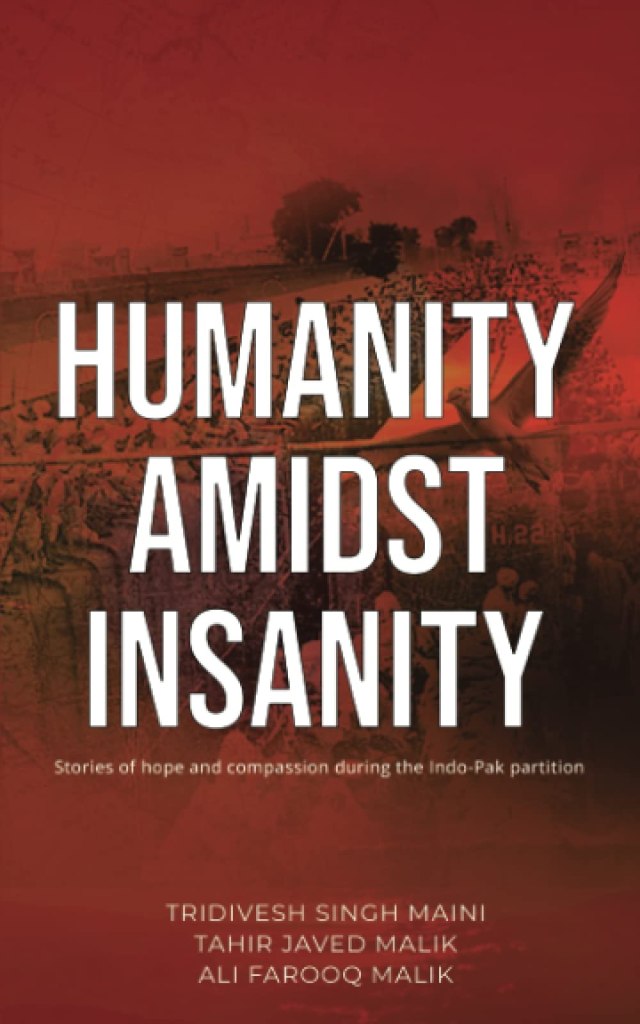
Book : Humanity Amidst Insanity : Stories of hope and compassion during & after the Indo-Pak Partition by Tridivesh Singh Mani, Tahir Malik & Ali Farooq Malik , New Delhi, UBS Publishers & Distributors, Published 2009,148 pages, Soft Cover- 5 in x 8 in, ISBN:978-8174766304, ₹ 200
Humanity Amidst Insanity
“It is during our darkest moments that we must focus to see the light.”
– Aristotle Onassis
The book “Humanity Amidst Insanity” is authored on the principle quoted above, highlighting the humanity and kindness shown by individuals on both sides of the border during the 1947 Partition – one of the darkest chapters in the history of the Indian subcontinent. What might appear as a collection of stories of hope during the Partition is actually a cross-border ethnographic effort to mine instances of perhaps the most infallible virtue of humanity – compassion. The authors, Tridivesh Singh Mani, an Indian academician of repute, and Tahir Malik and Ali Farooq Malik, both renowned Pakistani journalists set out on the quest to find such positive experiences through the process of interviewing survivors of the Partition in both the countries.
What strikes a reader the very instant they grab hold of a copy of the book, is how ‘bare-bone’ it is. There is neither page after page of social commentary, the book itself a light 150-pager read, nor any precarious wording. The language in fact is surprisingly lucid and straight-forward for a theme that is usually riddled with philosophical undertones. That is not to say that philosophy does not direct the flow of the book, as the constant journeying for tales of compassion centralizes the mission of the text. A reader is not wheeled along on this journey of discovering the ‘light’ side. They are allowed to set out on it on their own with a map. The plots on this map are actually a set of questions and queries made to the interviewees, the answers to which unlock the much larger tapestry of unity, commonalities, trauma, nostalgia and decades of generational memory on both sides of the border. One such question asked to almost all the partition survivors was whether they were aware at the time of the partition that the division was permanent or not. Most of the interviewees’ accounts reflect that almost everyone thought they were coming back, either having purchased property right before fleeing and even taking the house keys along, or having buried treasure or left their assets to someone trustworthy for safekeeping till they returned. The authors are able to connect this with the attachment these survivors have with their ‘watan’ or homeland. As a reader sets out to discover these, making frequent trips to observe experiences on both sides of the border, they start to question the demarcation itself.
That moment of questioning brings to light the relevance of the book, which in the words of the authors, is an ‘important’ work for the current generation of South Asians, the generation that has not grown-up with stories of Partition, but are seeing displacement all around them. But why positive experiences? A reader is plagued with this question early on in this text, thinking that an over-emphasis on such good, humane and brave acts during an otherwise depraved period runs the risk of trivializing the actual history. The authors understand the readers’ dilemma, and furnish the significance of such positive experiences, and show how it connects to the larger theme of the book. Not for once, however, do the authors try to downplay the inhumane acts committed during the Partition, and all the suffering that was caused. An alternate view is offered which acknowledges that human beings are capable of both good and evil. Almost all of the interviewees recalled their own versions of the horror they witnessed, alongside the positive experiences. In no way is this a literature which denies the massacre that took place during the Partition, but by highlighting the positive experiences in the same temporal space as the horrors, it creates a niche of its own amongst other Partition literature.
This ethical antagonistic duality is one of the things which the book gets a good grip on, allowing it to lead the narrative. One of the critical intentions of looking for good in the darkest of times is the idea that it sets out a ripple effect of kindness and compassion that helps ward off the adverse effects of depravity. Humanity is struggling to find optimism as the world steeps deeper in a poly-crisis environment of war, unrest and calamity. This book allows them to attune their senses in seeking out individuals stepping up to help others, often risking their lives in that process. Such experiences can catalyze change, inspiring individuals to take action. The authors manage to extrapolate the usually clandestined compassionate, humane and apolitical side of the ghastly Partition and set forward a more hopeful and inspiring vision for the future. One such ‘humane’ experience in the book highlights accounts of shared compassion amongst Sikh refugees coming into India, and Muslim refugees moving towards Pakistan helping each other by sharing water and nursing wounds.
The operating theme of finding the positive side of humanity in times of depravity also fits into the concept of waiting in exile. Waiting in exile is as much a physical act as it is a mental and emotional state and can be quite difficult and disorienting. Positive experiences, such as the ones collected in the book, offer a glimmer of hope and inspiration for the ones feeling detached from their identities. Even the interviewees stated how these experiences helped them find hope and strength to find stability, identity and momentum in a new homeland, a new country – one that felt like an exile. These experiences help individuals find a sense of community and belonging and demonstrate the commonalities that exist on either side of a border or conflict. This book focuses on building bridges in a highly polarizing world which is busy erecting higher walls.
One of the strengths of the book is that it is not a typical historical account of the partition. Majority of the book consists of interviews of individuals from both sides of the borders. The observations of the work therefore face some of the challenges that any other compilation of oral history faces. While the individuals are selected from different educational backgrounds, places of origin, age, caste, gender et cetera, their recollections still bear more nostalgia and bias than fact. The authors have tried to untangle much of such bias, and showcase some advantages of relying on oral history. Constructing a narrative based on people’s experiences allows for a more free-flowing understanding of events by deconstructing the rigid time frames of history. Finding cultural anchors and affinity also becomes easier, as was the case of tracing the significance of ‘watan’ on both sides of the border. Therefore, this approach provides a unique and compelling perspective on a significant historical event.
However, a few flaws in the book disorient the reading experience. While the feature of the work is the laborious cross-border collection of positive experiences from survivors of the partition, it gets a bit washed out in terms of the insights and observations put forward by it. Some portions of the book, such as the section on why certain cities were picked to collect experiences from, tends to read like a journal research paper at times. However, since this forms the methodology section, it can be avoided. The book also does not delve deeply into the complex political and social factors that contributed to the partition and its aftermath. While this may be a deliberate choice by the authors to focus on individual experiences, it may leave some readers feeling that the book oversimplifies or overlooks important aspects of the partition.
Overall, “Humanity Amidst Insanity” is a thought-provoking and uplifting book that offers a fresh perspective on the partition of India and Pakistan in 1947. While it is not a comprehensive account of the Partition, it perhaps remains one of the very few accounts that tends to focus on positive and humane experiences during an otherwise politically charged and depraved event. Its coherent writing and narrative driven experiences bear resemblance to chapters from The Diary of Anne Frank offering a wider appeal to the book. It delivers a valuable reminder of the power of human connection and compassion, even in the face of extreme adversity. As the world descends into longer and disorienting periods of instability and insanity, that sentiment holds the potential to breed much required strength in the hearts of humanity, that all hope is yet not lost.
Piece of War: Narratives of Resilience and Hope

Book: Piece of War: Narratives of Resilience and Hope by Meha Dixit Sage, 2020, ISBN:978-93-5388-506-9, Rs. 450
“War is a snake that bites us with our own teeth. Its poison flowed through all the rivers of our soul. We no longer ventured outside during the day, and at night we no longer dreamed. Dreams are the eyes of life and we were blind.”1
This book is a marvelous work on pieces of war’ which humans carry from the war-torn areas. The author has covered several countries like India, Lebanon, Sierra Leone, Bangladesh et cetera for her study and she has tried to bring out the voices of stakeholders of war like soldiers, doctors apart from focusing on the people who are suffering. It is the result of an extensive ethnographic study yielding heart-wrenching case studies of humans from the most tragic conflict zones. It’s a book that is politically balanced and nuanced since it involves all the facets involved within the conflict zone. It tries to bring out nothing but the ‘truth’, ‘experiences’ and ‘pain’. Living in war zones is like being in exile while at the same time waiting for life to happen. Waiting and exile are intertwined closely. They involve human experiences of devastation, separation, anticipation and expectations.
Waiting and war can be connected not only in terms of bringing peace or waiting for the war to get over, but there is waiting for the war to happen. ‘Waiting for war’ is also inbuilt into human nature. Since time immemorial, we have prepared for war. Some kings and queens waged war, invaders and rulers who destroyed cities and villages and converted them into ruins in ancient and medieval times. At the same time, modern times have witnessed deadly world wars and ongoing regional conflicts. Waiting for war is a period where there may be efforts to prevent war through diplomacy, building up conflicts and tensions and the groups or states preparing for the battlefield with mobilization and army at each side. When waiting for war eventually leads to war, it converts into waiting during wartime or waiting in the warzone. This includes both civilians and the army waiting for their respective victory and trauma to end simultaneously. An extended period of waiting for the war to end; involving anxiety, depression and anticipation is felt by both soldiers and civilians. Waiting is done by the army for orders, reinforcements, supplies, attack or as they long for home, sleep or death in peace while civilians wait for their sons and fathers to return from war, for food and other basic necessities.
Waiting and exile connect us to the idea of perseverance and hope. Those suffering while waiting in war and exile have to have these virtues of patience, strong determination to live, courage, hope, persistence and perseverance in a difficult situation as they are deemed to face dangerous, uncertain circumstances. As the author states, “finding hope amid turmoil may well be akin to spotting a fresh leaf on a barren tree or sudden rain in blazing sun”(p251).
War connects to waiting and exile simultaneously, but it also highlights a chunk of the population already in exile even before the war or conflict emerged in their area. They are in a state of exile forever, whether it’s war or no war. The book highlights the issue of differently abled people who are already in exile. They are undesired, unloved and uncared for. As the author mentions in her book, interviewing one of the people working in a center for special children when asked about the impact of war and unrest on the children one of the respondent said that “Mostly the behaviour of children changes during the unrest”(p206) and that “some boys become more aggressive after they return from protests.”(p207) This pushes them further, for they are perceived to and in some cases also do become more hostile and violent and indulge in self-harm. The families then send them to centers that deal with special children and people.
Similarly, women also face exile in these situations. Women abducted, raped or deployed as soldiers or servants by the insurgents and army, face exile. Society and family disapprove of them, and they wait in vain for their acceptance, and in that, they accept exile. Patriarchal norms and orthodox gender roles are reinforced and strengthened in conflict zones. The author writes that even in conflict zones, men have a right to roam around and venture onto streets while women are confined at homes and ruled by men inside and outside the household. Here, the girls and women are waiting for their voices to be heard and waiting to walk on the streets freely and feel safe and secure. For men, war could also mean freedom in chaos with no authority, but for women, the scenario remains the same; in fact, it becomes brutal. The author mentions from April Carter’s writing that ‘women’s primary roles in war are as mothers, wives and girlfriends waiting for their soldiers to return and caring for the wounded’.2
In my understanding, the significant reflecting point of the book is that it highlights people’s wait to move towards this abnormal situation. This is implied in one of Dixit’s interviews with one of the respondents from Lebanon, who says that “she would prefer to go back to the wartime”, and not only her but many respondents from the conflict zones more or less spoke the same thing. For them, being in the war, living in war, and witnessing war is normal. Especially those growing up with war and war times see ‘normalcy’ in war and violence, since they have not seen anything other than war, chaos, displacement and suffering. When war becomes normal, the peaceful and certain times and lives even when they bring stability, that stability becomes abnormal. Something those constantly at war probably have desired and hoped but could not have. This abnormality for them then starts signifying the alienating waiting time until war comes again. In one sense, and terribly devastating sense they wait for war. War by becoming regular, also becomes familiar. The respondents in the book wait for the stable but abnormal, with war looming sometime in the future, bringing more confusion, corruption and even chaos.The war victims wait for the ‘abnormal’, which to them is peace and stability. Isn’t it sad and equally traumatic to even think that war has become so usual for some that it has alienated them from the idea of peace? According to most of them, moving from everyday normal wartime to abnormal peace led to instability in their lives; the memory of war and the lost ones would continuously haunt them, and hope became questionable.War was the routine for them, and when peace arrived, it brought memories of hostilities that even outlived the humans. Thus, the book truly depicts, through the author’s first-hand experience, the people’s hope and resilience to wait for their exile to end for the abnormal to happen, to wait for their wounds to heal in the process.
Works Cited
Dixit, Meha. 2020. Piece of War: Narratives of Resilience and Hope. Sage Publication.
Notes:
- Mia Couto, Sleepwalking Land, Trans. David Brookshaw, Translation Year-2006/Portuguese 1992, as cited in Dixit, 2020.
- April Carter, ‘Should Women Be Soldiers or Pacifists’, in the Women and War Reader, New York University Press, 1998, as cited in Dixit, 2020.
जूठन: पहला खंड

पुस्तक: जूठन: पहला खंड, ओमप्रकाश वाल्मीकि: १९९७, राधाकृष्णन प्रकाशन, २०११ एडिशन, जनवरी २०१५, भारत, पृष्ठ १६४, आई. ऐस. बी. न. ९७८८१७११९८५४२, ३२७ रुपये
शैक्षणिक संस्थानों में समानता व सम्मान का इंतज़ार करता दलित समाज
या
शैक्षणिक संस्थानों में समानता व सम्मान की लड़ाई लड़ता दलित समाज
कुछ दिन पहले ही विश्व प्रतिष्ठित भारतीय प्रोद्यिगिकी संस्थान, बॉम्बे में एक दलित छात्र, दर्शन सोलंकी, की संस्थानिक हत्या देखी गयी । खुद के ऊपर थोड़े सी चोट आ जाने पर इन्सान कई दिनों तक अपने आप को संभाल करके रखता है तो आखिर कैसे दर्शन ने खुद की जान ले ली? क्या यह संस्थानिक हत्या इस बात को इंगित नहीं करती है कि भारतीय समाज में समानता व न्याय जैसे शब्द खोखले हैं और जातिवाद ने इस देश के हर संस्थान व घटना को अपने विषैले दंश से प्राणविहीन कर रखा है? मनुवादी व ब्राहमणवादी व्यवस्था में शुद्र व पंचम वर्ण को शिक्षा का कोई अधिकार नहीं था | तथाकथित भारतीय गुरु परम्परा व प्राचीन गुरुकुल व्यवस्था केवल एक अग्रहारों का संस्थान था जिसमें शिक्षक द्रोणाचार्य, एकलव्य जैसे आदिवासी बालकों के शिक्षित होने की अभिलाषा को अंगूठे मांग कर कुचल देते थे । लेकिन ऐसा क्यों है कि प्राचीन भारत की यह अमानुषिक व सड़ी हुई व्यवस्था आजाद भारत में भी जातिविहीन समाज की कल्पना की नींव रखने वाले संवैधानिक देश में समानांतर चलती रही ? आखिर कैसे हमारे शैक्षणिक संस्थान प्राचीन भारत के अग्रहारा की खौफनाक परछाई को अब भी जगह दे रहे है और कैसे यहाँ के शिक्षकों का व्यवहार आधुनिक द्रोणाचार्य के खौफनाक प्रतिरूप को परिलक्षित कर रहा है ? क्या दलित छात्र-छात्राओं के साथ ऐसे जातिवादी भेदभाव इन शैक्षणिक संस्थानों के भीतर ही उन्हें निर्वासन की जिन्दगी जीने को मजबूर नहीं करती है ? जहाँ पर हमारे पास दर्शन, पायल व रोहित जैसे छात्र-छात्राओं के ह्रदय द्रवित करने वाले उदाहारण हैं जो आधुनिक द्रोणाचार्य के प्रतिदिन के जातिवादी दंश को झेल नहीं पाए तो वहीं पर इन अमानुषिक व्यवस्था से लड़ने की हिम्मत देने वाली कई जिदादिल कहानियाँ भी समाज में उपलब्ध हैं | इन सवालों को समझने के लिए हमें उन्हीं व्यक्तियों के अनुभवों को टटोलना होगा जिन्होंने इस व्यवस्था से उबरने के लिए इंतज़ार के बदले प्रतिदिन संघर्ष व असरसन के माध्यम से इन अग्रहारा व आधुनिक द्रोणाचार्यों जैसी सोच को चुनौती देने का उदाहरण प्रस्तुत किया है |
यह आलेख इस संदर्भ में ऐसी ही एक पुस्तक ‘जूठन’ (जो आत्मकथा के रूप में लिखी गयी है) के प्रयोग पर आधारित है जो इन सवालों को समझने का प्रयास प्रस्तुत करती है ।
शिक्षक या आधुनिक द्रोणाचार्य ?
लेखक ओमप्रकाश का जन्म जिस जाति में हुआ, मनुवादी व्यवस्था में इस जाति का काम मरे हुए जानवरों की चमड़ी उतारने का निर्धारित किया गया था । लेकिन स्वतंत्र भारत में क्रांतिकारी ग्रंथ संविधान ने समाज के हर एक वर्ग को शिक्षा का अधिकार दिया । लेकिन क्या भारत का प्रत्येक समाज इन अधिकारों का समान प्रयोग कर पाया या अभी भी कर पा रहा है ?
ओमप्रकाश वाल्मीकि अपनी आत्मकथा में लिखते हैं कि जब वो पहली बार विद्यालय गये तो वहाँ के हिन्दू धर्म के तथाकथित उच्च जाति के त्यागी समाज के शिक्षकों ने कई दिनों तक उनसे पूरे विद्यालय में झाड़ू लगवाई | शिक्षक तो शिक्षक बल्कि त्यागी समाज के छात्र भी लेखक को जातिसूचक गाली से संबोधित करते थे | ओमप्रकाश पढने लिखने में एक अव्वल छात्र थे और तमाम कठिनाइयों के बावजूद वो प्रत्येक विषय में किसी भी सुविधा संपन्न वर्ग के बच्चे से बेहतरीन समझ रखते थे, उसके बावजूद कोई भी शिक्षक उन्हें देखना तक नहीं चाहता था | ओमप्रकाश के साथ यह बर्ताव आगे भी होता रहा | लेखक बारहवीं की विज्ञान के विषय में लिखित परीक्षा में सबसे अधिक नंबर लाते हैं लेकिन जातिवादी शिक्षक ने उन्हें प्रायोगिक परीक्षा व मौखिक साक्षात्कार में कम नंबर देकर अनुतीर्ण कर दिया | आइआइटी से लेकर जेएनयू व तमाम सरकारी नौकरियों में प्रायोगिक व साक्षात्कार के नाम पर दलित छात्रों को कम अंक देकर बाहर व अनुत्तीर्ण करने की मनुवादी परम्परा अब भी जारी है | जब लेखक के साथ यह हुआ तो उनके मनोव्यव्था को उनके ही शब्दों में समझते हैं,
“इस घटना ने अचानक मेरे सामने भयानक गतिरोध उत्पन्न कर दिया था. मेरा मन उचट गया था. समझ में नहीं आ रहा था, क्या करूँ. एक अँधेरा मेरे सामने खड़ा था . घर-परिवार में जैसे मातम छा गया था. पिताजी अफ़सोस जाहिर करके चुप हो गये थे. मै बुझ सा गया था. किसी काम में मन नहीं लगता था. बहुत बैचेनी भरे दिन थे” (वाल्मीकि, पृष्ठ संख्या, 83).
शैक्षणिक संस्थान दलित समाज के छात्रों को ऐसे मनोवैज्ञानिक दबाव में धकेल देते हैं जहाँ से उनके लिए उबरना मुश्किल होता है | इसमें कोई दो राय नहीं है कि भारत के शैक्षणिक संस्थान आज भी दलित समाज से आए छात्रों के साथ इस प्रकार की प्रत्येक दिन की हिंसा (everyday violence) के माध्यम से उन्हें अपने ही शैक्षणिक संस्थानों में एक प्रकार की निर्वासित जिन्दगी जीने के लिये मजबूर करता है | द्रोनाचार्यों के द्वारा इस हिंसा व् निर्वासन में धकलने के कई नये साधन विकसित किये जा चुके हैं जहाँ पर प्रत्येक दिन दलित छात्रों को इससे जूझना पड़ता है (Lakshman, 2023) |
लेखक की आत्मकथा हमें अपने शैक्षणिक संस्थानों के नींव में स्थापित प्राचीन विद्या परंपरा व गुरु परम्परा की महिमामंडन की खोखली सच्चाई से अवगत कराती है |
आखिर द्रोनाचार्यों को कैसे चुनौती दें ?
लेखक की किताब इस मायने में असाधारण है कि यह उन समाज के छात्रों के लिए ऐसे द्रोनाचार्यों से लड़ने की राह दिखाता है जो इतिहास में पहली बार शैक्षणिक संस्थानों में अपनी कदम रखते हैं | यह पुस्तक सदियों से निर्वासित समाज को अपने अधिकारों के लिए लड़ने का राह दिखाता है | इस वाक्य का मतलब समझने के लिए हम लेखक की जिन्दगी में वापस लौटते हैं जहाँ से आज के शैक्षणिक संस्थानों में पढ़ रहे दलित समाज के छात्र सीख ले सकते हैं । जैसे जब कलीराम त्यागी नाम के हेडमास्टर ने लेखक को लगातार तीसरे दिन पूरे स्कूल में झाड़ू लगाने को कहा तो उसी वक़्त लेखक के पिता ने अपने बच्चे को ऐसा करते देख लिया, जिस पर वो जोर से दहाड़े । लेखक लिखते हैं कि उनके पिताजी का जातिवादी हेडमास्टर कलीराम को इसप्रकार चुनौती देना ने उनके भविष्य को गढ़ने में योगदान दिया । दूसरी घटना तब की है जब लेखक के देहरादून के कॉलेज में पहुंचने पर कुछ छात्र उनके कपडों का मजाक उड़ाते हैं, तो लेखक के एक दोस्त उन्हें धमकाते हैं कि वो आइन्दा ऐसा न करें, तत्पश्चात वो छात्र लेखक का मजाक उड़ाना बंद कर देते हैं । लेखक लिखते हैं कि उन्हें देहरादून आकर समझ आया कि बर्दाश्त और सहन करने की आदत ने उनसे कितना कुछ छीन लिया है । इस क्रम में तीसरी घटना तब की है जब लेखक आर्डिनेंस फैक्ट्री अम्बरनाथ के ट्रेनी थे, और दलित पैंथर्स के समर्थन में लेख लिखते हैं । ज्ञात होने पर आर्डिनेंस फैक्ट्री का प्रिंसिपल उन्हें बुलाकर लेख लेखन के बारे में पूछता है और लेखक हाँ में जवाब करते हैं । फिर प्रिंसिपल उन्हें चेतावनी देकर छोड़ देता है । हालांकि इस घटना के बाद लेखक के बहुत सारे मित्रों का व्यवहार बदल जाता है लेकिन इसके बावजूद भी लेखक अपनी दलित पहचान को कभी नहीं छुपाते और हर जगह अपनी पहचान को अपनी ताकत बनाकर स्वयं व दलित के अधिकारों हेतु संघर्ष करते हैं । यह पुस्तक इंतज़ार से आगे बढ़कर संघर्स व् कारवाई के लिए जोर देता है |
निष्कर्ष के मायने
दरअसल हमारे समाज की बनावट ऐसी है जिसमें उच्च जाति के लोगों को निचली जाति के लोगों को न देखने की और न सुनने की आदत होती है । उन्हें दलित समाज की आवाज व तना हुआ चेहरा कभी सुनने व देखने का अभ्यास नहीं होता तथा न ही ये उनके अनुभव कभी किए होते हैं । जब ऐसे समाजों के छात्र इन शैक्षणिक संस्थानों में आते हैं, बोलते हैं, हँसते हैं लेकिन जब अन्य वर्ग के छात्र द्रोणाचार्यों के प्रिय अर्जुनों को पढाई में पीछा छोड़ देते हैं तो उन्हें यह सब पसंद नहीं आता, उन्हें यह नागवार गुजरता है । परिणामस्वरूप इन परिस्थितियों में वो समाज के दलित व् अन्य पिछड़े वर्ग के छात्रों को उनकी जाति या कोटाधारी के नाम से प्रताडित करना शुरू कर देते हैं । लेखक ‘जूठन’ के माध्यम से इन बातो को कई प्रसंगों में बेहद ही साफगोई से पाठक के सामने रखते हें ।
लेखक से हम सीखते भी हैं कि एक समय के बाद बर्दास्त करने की आदत छोडकर जवाब देना व लड़ने को अपनी ताकत बनाना ज़रूरी है । जूठन पुस्तक हमें इस बात की ओर भी इंगित करती है कि किन-किन माध्यमों से भारतीय शिक्षण संस्थान दलित समाज के छात्र के लिए शिक्षा के माध्यम से बनी उसकी गतिशीलता (mobility) के अवसरों को कुचलने के साथ साथ एक मर्यादा और गरिमा पूर्ण ज़िन्दगी को भी अनवरत इंतज़ार और निर्वासन कि ओर धकेलता है ।
एक राजनीति शास्त्र के अध्येता होने के नाते हमें ज्ञान के ऐसे स्त्रोतों को पढने व समझने की जरुरत है जिसमें अनुभव को बिना किसी लाग-लपेट के लिखा गया हो, जूठन नामक पुस्तक हमारी इस खोज को पूरा करती है । और मैं जोर देकर कहना चाहता हूं कि ऐसी पुस्तकों को समाज विज्ञान के पाठ्यक्रम में एक अनिवार्य विषय के तौर पर पढाये जाने की जरुरत है । ताकि हम शैक्षणिक संस्थानों में उन सिद्धांतों को स्थापित करने की ओर प्रेरित हो सके जिससे हम विशेष वर्ग की जातिवादी प्रवृत्ति को उजागर कर संस्थानों को संवैधानिक मूल्यों के तर्ज पर बना सकें |
सन्दर्भ
- वाल्मीकि, ओमप्रकाश (1997). जूठन. राधाकृष्ण पेपरबैक्स.
- Lakshman, A. (2023, February 24). The Kota-quota hierarchy at IIT. The Hindu. https://www.thehindu.com/news/national/the-kota-quota-hierarchy-at-iit/article66546633.ece
- Sukumar, N. (2022). Caste Discrimination and Exclusion in Indian Universities: A Critical Reflection. Routledge India.
Family life: a novel

Book : Family Life by Akhil Sharma, New York : W.W. Norton & Co., 1 May 2014, 240 pages, ISBN: 978-0-393-35060-9, $14.95 (Also, Family Life by Akhil Sharma, India, Penguin, May 2015, 240 pages, ISBN: 9780143422907 ₹399.00
Author Akhil Sharma had proven to be a critical hit when he first published in 2001 but had remained quiet for a very long time before coming with ‘Family life’ in 2014 which is a semi-autobiographical work. He writes in his acknowledgements, “When I handed it in, this book was nine years overdue. Each year, on the anniversary of the novel’s due date, Jill would email me and invite me to lunch…”(p234). In an interview with the Guardian, he discussed the problem of the sensorium, which was a technical writing detail. Once he could resolve that, he published. However, what struck my mind were other things he said about waiting before the book was for the world to read. He wanted it to be something that could not be ignored, something demanding a lot of the reader. And the book did. It demanded a lot.
The book begins in nostalgia. The narrator Ajay, the younger son of the family, introduces us to his parents and his elder brother. They are immigrants in the US who left India in the 1970s. Immediately, we are taken back to the India of the 1970s. India listening to radio sets and a period of emergency where the postman bringing air tickets to ‘Amerika’ (America)hoped for an ‘Inam’ (prize). India of red-tapism and socialism. Both parents embody the Indian ethos of the time. Six year old Ajay perceives the father as “…being assigned to them by the government’ (p27) and hence serving “no purpose”(p27) reflecting on the anxieties associated with the bureaucratic apparatus of the 1970s in the figure of the father. Ajay’s mother, on the contrary, embodies Nehruvian socialism. He remarks that his “mother viewed gloom as unpatriotic.” (p7) Their Indian story is one of aspiration tied to education and free liberal values presumably at the time of the West (term used loosely to speak of the first world).
When the Mishras arrive in the US, as a new migrant family, we watch them from Ajay’s perception – the child’s eyes. He feels powerful, even commandeering upon learning that the elevator moves as he presses the buttons. Compared to his rooftop cold baths in India, the hot water flowing from the tap makes it dreamlike. When Ajay’s older brother makes it to a prestigious school, they find themselves acquiring celebrity status among the local Indian community. The story culminates like most emigrant stories do in ‘apna time aa gaya’ (our time has come).
But they also find themselves estranged from the universe they had once known. When their father takes them to a library and offers to give them money in exchange for every book they read, he wonders “If my father wanted us to read, what he should have done was threaten to beat us.”(p31). Ajay felt deeply wounded for his father’s un-Indian behavior. Upon visiting the local grocery store with their mother, the sons checked the labels of canned food. In India, there was the smell of cooking oil and loud voices of the vegetable vendors. Here they could neither afford nor worse, find that food. When the mother wears jeans for the first time, they exclaim “your thighs are so big”(p37).They are astonished to find that the pandit (priest) at the local temple is a full time engineer and a part time priest. In India, they had seen no such thing. They are also bullied at school and sneered at on roads.
It is a usual emigrant story except when it is not. Within two years, they find their American dream shattered because of a tragedy that then becomes their life. In the span of the book we stay with Ajay and his family from his early childhood in India to when he was a man in his forties in the US.
The many days and nights they spend in hospitals and nursing homes, feeding, cleaning and changing the elder son. The endless number of people who visited their home and the prayers that never ceased. The waiting was ongoing and cyclical. Days of hope and spirit, followed by months of frustration and fear. When Birju the elder brother falls to an accident, the others go in waiting. The mother becomes divine-like through the power of her prayers. She remains devoted to Birju’s care and escapes into God what Ajay calls superstition. The father finds alcohol as a way of escaping his terrible reality. He finds himself dealing alone by checking himself in a rehabilitation home hoping-waiting to get better. He does and also does not. He stops drinking but he is never happy.
We see them carrying pain until it goes away, in effect waiting for it to go away. ‘Eating pain’ (p228) is the expression that Akhil Sharma uses. It is a devastating expression. How do you eat pain? Do you wait for it to be digested, does it go away or it jams your veins and becomes a thick layer underneath your skin? Do you carry it on you all the time? How? I picked this book because I needed something to take my mind off my mind. Reading can be an immersive experience. You get invited into another world. A world that is not your own but threatens to become one, as you read. Akhil Sharma’s world was tragic. Back in 2015, when I first read this book, my world was tragic. Perhaps less tragic than Sharma’s but tragic nevertheless. Somewhere half past the novel, I had scribbled in a small handwriting “will the pain ever go?, waiting”. Almost a decade later, I picked ‘Family Life’ again wondering who was the note for, myself or the Mishra(s), the family in the Family Life. I had never intended to review this book. It is not the kind of book you can speak of without feeling things. As I sit here to talk about Family Life , I ask why now and why here? The answer, perhaps, is the waiting. Reading this book felt like waiting the entire time for something or someone to come pull me and my author’s book out of its grief.
If one were to allow oneself to think of reading as an act of waiting, what is one waiting for? Your world has fallen apart and you bury yourself in a book. Some would say it is a daring act to enter the world(s) of others when your’s can’t hold. Hence, it is an escape. Pushed into a book, or into an imagination of a distant land with sand or sun or both and ocean with cool breeze. Hence, one could be exiled in reading, or maybe writing a book. You do hope to return, someday, any day. Or maybe not. When I tried escaping in Sharma’s book, I found myself in Ajay’s life who found Ernst Hemingway’s writings as an escape of his own. For him, writing became co-terminus with leaving. He would wait through the piles of grief, his brother’s illness, his father’s alcoholism, his mother’s superstitions, the bullying at school. He would wait until he escaped into writing. In great tragedy, he was present, he cared, loved and stayed. But in great tragedy, he was also exiled in his thoughts wandering, making notes, jotting what he will write in his book.
It probably gave him more control. “Reading a book a second time was more comforting than reading it the first because during the second reading everything was in its place. ” (p 65) It was also because, after the initial tragic incident, the family goes down a vicious path of hope and its denial. Hope, however irrational, is powerful. Hope makes waiting palatable. Hope makes waiting reasonable. Hope makes waiting bearable. But hope and denial of hope in loop causes Ajay to ‘wait for worse’ his default setting. “I got happier and happier. The happiness was almost heavy. That was when I knew I had a problem.”(p233)
Ajay grew up torn and neglected by emigrant parents worn out by the cards life dealt them with, the tragic cards. It is a story of a home left behind. It is a story of shattered youth. A story of both parental neglect and parental devotion. The parents devoted to Birju’s care neglected Ajay’s entire childhood. It is also a story of forgiveness. This is deep grief. Grief that moves down the system like sediments. It is not heroic. It is not charismatic. You cannot remember who you were before it. If you ‘were’ before it. It does not change you. It becomes you while you become it. ‘Will it ever get over? Probably not, but you can try and ‘eat pain’ and just like that, the waiting becomes part of life, like the pain and grief does and so does the ‘escape(s)’, the self-exile mirroring the grief but also creating pathways to move forward and onward.
References: https://www.theguardian.com/books/2014/apr/26/akhil-sharma-family-life-books-interview
 TheDaak review
Leave a comment