
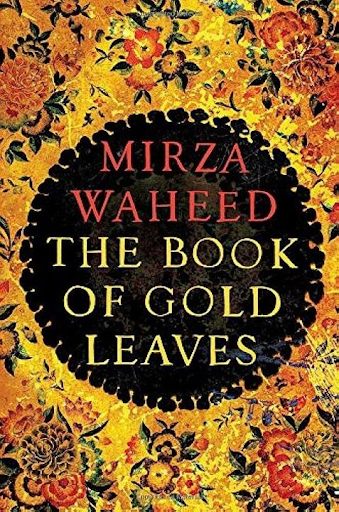
The Book of Gold Leaves by Mirza Waheed, Penguin Books, Published: 2014, 280 Pages, ISBN: 9780143422839, Rs. 399.00
“In the dark times
Will there also be singing?
Yes, there will be singing.
About the dark times”
Bertolt Brecht
Svendborg Poems (1939), trans. John Willett
The epigram “Motto” by Bertolt Brecht encapsulates the vicissitudes of turbulence-ridden times. On one hand, it suggests that despite the harshest adversities, the art of expression has an unyielding resilience, but on the other, it suggests that conflict becomes the dominant leitmotif of dark times. Thus, the all-pervading nature of a conflict captures our imagination in a way that both our songs and silences narrate the tales of the same. Similarly, Mirza Waheed’s novel The Book of Gold Leaves takes us on a poignant journey where he unravels the nature of chaos that dark times entail. While normalcy is the first thing that is robbed in times of conflict, the hijacking of desires and dreams is perhaps conflict’s greatest collateral damage. Both the mundane and the extraordinary are shaped by the invisible hand of turmoil. Likewise, the world created by Mirza Waheed in his novel highlights how each character’s destiny is inseparable from the zeitgeist of political instability. The novel is set in the early 1990s in downtown Srinagar. The author narrates the story of the region’s rapidly changing political landscape and the effect it has had on the lives of different characters. The novel displays the love story of Faiz and Roohi against the backdrop of sprawling military presence. It goes on to outline changes in the daily activities of local residents following heavy militarisation of the city: from late-night outings to deafening silences on the roads at dusk. The tragic exodus of Kashmiri Pandits after the selective targeting of the community has also been narrated in the book. The spawning of army bunkers at every nook and cranny along with the conversion of hotels into torture cells creates a psyche of fear. Makeshift bunkers are set up in school “rooms that have for ages listened to the whispers of the older girls, the laughter of the younger ones”(p.64).
The novel is successful in exploring the complexity of human existence through the portrayal of love between Faiz and Roohi. Despite being set in a war-torn state, where basic survival takes precedence over catering to an elaborate array of human emotions, the spark of love ignites the protagonists. Faiz is a naqāsh ( papier-mâché artist) who earns a meagre income and supports his large household and Roohi is a spirited, headstrong and attractive woman who dreams of experiencing a love story.
The picturesque scene of the swirling breeze sweeping everything on its way conspires the lovers to meet. Waheed portrays the power of destiny writ large. The characters succumb to its force, mindless about consequences and oblivious to social realities. As in any quintessential love story, it is only when characters are all engrossed in love, the jolt of reality strikes, making the lovers see what seemed invisible at its inception. In the case of Faiz and Roohi, they each belong to different sects of Islam. So, they have to navigate not only through the political turmoil which is all-encompassing but also through deep social cleavages Waheed’s lyrical prose gives us a glimpse of the shared world that Roohi and Faiz create together while juxtaposing it with the vivid details of the grimness that engulfs the city. “They dream and dream. Together and alone. They meet and talk, the evening prayer their pretext and sanctuary” (p.71). But the rapidly deteriorating political climate results in the city being subjected to a round-the-clock curfew. Thus, “All movement proscribed. All meetings banned. All life besieged. A deathly calm has spread everywhere, as soldiers circle the area from sides”(p.89).
Faiz’s character takes a dramatic turn when there is an attack on a school minibus and his Godmother is killed in a crossfire. As a result, he swings to “the borderland between sanity and insanity, or, that, his mind is filled with the thoughts of escape, of flight, or running away and freeing himself. He cannot take it anymore”(p.106). The need to escape the state of helplessness pushes him to become a militant. His artistic brilliance at papier-mâché seems meaningless when he cannot contribute to a greater cause. Remaining true to his artistic sensibility— like his namesake Faiz Ahmed Faiz whose poetry is marked by defiance against the might of President Zia-ul-Haq— Faiz marches unwittingly towards the mission of bringing justice to his people. Waheed explores the notion of how conflict drags individuals out of their personal space, a sensitive artist transforms into an armed fighter. The luxury to remain“apolitical” is lost when immediate lives are at stake.
Mirza Waheed has also touched on the significant theme of unplanned development in Srinagar. Unregulated urbanisation has blocked the city’s natural drainage canals and the network of lakes has collapsed. The devastating flood of 2014 was a grim reminder of the need to reevaluate the parameters of development in an ecologically sensitive area. The nostalgia about the currently non-existent Nallah Mar canal invokes a sense of remorse in the novel. Environmentalists cite the filling up of the Nallah Mar navigational canal which connected Bari Nambal to the Khushal War lake and its conversion into the Nallah Mar Road as an ecological disaster. “This road, too, was built on water, filling yet another artery of the city”(p.86). Such issues of great significance become marginalised in conflict zones as people are forced to focus primarily on the concerns of life and death. Waheed suggests that there is a lot that goes on in the background of the conflict. However, the events from the background get lost into oblivion. Therefore, conflicts create selective memories of history. While the consequences of conflict usuallly focus on death, destruction and despair, a range of events and episodes from the history of a region are erased alongside. Waheed maintains that the presence of a canal in the place of Nallah Mar road will, in a similar way, become a legend to be forgotten by posterity.
The plight of the Kashmiri Pandits who were forced to leave their home during the upheaval is represented by a sense of loss to Kashmiri culture. Waheed depicts the heart-wrenching details of the departure of Faiz’s immediate neighbour, Dinanath’s family, who had been his neighbour for at least half a century. The mass exodus of Kashmiri Pandits shook the very foundation of the Valley’s composite society, as it witnessed a radical shift in the aftermath of their departure. Principal Shanta Koul’s transformation from being an assertive woman who speaks her mind to living as a forced recluse for survival captures the painful complexity of the shifting power dynamics. However, the novel gives scant attention to the fact that an element of insularity has a tendency to brew when communities grow in isolation.
Waheed justifies the narration of the story about Kashmir by a Kashmiri with his usage of colloquial expressions throughout the novel. One is reminded of Chinua Achebe’s “Things Fall Apart” where Achebe deliberately introduced Igbo words and metaphors into a novel written in English. While it is refreshing to know the sociopolitical landscape of Kashmir from the lens of a native, it is equally baffling how Waheed has glossed over the Shia-Sunni divide in the Valley. The phenomenon of inter-sectarian marriages doesn’t enjoy general social acceptability in the Valley. However, Roohi and Faiz’s relationship receives an easy acceptance from their respective families. Minor resistance from some insignificant characters doesn’t adequately reflect the magnitude of opposition such relationships/marriages face. Waheed wants to show that the sectarian divide retreats during times of adversity, yet, at no point can one ignore the fact that conflicts can often exacerbate parochialism.
Overall, The Book of Gold Leaves is a riveting story about love during a time of conflict. It captures the layered complexity of the Kashmir conflict by providing it with a human element. It explores the richness of tradition bequeathed to the region from the plurality of different cultures. Waheed’s melodious prose accentuates the beauty of the Valley’s geographical distinctiveness, which has earned it the sobriquet ‘Firdaus’. The outstanding element of the novel is the authenticity of its narration, as the writer gives the reader an insider’s view of a person living and loving amidst dark times.
KEYWORDS: Fiction, Kashmir, Religious conflict, Exodus

Mehnaz Abdullah is a research scholar at MMAJ Academy of International Studies, JMI
 TheDaak review
Leave a comment