





Decolonizing Methodologies: Research and Indigenous Peoples

Decolonizing Methodologies: Research and Indigenous Peoples (2nd Edition), by Linda Tuhiwai Smith, Zed Books, Rs. 7,436, 256 Pages, 13.81, 2.03, 21.59 cm
Linda Tuhiwai Smith’s Decolonising Methodologies: Research and Indigenous Peoples laid the groundwork for starting and expanding the conversation on Indigenous research methods. The book was developed as an alternate or a counter voice to the Western or Eurocentric nature of research and knowledge systems from an insider’s perspective (i.e., from within the indigenous community). It is significant to affirm here that Professor Smith is herself a Maori Indigenous person. The book has twelve chapters which are further divided into two sections (thematically rather than technically as told by the Author herself in the book), with the first part, up to chapter six, being more directed towards an academic world (particularly to the non indigenous). Native readers have especially been drawn to the book’s second half, using it as a springboard for conducting their own research, engaging in productive debates with others and in Indigenous knowledge production.
Decolonising Methodologies is a significant literature in the continuity of post-colonial tradition from the non-West. But at the same time, it separates itself with its core focus on research. The book shares its debts and commonality with works of prominent postcolonial scholars like Frantz Fanon, Ngũgĩ wa Thiong’o, Edward Said, and others. It discusses central post-colonial concepts such as Imperialism, Modernity, etc., and their effect on the colonised. The book separates itself by using such concepts as the foundation and extending it in the frame of research and knowledge production. She questions the positivist gaze of the Western knowledge system and their quest and claim of objective knowledge (detached from the subject).
Decolonising Methodologies is not a technical research book (focus more on the process) per se but as
“a book which situates research in much larger historical, political and cultural context and then examines its critical nature within those dynamics”
p. 6
The book attempts to reformulate the hegemonic idea of Eurocentric research and aims to develop research for Indigenous people. It reveals how deeply ingrained colonial legacies of Western knowledge are and how they continue to have an impact on academic institutions, influencing them to exclude indigenous peoples and their ambitions.
In Decolonising Methodologies, Smith makes the case that decolonisation is more about one’s perspective and relationships toward research than it is about the instruments themselves, whether or not that term is used. Smith is able to bridge the gap between the worlds of research and indigenous people by recasting and reclaiming these discussions as research by Indigenous people. She uses chapters one to six to simplify the complex connections among imperialism, writing, history, theory, and the larger projects of modernity. Tracing how native peoples have been integrated within these systems and relations of power. For her, this makes the research inherently political in nature.
The book has multiple gazes to offer to make sense of ‘Eurocentric Scientific research.’
First, it situates and contextualises research in a large frame of its colonial and imperialist origin. Second, from its colonial legacies, it traces the formation of scientific knowledge about others. Third, the claim of scientific knowledge and the involvement of Indigenous people in such knowledge formation, and lastly, the creation of their own ‘research’ by Indigenous people is discussed. For Smith, research is integrally rooted in European imperialism and colonialism, where it reflects and reawakens the historical memories of enslavement and oppression. She argues research is one of the dirtiest words in the indigenous community’s vocabulary (p.1).
One can infer from the book’s title that this study is a deconstruction of imperialist and colonial research. It is a process of detangling the many threads and layers of the story, text, and knowledge, which is intuitively felt among the Indigenous people about their inherent servitude. In the first chapter, “Imperialism, History, Writing and Theory”, Smith contextualises how the idea of Indigenous peoples is framed within Western research. (p.20) With the influence of Enlightenment (the start of an age of imperialism and positivism), where knowledge creation is considered objective and neutral, Smith highlights its dehumanising gaze on Indigenous people. Scientific research considers the Indigenous life world as some form of ‘object’ that exists there, depriving them of humanness and their agency.
Further, in chapter two, “Research Through Imperial Eyes”, Smith unravels the unease of ‘scientific research’ with an alternate conception of any knowledge system. Its monistic and rationalised gaze forces any other alternative knowledge system from existing beside its frame. The intelligibility of any life can be legitimately and accurately claimed only through that model of scientific research. It asserts its ‘positional superiority’ through the sole legitimate creator of scientific knowledge.
In colonial understanding, the Indigenous life world is often treated as a primitive and simplistic way of being. Their world is understood to be naive and heavily nature dependent. It was predicted that they would not survive the onslaught of colonial modernity. Such stereotypical pseudo-scientific understanding has roots in positivist thought, which claims to know objectively about the Indigenous world. According to Smith, Indigenous people are appalled by such claims of knowledge systems, which believes in their ability to discern them completely (p.41). Simultaneous chapters of the book expresses another uncomfortable theme (Modernity) of the colonial project, that of measuring and quantification, which qualifies the Indigenous life and peoples by several characteristics defined by colonisers. Some would argue this was the practice during the imperial period, and it is a thing of the past, while today’s world is sympathetic and sensitive to the nuances of the Indigenous life world. But here, the book reminds us of the persisting colonial continuity in the Western research and knowledge system, which still carries and reminds the Indigenous people of their marginalisation and oppression, and the need for a process of decolonisation.
Colonisation and its structures of power still exist in multiple forms in today’s world. One of the themes investigated in the later part of the book is how research became institutionalised in the colonies, not just via academic disciplines but also through scientific institutions and intellectual networks. The transplantation of research institutions, especially universities, from European imperial centres allowed indigenous scientific interests to be organised and integrated into the colonial system. This collective memory of imperialism has been perpetuated through the many methods in which knowledge about indigenous peoples has been collected, categorised, and then projected back to the West and, through the eyes of the West, back to those who have been colonised. It not just deprives the colonised but also negates the possibility of having their own agency in knowledge production. Indigenous peoples worldwide have their own knowledge tradition and life world to share that not only call into question the presumed nature of principles and the behaviours manufactured by the imperial knowledge systems but also serve to convey a different story. From certain indigenous viewpoints, scientific knowledge collecting was as haphazard, impromptu, and harmful as that done by amateurs. From these vantage points, there was no distinction between scientific inquiry and other inquiries by acquisitive outsiders.
To counter the hegemonic Eurocentric knowledge System, Smith argued for creating Indigenous research led by the Indigenous people, based on sharing the spiritual, creative and political resources. She argues,
“To able to share, to have something worth sharing, gives dignity to the giver. Accepting a gift and reciprocating gives dignity to a receiver. To create something new through that process of sharing is to recreate the oil, reconnect relationships and recreate our humanness”
p. 110
A field of Indigenous research privileges indigenous concerns, Indigenous practices and Indigenous participation. The Indigenous methodology goes beyond the insider and outsider binary of research methodology (p.138). The positivist approach to the research method takes research to be an outsider activity, observing from the outside and understanding the phenomenon. They consider population as a mere object of study that exists out there. Among others, this has been a major point of criticism in the feminist research methodology, which calls for the insider approach to research. Indigenous research relies more on Insider methodology (it empowers the population by placing them at the equal level of knowledge production), it pushes for it to be an equal participant or recipient in the consequences of research and has a sense of accountability.
With this setting of the research agenda, Indigenous people have now shifted from being viewed as research objects to becoming their own researchers. Professor Smith say,
“When Indigenous people become the researchers and not merely the researched, the activity of research is transformed. Questions are framed differently, priorities are ranked differently, problems are defined differently, and people participate on different terms”
p. 196

Chhotelal Yadav is a PhD scholar at CPS JNU. He is a published author and has written on several popular platforms. His research interests are Adivasi society, politics, and South Asia.
Doing Democracy: Activist Art and Cultural Politics
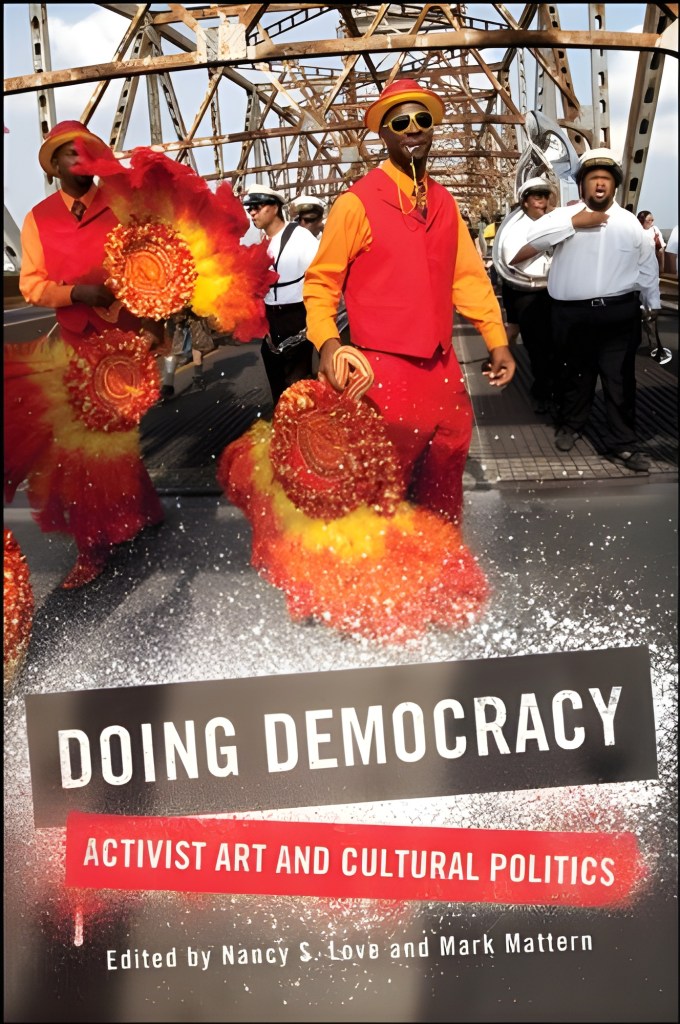
Doing Democracy: Activist Art and Cultural Politics, Edited by Nancy Sue Love and Mark Mattern, Albany, State University of New York Press, 2013, 386 Pages, ISBN: 9781438449111, ₹2423
The established frameworks of studying social movements tend to focus on rational and empirical and objective indices such as class structure, protest strategies and leadership. Nancy S. Love and Mark Mattern’s edited volume, Doing Democracy: Activist Art and Cultural Politics marks a critical intervention in the dominant methodology of understanding social movements and political activism. Moving away from a rational-legal materialist assumption of politics espoused by liberal democratic scholars, the contributors in this volume focus on the affective corporeal experience of politics most acutely perceived through artistic expression. John Locke and subsequent liberal theoreticians such as Mill, privatised the aesthetic realm of the liberal subject as a matter of individual taste (p.7). Consigning the aesthetic to the ‘private’ was an intentional cultural-political project with significant implications on how citizens understand and practice democracy. The assumption that art is apolitical has been challenged by scholars as early as Antonio Gramsci (1971)1. Thus, the liberal depoliticisation of the cultural realm- a possible arena of political struggle – potentially decreases the democratic capacity of citizens to critically evaluate the structures of domination prevailing in society.
Love and Mattern, in this volume, seek to re-politicise art through methodological and conceptual intervention. In reference to the rise of alternative aesthetic modes of public discourse, they ask whether pluralizing the forms of political communication prefigures a more democratic future by enabling citizens to exercise their share of popular sovereignty. The book has been organised into eight sections and fourteen chapters. These chapters apply theories of political science to artistic experiences and analytically link affective experiences to political realities. Artistic experiences serve as critical vantage points. They act as primary source material, autobiographical accounts, reflective secondary analyses or empirical phenomena used to understand the politics of the masses, particularly the marginalised, who have historically been excluded from formal political institutions. Each section engages with a particular mode of aesthetic public discourse – such as visual media (photography, cartoons), poetry and literature, music, theatre, parades – and how they amplify or condense democratic capabilities of citizens. The articles in this volume pursue four broad vectors of analysis.
First, art is seen as a method of making oneself visible, particularly in the context of social marginalisation. Hannah Arendt (1959) argued that in the public realm, where nothing counts that cannot make itself seen and heard, visibility and audibility are of prime importance. Situating himself in the favelas of Brazil, Frank Möller’s chapter on photo-activism connects visibility and political agency to argue that visual representation of the self via citizen-photography, transforms former subjects of the oppressor’s gaze into agents capable of democratic participation. Wairimu Njoya, in his essay, reveals how the ‘blues tradition’ in America allowed black people to communicate their suffering while keeping alive a ‘tragicomic’ hope for a better future. Songs as a form of artistic expression enabled individuals to ‘imagine’ an alternate political utopia in the most bleak of circumstances. Njoya compares this to the Kantian ‘human sublime’ where the physically unfree can ‘pretend to be free’ by exercising their moral agency.
The ‘slave sublime’, in the works of Toni Morrison, finds black people asserting their moral agency (such as Seethe in the novel Beloved) by envisioning alternate self-understanding which subvert racist stereotypes. Notably, Mahatma Gandhi and Martin Luther King Jr. both called for the exercise of internal or moral agency/freedom (swaraj) to combat external constraints. Thus, the contributions in this volume highlight the pre-figurative quality of art and popular culture to imagine democratic possibilities which remain elusive in academic literature if social movements are studied within the narrow constraints of rational ‘real’ politics. Drawing on Iris Marion Young (2000), Mattern and Love argue recognising artistic media as ‘doing democracy’ broadens the base of political participants and envisions a more deliberative and agonistic vision of democracy.
Second, aesthetic modes of discourse have made politics more accessible to the people, and thus strengthened democratic citizenship. Parades in New Orleans are analysed by Peter G. Stillman and Adelaide H. Villmoare as a locus of civic engagement and sites of articulating dissent. Popular culture augments citizenship by fostering a sense of the common good while recognising ‘difference’ with generosity and empathy- not domination and exclusion, as espoused by western rationality. Sanna Inthorn and John Street in their article on first-time voters in the United Kingdom, argue that popular culture aids political engagement by creating collective identities that provide young voters a sense of community in the midst of political alienation and apathy. They draw on and reinforce Nussbaum’s (2010) theoretical corpus by demonstrating how aesthetics amplifies the democratic capacity of citizens by counteracting insecurity over ‘difference’ through the development of empathy needed to practice democracy in culturally diverse societies.
Third, the chapters in this volume explore how aesthetic modes of discourse are democratic, not only in content but also in form. The form of slam poetry2 and verbatim theatre3 blurs the lines between creators and consumers of art. Audience interaction and authentic portrayal of complex issues on stage, enable critical deliberation on socially relevant political realities. They reclaim popular power as ‘agenda setting’ (Bachrach and Baratz, 1962) and prefigure a more participatory and democratic vision of politics. Emily Beausoleil in her article on theatre in apartheid South Africa, argues that the ‘unruliness’ of theatre defined in terms of polyphony and transience protected plays against state censorship and supported mass mobilisation through the coded language of art.
Fourth, the contributors acknowledge the internal power dynamics of artistic forms and warn that aesthetic modes of public discourse may promote reactionary politics and elitism. Love highlights the use of ‘white power music’ to augment the reach and legitimacy of white nationalism. Art has historically been an elite preserve. Despite changing currents, the high art- low art dichotomy continues to burden aesthetic discourse and threatens to sideline marginalised voices. In the context of racist cartoons about Obama, Sushmita Chatterjee in her article on political cartoons, notes that there exists different frames of perceiving visual media. Critical race theorists like Matsuda and Crenshaw argue that the use of racist language in popular media tends to dehumanise vulnerable and marginalised identities. Visceral language serves as a powerful conduit of reinforcing prevailing identity-based stereotypes that can adversely impact the exercise of constitutionally guaranteed rights by individuals belonging to historically oppressed communities. Butler (1997, 163) on the other hand argues violent or prejudiced language reveals existing social chasms and acts as a ‘trigger’ which can outrage, agitate and mobilise citizens to enact change. Thus depending on which frame is dominant, visceral visuals can either contract democracy by causing ‘injury’ or spur ‘insurrection’ through democratic change .
This volume, written in 2013, was a timely intervention in the domain of understanding performative politics. In fact it seems to have foretold the wide body of literature that has emerged in the past decade linking performance and politics.4 Today, analysing the performance of participants at protest sites and the gestures of charismatic political leaders play a crucial role in understanding the politics of resistance and populism. This volume can also be situated in the academic field of studying agonistic ‘radical democracy’, first conceptualised by Ernesto Laclau and Chantal Mouffe. Laclau and Mouffe (1985) view confrontations in democracies favourably as they indicate civic vitality and pluralism. Thus, conflict in the cultural domain can also be interpreted as a sign of democratic vibrancy. It was disappointing however, to observe that while the artistic phenomena analysed in this volume extends to peripheral political events like memorials, it failed to engage with core political aesthetics like protest posters and radical cinema.
Doing Democracy has a powerful scholastic agenda- putting art on the academic map of political science. The volume’s intellectually nuanced engagement with traditionally ‘political’ concepts like E.P Thompson’s ‘moral economy of protest’ or Benedict Anderson’s ‘imagined communities’ is of crucial significance as correlating art with core political theories, establishes aesthetics as a central concern of political science and not an axiomatic preoccupation. The volume presents a convincing argument about why the study of politics and particularly social movements will benefit from the inclusion of aesthetics as a method and category of analysis. Not only does art provide exclusive intellectual insight, but its unique creative ability to envision seemingly impossible democratic utopias, sustains social movements in the realm of political action and enriches political analysis in the realm of academics. By intertwining rational and affective faculties, Doing Democracy tries to erase the false dichotomy between art and realpolitik. Afterall, as noted by Rabindranath Tagore (1931, 139), what is art, but the response of man’s creative soul to the call of ‘the real’.
Endnotes
- Writing between 1926 and 1935, Gramsci argued that the ruling class established political control by shaping dominant cultural institutions of civil society.
- A form of performance poetry that combines performance, writing and audience participation.
- A form of documentary theatre which is based strictly on testimony and interviews of real people.
- See The Oxford Handbook of Politics and Performance Edited by Shirin M. Rai, Milija Gluhovic et al. (OUP: 2021) and The Aesthetics of Global Protest Visual Culture and Communication Edited by Aidan McGarry, Itir Erhart et al. (Amsterdam University Press, 2019).
References
- Arendt, Hannah. 1959, Winter. “Reflections on Little Rock” in Dissent Magazine. www.dissentmagazine.org/article/reflections-on-little-rock.
- Bachrach, Peter, and Morton S. Baratz. 1962. “Two Faces of Power.” The American Political Science Review. 56, no. 4 : 947–52.
- Butler, Judith. 1997. Excitable Speech: A Politics of the Performative. New York: Routledge.
- Gramsci, Antonio. (1971) Selections from the Prison Notebooks. Translated and edited by Quintin Hoare and Geoffrey Nowell-Smith. New York: International.
- Laclau, Ernesto, and Chantal Mouffe. 1985. Hegemony and Socialist Strategy: Towards a Radical Democratic Politics. London: Verso.
- Nussbaum, Martha C. 2010. Not for Profit: Why Democracy Needs the Humanities. Princeton, NJ: Princeton University Press.
- Tagore, Rabindranath. 1931. “The Artist”, The Religion of Man. London: George Allen and Unwin Ltd: 129-142.
- Young, Iris. 2000. Inclusion and Democracy. New York: Oxford University Press.

Suhasini Das Gooptu has recently completed her Masters from the Centre for Political Studies, JNU, New Delhi.
Body on the Barricades: Life, Art and Resistance in Contemporary India

Body on the Barricades: Life, Art and Resistance in Contemporary India by Brahma Prakash, Leftword Books, 2023, 210 pages, 5.5 x 8.5 inches, ISBN 9789392018107, ₹325.00
by Zainab Wahab
Navigating Resistance in the Milieu of Authoritarianism and Bio-politics
Brahma Prakash’s Body on the Barricades presents a riveting analysis of the myriad manifestations of dissent and the barricades that stifle bodies resisting oppression in contemporary India. The book dismantles the ambiguity surrounding resistance by positing its fundamental significance for affirming the humanity and freedom of citizens in a democratic country. In his reflections on the recent instances of large-scale resistance and protests, Prakash identifies the systemic nature of oppression as a culmination of historical injustices legitimized by authorities who not only tolerated but actively encouraged the persistence of social inequalities. To understand the extent of the state’s power and the suppression of dissent, he examines the phenomenon within Indian politics that positions bodies in confrontation with barricades. For Prakash, this situation represents standing at the edge or the margins. When the body encounters the barricade, it is as likely to bring its domineering structure down by pushing against it as it is to suffocate under its unrelenting presence. As a liminal space of vulnerability and transgression, the barricades open avenues of possibilities, where freedom and life become as likely as their cessation.
By situating the body on the barricade, Prakash unravels the biopolitical aspect of the state’s power that regulates the life and death of citizens. Borrowing the slogan ‘I can’t breathe’ from the Black Lives Matter Movement, the book sheds light on how severe curtailment of liberties can deprive people of not only their democratic rights but also the bare minimum necessities for dignified existence. Exploring the plight of migrant labourers during the Covid-19 crisis and the criminalization of protests in the last decade, the eight essays in the book comment on the rising inclination of the Indian state towards authoritarianism and the complicity of the media in legitimising it.
The essays frequently draw instances from the catastrophic consequences of institutional failure and Government mismanagement witnessed during Covid-19 crisis to expose the corrupt and exclusionary forces that thrive under the garb of democratic values. By assessing the close semblance between the social distancing guidelines imposed during pandemic and the pre-existing norms of caste-based separation, Prakash depicts how the pandemic acquired new meanings when it pervaded the social fabric of the nation, giving cogency to the discriminatory notions of contamination and pollution. As a result, the virus resurfaced practices similar to untouchability and ritual purity, leading to the ostracisation of marginalized communities. Additionally, the media acted as a mouthpiece to corrupt leaders and facilitated their sectarian agendas by changing the narratives and making oppressed communities appear virulent and violent.
With a thorough analysis of the form, Prakash identifies monologue as a feature of a hierarchical society that dissuades dialogue. When used by demagogues, the monologue appropriates spaces for meaningful and rational discussions. By extending their control to the agency of words, demagogues allow words to be misconstrued, decontextualized and imposed as erroneous labels on people demanding their rights or opposing state-sanctioned violence. The brilliance of Prakash’s engagement with the tactics of authoritarian regimes lies in how he uncovers the multiple capacities contained within them. While the barricade restricts the motion of bodies, it also makes their movement inevitable since one cannot remain stationary at a barricade. In the same vein, the confrontation of resisting bodies with the state’s instruments of violence creates spaces for both movement and pauses, igniting hope in the possibility of change. In her book Azadi, Arundhati Roy writes “hope lies in texts that can accommodate and keep alive our intricacy, our complexity, and our density against the onslaught of the terrifying, sweeping simplifications of fascism” (Roy 2020, p. 101) Resisting reductive and oversimplified definitions that perpetuate singular and biased narratives, Prakash’s book is such a text, inspiring hope by navigating the myriad possibilities that arise during situations of crisis and despair.
In further chapters, Prakash has closely engaged with the Hindutva ideology and right-wing politics that mobilizes and unites the masses through hate. By drawing light to genocidal jokes and religious fundamentalism in schools, the book delineates the systemic nature of oppression and exclusionary politics. With the pandemic, the intolerance entrenched in the Hindutva ideology rose to the surface as its adherents blamed Muslims and lower caste communities for spreading the virus. Using Emile Durkheim’s distinction of the ‘sacred’ and ‘dangerous contagion’, Prakash portrays how the Brahmanical state perceived the minority communities as carriers of disease and subsequently, a threat to the purity of upper caste citizens (Durkheim 1995). While the pandemic contained the potential of becoming a great equalizer, in the Indian context it became an instrument to segregation and inequality.
The chapter on the plight of migrant workers during the pandemic is incredibly telling about the state’s indifference towards workers in the informal sector. The writer highlights that the Indian government has kept no data on migrant laborers. As a result, their deaths didn’t figure in the official death records. Perceived by the critics as a “man-made disaster with misplaced priorities”, the death of (literally) uncountable migrant labourers during the pandemic as they headed back home indicated their lack of trust in the cities and the authorities for sustaining them during a crisis (Jaffrelot 2021). As they walked back home, covering miles on foot and wobbly carts, their existence and numbers came to be recognized by the inhabitants of cities built from their labour. Their arduous journey back home provoked conversations on the rights of people suspended in movement, perennially traversing the distances between alienating cities and caste-practising villages.
In the foreword to American Protest Literature, John Stauffer defines protest literature as “the uses of language to transform the self and change society” (Trodd 2008, p. xiii). Art becomes inevitable during periods of crisis because as progenitors of ideas, the artists play a crucial role in combating hopelessness and opening new possibilities. Remembering poets like Kabir, Bojja Tharakam and Varavara Rao, Body on the Barricades depicts the indispensable role played by art in paving the path of liberation for the oppressed. The disruptive influence of art challenges the status quo by questioning the accepted norms of society and exposing their inherent violence. Prakash is right in positing that the artist’s conflict with the state isn’t rooted in politics but in principles (p.130). The artists do not care to conform as they do not tether their works to normative conceptions of morality or truth. Rather, they align their work with the principles of freedom, humanity and love. When the state imprisons poets and artists, it curtails the right of an individual to think freely and stifles critique. The antagonism between the state and the artists emerges when the former tries to annihilate the freedom and imagination of the latter, disguising its intolerance by imposing seditious and anti-national labels on the artists. Prakash’s book is a testimony to the perseverance of art. It reminds the reader of what Bertolt Brecht wrote about singing in the dark times. It will be about the dark times.
Focusing on the anti-CAA resistance and farmer’s protests, the book exposes the nuances of protests, their unpredictability and strategic misrepresentation by the media. Regardless of the political consequences, Prakash sees a protest as a victory for democracy. As a proof of the successful exercise of the right to dissent, protests strengthen democracy by giving people space to convey their problems and negotiate their demands with the government. The protest represents a multitude of possibilities that can determine the future of the state and the people. While the suppression of protests through increased surveillance, military action and police brutality is no longer an uncommon phenomenon, it is jarring how violence towards protesters has increasingly been accepted as a peace-keeping measure. The state’s monopoly over violence is repeatedly justified while the passivity of non-violence is expected from the protesters. By perpetuating misconceptions and changing narratives, the media becomes complicit in misrepresenting the objectives of the protest and encouraging suspicion towards dissent. While artists decorate protest sites with thought provoking and enlightening posters, sculptures and graffiti, the media reportage obstinately pursues the narrative of protest sites causing inconvenience to non-participating citizens and disrupting everyday events. In this way, the media invalidates the restorative and reformative objectives of protests by persistently portraying them as a nuisance to society, hence redefining them as acts of selfish interest aimed at depriving others of convenience and privileged spaces of comfort.
Reflecting on the relevance of strikes, Prakash asserts that it was the workers’ strike in the 19th century that enabled the proletariat to claim ownership of their time. However, in the contemporary world, as factories and corporations overtly prohibit strikes and oppose unions, workers’ resistance has become an impossibility. The prohibition of strikes limits the possibility of the workers’ to collectivize and resist exploitation. While Ambedkar saw a strike as “a breach of contract of service”, he proclaimed that to criminalize strike would mean compelling “a man to serve against his will” (Ambedkar 2020, p.87). In the absence of workers’ collectives and the possibility of strikes, the workers’ role becomes susceptible to being reduced to slavery. Prakash reflects that by resisting exploitation through strikes and refusing to work, the workers gain a sense of their collective capacity and the indispensable significance of their labour.
By invoking several philosophical perspectives, Prakash analyzes how people struggle for their rights and resist oppression during politically tumultuous times. As the state tries to further its control over the life and death of citizens, it consistently reduces their existence to what Giorgio Agamben calls ‘bare life’ (Agamben 1998, p. 9-14). By imposing bans on strikes, forbidding mourning and criminalizing protests, the state attempts to disintegrate solidarities and express contempt for any assembly that doesn’t blindly submit to its views. An intriguing blend of poetry, philosophy and the author’s personal experience, Body on the Barricades is an eye-opening read about the significance of resistance and art in the politically tense climate of the present day.
References:
Agamben, Giorgio. (1998). Homo Sacer: Sovereign Power and Bare Life. Stanford University Press.
Ambedkar, B. R. (2020). Dr. Babasaheb Ambedkar, Writings and Speeches. Dr. Ambedkar Foundation. Vol. 2, 87.
Jaffrelot, Christophe. (27 April 2021). ‘India’s Second Wave: A Man-Made Disaster?’ Institut Montaigne
Durkheim, Emile. (1995). The Elementary Forms of the Religious Life. New York: Free.
Prakash, Brahma. (2023). Body on the Barricades. Leftword Books
Roy, Arundhati. (2020). Azadi. Penguin Hamish Hamilton
Trodd, Zoe, et al. (2008). American Protest Literature, The John Harvard Library

Zainab Wahab is pursuing her Master’s in English Literature from Jawaharlal Nehru University. She writes poetry and enjoys baking for family and friends
Social Reproduction Theory: Remapping Class, Recentering Oppression
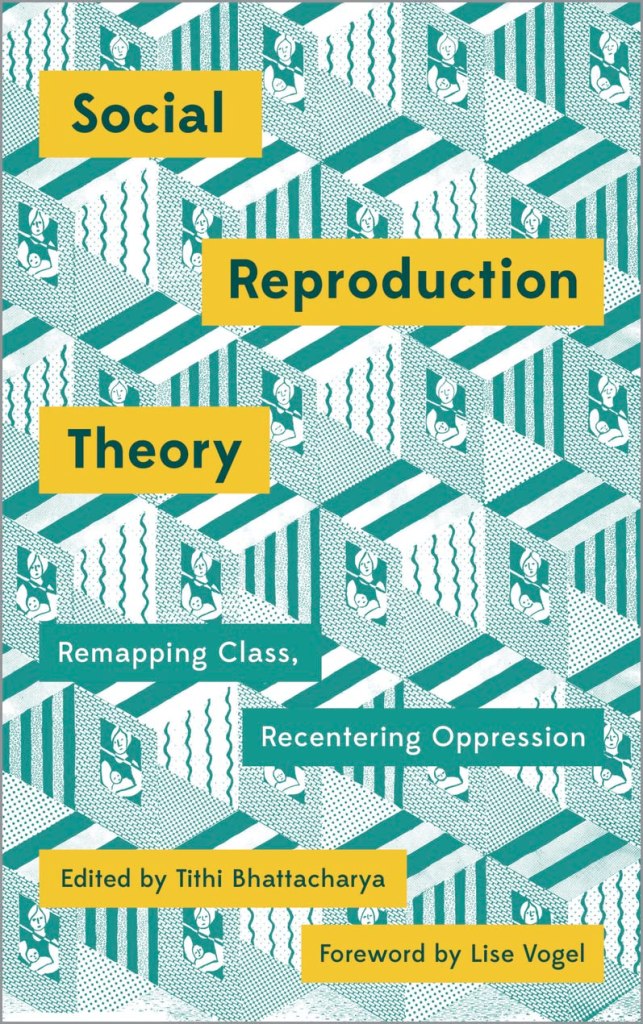
Social Reproduction Theory: Remapping Class, Recentering Oppression, ed. Tithi Bhattacharya, Forward by Lise Vogel, 2017, Pluto Press, 250 Pages, ISBN 9781786801579
Tithi Bhattacharya’s edited volume titled Social Reproduction Theory: Remapping Class, Recentering Oppression is an array of different developments on the idea of ‘social reproduction’ in different realms of conflicts and struggles of the subjugated ones against the exploitative expropriation by the dominating sect. Bhattacharya draws upon the trajectories of SRT (Social Reproduction Theory) theorization and poses it as a methodological framework to understand the process of exploitation and expropriation of bodies outside the materialistic sites of production. Through an honest attempt, it recontextualizes Marxist political economy based on class relations and maps its intersection to other social identities such as gender and race. By doing so, it rearranges the debate around the centrism of oppression from economic class to an idea of class as a site of oppression. The volume carries forward what Marx left under-theorized, i.e.; reproduction of capitalism as a systematic whole where social reproduction and material production are conjoined, yet separate spheres with social relations regulating them.
The different essays point to the negligence of capitalism towards the sphere of social reproduction and the unseeing totality of the use value of labour-power. SRT emphasises on labour and its labour-power in the larger portrait of the ‘social whole’ through ‘capitalist social relations’. Fraser’s essay “Crisis of Care? On the Social-Reproductive Contradictions of Contemporary Capitalism” questions the capitalist devalorization of extra-market resources like household labour-power, governance assistance, and nature itself, taking these as given. This historical alienation of ‘social reproduction’ from the sphere of value production is further detailed in Mohandesi & Teitelman’s essay “Without Reserves”. It argues against the gradual devaluation and externalization of social reproduction as women’s social responsibility, then under financialized capitalism renegotiated as an inferior work. The essays establish how capitalism is far from allowing reconstruction of gender roles, rather, allows class privilege to buy what is otherwise the conventional responsibility of women belonging to the upper-class. The male bread-winner model has led to the procreation of a new form of patriarchy – Capitalist Patriarchy – symbolizing the symbiotic coexistence of the two oppressive systems. Capitalism, thus, holds an ulterior motive to exteriorize social reproduction from the material world as a separate sphere of love and affection.
Hopkins’ essay “Mostly Work, Little Play: Social Reproduction, Migration, and Paid Domestic Work in Montreal” on the same line criticizes the devalorization of domestic work as something outside ‘productive work’ and hence, unpaid. She draws upon Tronti’s (1962) idea of ‘Social Factory’ that develops on the social relations and their reproduction at home. The historical devaluation of domestic work has created a racist and sexist other than classist narrative, where care work is commodified and marketed to absorb proletariat women of colour mostly. The immigrants from Global South, especially women, are encouraged in Global North to absorb them as low-paid domestic workers.
In a capitalist society, every sphere of life is commodified for market purposes. Fraser identifies that under financialized capitalism a duality in social reproduction is produced – care as a commodity who can afford it, and as a private matter for those who can’t, hence, externalized on the family and the community. What goes unseen is that under this partial commodification of care, the exploitation of labour continues with extended working hours for both who can and cannot afford paid care work. In Oran’s essay “Pensions and Social Reproduction”, the capitalist move towards informalization reveals to threaten access to pension, which is a worker’s right and means to generational reproduction of the labour force for capitalism. Bhattacharya also highlights how marketization of every sphere makes the proletariats more dependent on capital to sustain, alienates them from their resources – both physical and social. Ferguson’s essay “Children, Childhood and Capitalism: A Social Reproduction Perspective”, exposes the indirect subjugation of childhood to capitalist relations of value production. She further notes how the engineering of childhood through capitalist interventions alienates and transforms their non-materialistic playful state to a more materialistic orientation needed in a future labourer. To sustain and expand, financialized capitalism needs the state to roll back, where capitalism consumes everything under its market commodification.
SRT framework in the essays reveals the superficiality of the division between the production and reproduction realms into the public and private spheres, and brings up their connections in different aspects. Bhattacharya’s essay “How Not to Skip Class: Social Reproduction of Labor and the Global Working Class”, draws upon Vogel, broadens the sphere of social reproduction out of domesticity to include education and health, leisure facilities, pension and other social benefits that reproduce labour-power on a regular basis. Similarly, David McNally’s essay “Intersections and Dialectics: Critical Reconstructions in Social Reproduction Theory” connects the spheres of value production and social reproduction through the purpose of the former to be the latter’s means. In these dynamics, the importance of the multiplicity of oppression needs focus in intersectionality, which creates differences in working-class experiences’ narratives. Hence, one can derive that capital production and surplus accumulation is directed to an intended creation of inequalities in social reproduction of the working and capitalist classes respectively.
Sears’ “Body Politics: The Social Reproduction of Sexualities” theorizes body politics as a medium for capitalism to reproduce its social order. The reserve army of labour enables capitalism to sustain the hegemonic power relation between the employer and the employees, threatening the latter with competition where they end up as wage-takers. To maintain its generational procreation of the labour force, capitalism upholds the heterosexual nuclear family model where women are ‘unpaid caretaker’ and the men are ‘paid workers’. The ideas of ‘free labour’ and ‘freedom of sexuality’ in the capitalist system are paradoxical, as what seems ‘free’ on surface is bound with the compulsion to protect wealth and inheritance along with purity. Apparently, this is biologically possible through heterosexual marriage.
Ultimately, Arruzza’s end note concludes for the need for unionization of all forms of struggles against different social oppressions under organized wings of resistance. Arruzza’s “From Social Reproduction to Feminism to the Women’s Strike” suggests not to see different social movements such as Feminist Movement, ‘#Black Lives Matter’, Immigrants’ movements, movements against ‘Muslim Ban’ – as something that are alternatives to class struggle, rather, they need an integration under the larger comprehension of class resistance to the multiplicity of oppression under capitalism.
The volume stresses upon the coexistence of value production and social reproduction as united spaces in terms of operationalization and theorization, although, in absolute sense they can be spatially divided. But the readings push the reader to conclude that these two spheres are not even separated in terms of their physical absolute spaces. At a workplace, socialization happens that forms the social relations between colleagues, employers and employees. These relations are determinants of the workplace experiences that differ across these relations. The value production site is, as one can perceive as, a space embedded within the larger space of social reproduction, hence alienating the former from the latter only narrows the economic understanding of superficial market relations and fails Marx’s attempt to deepen the ‘economic’ narratives into political and social structures. Hence, Bhattacharya was right to see production relations as reflection of social relations historically specific in context. But not just time, these social relations are space specific as well. This volume efficiently captures diverse aspects but they reflect less the complexities of the spatial variations such. The forms of oppression and the resultant process of capitalist expropriation of extra-market resources differ in the Global South than in the North. Larger informal background creates a different story for the wage workers in the North and in the South (see Mies’ 1981). The labour narratives of piece workers in an Asian village, whose “unpaid” domestic and “paid” piece work go simultaneously, would definitely differ from an American factory worker.
Amidst the wave of postmodernism where de-differentiation and de-centralization is celebrated with every unique identity as a possibility for new forms of resistance, this volume attempts to revitalize and redefine “class” and class struggle as inclusive of all forms of oppression. SRT is reclaiming its relevance in addressing proletariat class struggle against capitalism by identifying the cunning approach the vicious system has taken to narrow the class identity to an economic issue, thus, playing the politics of ‘divide and rule’. But doubts remain in the understanding of which form of oppression predates and dominates the others. Will solidarity through SRT be able to overcome the male ego that historically has already failed the Medieval Anti-feudal struggle (Federici, 2004); will the racist antagonism subside which gave the whites, irrespective of class and gender, a sense of superiority over people of colours – these remain as questions.
The efforts in mapping social reproduction into different frameworks such as the site of capitalist reproduction, locus of class formation, site of oppression and resistance, a space of inequality creation and consolidation of all forms of struggle, other than reproducing labour-power, is indeed a rational and subjective approach that reaches the readers well. The reproduction of social relations across space and time provides the grounding for different experiences in the labour market which enables capitalism with a competitive environment where the capitalists can play the price-maker role. Intersectionalities in understanding oppression, thus, strengthen the SRT framework.
References
- Bhattacharya, T. (2017). Social reproduction theory: Remapping class, recentering oppression. Pluto Press
- Federici, S. (2004). Caliban and the Witch. Chap-2. Autonomedia.
- Mies, M. (1981). Dynamics of sexual division of labour and capital accumulation: Women lace workers of Narsapur. Economic and Political Weekly, 487-500.
- Tronti, M. (1962). Factory and society.
- Walby, S. (1999). Theorizing Patriarchy. Modernity: Critical Concepts, 2, 153-174.

Aditi Bardhan is a PhD Scholar at CSRD in JNU. She is currently working on gender and labour issues in spatial contexts. Feminist epistemology has been an inspiration for her to re-read the dominant theories under the light of the power dynamics in knowledge creation. This book by Tithi Bhattacharya was one such engagement that helped her me redevelop the understanding of capitalism on a larger social portrait and its rootedness in the social constructs such that it appropriates the existing hegemonic hierarchies to reproduce, appropriate, and sustain itself.
Planning Democracy: Modern India’s Quest for Development

Planning Democracy: Modern India’s Quest for Development, by Nikhil Menon, 2022, Cambridge University Press, 285 Pages, ISBN: 9781316517338, ₹596
by Dr. Vishal Singh Bhadauriya
In his book titled Planning Democracy, Nikhil Menon extensively examines the complex trajectory of India’s planning institutions, charting their development from the inception of the National Planning Commission (NPC) through its subsequent dissolution and the emergence of the NITI Aayog. It provides a comprehensive socio-political history of India after independence, with a particular emphasis on the country’s ambitious pursuit of integrating Soviet-style economic planning with Western democratic ideals.
The main aim of Menon’s work is to document the ascent and decline of the NPC, with a particular focus on its importance in shaping India’s trajectory after the colonial period. It, thus, provides a comprehensive account of the development of India’s statistical infrastructure, highlighting the significant contributions made by influential figures such as Professor P.C. Mahalanobis. Additionally, the author addresses the difficulties encountered in reconciling technocratic principles with democratic governance. The narrative is enhanced by the inclusion of descriptions detailing the endeavors undertaken by the government to foster the practice of planning across different platforms, encompassing domains such as education, art, and literature.
Planning Democracy begins with India’s current Prime Minister, Narendra Modi, addressing the nation from Red Fort for the first time following the 2014 election. Modi’s announcement marked the end of an era which is the book’s central theme – the era of the Planning Commission. It tracks the journey of the planning body from the establishment and later bulldozing of the National Planning Commission (NPC), followed by the establishment of a new body for planning India’s democratic structure, the NITI Aayog in 2015.
The planning project in post-colonial India was a daring endeavour, blending Soviet-style economic planning with Western democratic principles. This bold experiment epitomized a unique collaboration between two vastly different ideological systems.
Menon describes India’s post-colonial conditions and plans for its new leaders post-independence. As India continued to struggle and revive, different predictions and opinions emerged across the rest of the world. The scope of the Planning Commission is briefly discussed to show how the NPC came into action in March 1950. Even with its rocky start, the body wielded enormous power despite possessing an inherent conflict between technocracy and democracy which the Nehruvian state made concerted efforts to portray these two concepts as harmoniously interconnected. The intricate choreography of political ideologies aimed to depict ostensibly conflicting concepts as inherently harmonious.
Chapter One discusses the establishment of India’s statistical infrastructure linked to planning, the early career of Professor P.C. Mahalanobis, who brought the idea of planned economic governance to India, and the establishment of the Indian Statistical Institute (ISI) in Calcutta. It also mentions the contribution of other members of the Indian National Congress in developing the NPC and the establishment of the Central Statistical Organisation (CSO). Moreover, to carry out large-scale surveys, the National Sample Survey (NSS) was also created in 1950. The impact of planning on statistics led to Mahalanobis, a statistician, shaping the Five-Year Plan, a centralised and integrated economic plan, first launched by Joseph Stalin in the USSR. Later, China and India approved the same idea for economic development in their respective countries. Chapter Two reveals a mutually influential connection between planning and statistics, resulting in a narrative that resembles the trajectory of a boomerang, specifically within the framework of India’s Second Five-Year Plan. Although the plan’s lack of success was attributed to the negligence of sectors such as agriculture and irrigation, the significance of statistics in the formulation of policies remained prominent.
The enactment of the Indian Statistical Institute Act, resulting from Jawaharlal Nehru’s effective passage of the Indian Statistical Institute Bill, served to reinforce and strengthen the institution’s position and function. The aforementioned legislation conferred autonomous status upon the ISI, thereby establishing it as a nationally significant institution with the authority to confer academic degrees.
Contrary to common intuition, the failure of the Second Five-Year Plan should have emphasised the necessity for enhanced statistical methodologies, rather than diminishing their significance. The shortcomings in the implementation process may be ascribed to a lack of proficiency in effectively incorporating statistical insights, rather than the inherent insufficiency of statistics.
Chapter three notes India’s campaign to acquire technology and computers mainly for storing data. When enough statistical data had been collected, there was a need to store it safely. This wasn’t possible, unless India was fulfilled in terms of technology. It unveils India’s campaign to acquire its first computer. Unlike other parts of the world, computers were not sought for military purposes in India. Mahalanobis was just not interested in buying computers, but was obsessed with them. Yet, despite pursuing this for over three years, he was left empty-handed.
Menon briefs readers on the eventual arrival of the first computer in India in 1956 and describes its features. Even though the dream of a computer was fulfilled, it was not going to meet the needs of the NSS. Contrary to the knowledge of the Indian government, Mahalanobis, the proponent of computer introduction in India, was paradoxically hindering the advancement of this initiative. The perception of his sympathetic stance towards the Soviet Union during the Cold War played a substantial role in hindering India’s efforts to obtain a digital computer from the United States during the 1950s. After an elaborate tussle involving Mahalanobis, Homi Bhabha, the ISI and the Tata Institute of Fundamental Research (TIFR), they finally joined forces. In the early 1960s, Esso Standard Eastern of Bombay installed the country’s first commercial computer.
The two subsequent chapters examine how the state sought to inform citizens about plans to build enthusiasm, participation and a ‘plan consciousness’. The NPC continued to receive sarcastic notices because of their enthusiasm for plans: they even had plans to promote the plans. Various publicity attempts were made to popularise the plans and the government also used education to promote them. They aimed to carve plans into young minds so they could contribute as adults. When formal advertisements, stunts and requests to join in the Five-Year Plan were ineffective, the government decided to reach citizens through art and literature. Journals and novels were published, but most of the population was illiterate, hence, the government hit theatres, music and cinemas. Documentaries, movies and hit songs were made based on promotional tactics. Despite these efforts, the result was not favourable.
Chapter four acts like Phase Two of the previous chapter, exploring how the government decided to involve more bodies in their plans. And it also delves into the examination of the involvement of state-supported voluntary organizations in the facilitation of the Five-Year Plans and the provision of associated services, in light of the absence of organic public engagement. This analysis explores the inherent contradiction that arises when a state encourages voluntary support for its policies.
After introducing the plans in high schools, the government targeted universities because they wanted the country’s youth on their side. They were tasked with bringing volunteers from villages as shramdatas (donors of labour). This body came to be known as Bharat Sevak Samaj. But there were conflicts over the word ‘Samaj’. The opposition saw this move as a weapon to keep the party cadre mobilised through religion.
The government extensively publicized their plans, targeting institutions from schools to universities and even enlisting sadhus for endorsement. While initially effective due to the sadhus’ spiritual influence, India’s secular nature inevitably sparked controversy. This highlights the complex interplay between technocratic and democratic aspects in planning.
While Menon’s research is commendable, the book’s writing style can be challenging for some readers. The lack of footnotes disrupts the reading flow, making it difficult to track references. Moreover, the book could have benefited from a more in-depth discussion on the Planning Commission’s role after the 1990s economic liberalization. The shift to neo-liberal policies marked a significant change in India’s economic regime, which inevitably impacted the function and status of the Planning Commission. The book could have explored this transition in greater detail, shedding light on the factors that led to the NPC’s demise.
Furthermore, while the NITI Aayog’s establishment is discussed, a deeper analysis of its performance, objectives, and current status would have added value. Has the NITI Aayog been successful in achieving its goals? How does it compare to the NPC, especially in the context of the current political landscape?
Planning Democracy is a significant contribution to the study of India’s socio-political history. Menon’s detailed account of the nation’s planning bodies provides valuable insights into their evolution and impact. However, a more critical engagement with the post-1990s era and the NITI Aayog’s current status would have enriched the narrative.
The NDA-led BJP Government finally scrapped the NPC entirely in 2014 to replace it with a new public policy think tank, the NITI Aayog. Restoring the previous planning system was nonetheless part of the election manifesto for Rahul Gandhi in the 2019 general election and Mamta Banerjee in the West Bengal state election, with Indian National Congress leadership considering the NITI Aayog ‘a noisy and incompetent intermeddler. [1]
Menon is thorough with his research and details. He tracks whole past events, making this book appropriate for study and research, especially for those interested in the evolution of Indian socio-political history after independence. the book is a must-read for those keen on understanding the intricacies of India’s planning journey and its implications for the nation’s democratic structure.
References
[1] We will deliver. Congress Manifesto 2019. (2019). Retrieved January 15, 2023, from https://manifesto.inc.in/ p.38

Vishal Singh Bhadauriya is a Doctorate from the distinguished Department of History at Banaras Hindu University. His scholarly pursuits primarily revolve around China’s intricate relationships with its East Asian neighbors and its multifaceted political and economic past
Hindi Nationalism (Tracts For The Time)

Hindi Nationalism (Tracts For The Time) by Alok Rai, New Delhi, Orient Longman, 2001, Pg. 152, 14.2 x 0.8 x 21.5 cm, ISBN 8125019790, ₹341.00
The linguistic divide in India had been instrumental in stipulating a breeding ground for Communalism and Hindi Nationalism since the 1800s. Gyanendra Pandey (2006) argues that by the early nineteenth century the sense of religious community was far more widespread than ever before and its implications could be seen in every sphere of the economic, social and political life of the country. Alok Rai, in his work Hindi Nationalism is investigating the manifestation of this communal sense in the language conflict. It is not merely linguistic but a political intervention in the context of the battle between Hindi and Urdu for qualifying to be the national official language of the country. It attempts to highlight the debates between the Hindi and Urdu protagonists alongside the role of the colonial state with respect to the language politics in India. This process inadvertently fueled what Alok Rai calls ‘Hindi Nationalism’, especially in North India. The author emphasizes that his aim, through this work, is to save Hindi and in this end Hindi must emancipate itself, and protect itself from being reduced to a regional language, desperate to establish national dominance. For Rai, Hindi is the language of everyday life that had evolved in North India by the nineteenth century, which could be called Hindi, Urdu or Hindustani. This Hindi was neither Sanskritised nor “dePersianised” (Bhattacharya 2001: vii).
It is merely a truism that any phenomena which occur in post-colonial societies have to be traced back to colonial intervention. The colonial explanation, each time interestingly locates the sources of the conflict outside of the colonial context but acquits the native perpetrators inside of it. In this case, however, the conflict was deeply rooted in the stagnant colonial economy and the fretfulness over religious identity. It stemmed from a constant anxiety among the Hindus and the Muslims to save their identity, symbols and resources. Nevertheless, the colonial explanation remains insufficient in gauging the magnitude of the conflict, especially its progression into the communal divide. Amidst the dispute, Hindi came to be associated as the language of the populist, conservative and reactionary population, English with that of secularism and scientific temper but with a narrow democratic base and Urdu with just the culture of Muslim elite and the “rigid Maulvis” (Bhattacharya, 2001, p. vi).
The book is divided into seven chapters; the first two are dedicated to the confusion surrounding the two languages. The fundamental issue with the history of modern Hindi is the fact that it has evolved through the Hindu-Urdu struggle of the nineteenth century. The language, in the nineteenth century essentially involved vocabulary which constituted of both- ‘Hindi’ and ‘Urdu’ words. Rahul Sankrityayan argues, “Hindi incorporates all the languages which emerged after the eighth century AD in “suba Hindustan” (Rai, 2001, p. 13). GA Grierson, in his work Linguistic Survey of India writes that “it is commonly said and believed that throughout the Gangetic valley between Bengal and Punjab there is only one language- Hindi, with its numerous dialects” (Rai, 2001, p.14). Moreover, Sir Syed traveling across India in 1869, would argue that from Allahabad to Bombay, in villages and offices everywhere, one can converse in Urdu. The major point here is that the language, which is identified as Urdu by Sir Syed, is a lineal descendant of Hindi and its dialects, as understood both by GA Gierson and Rahul Sankrityayen. There was a simultaneous understanding that a middle common language (a mix of Hindi and Urdu) existed, but naming this language as Hindi or Urdu, or even Hindustani, was dangerous. It is precisely this naming that led to the insistence on the purist forms of the two languages, the Persianised Urdu and the Sanskritised Hindi.
In the next two chapters, the author traces the genesis of this conflict and the various episodes, which not only intensified but also widened the curves of the crisis. The conflict began at Fort Williams College in the 1800s. The college was meant to train the British officers in ‘Hindustani’ before setting foot in the uncharted linguistic area of North India. The college bestowed institutional recognition to the idea of linguistic duality- that Hindustani could be done in two ways, with mixing available languages and dialects. The second form of Hindustani was the result of removing the Arabic Persian words to make it more suitable to Hindus. An important role in the history of linguistic division was played by the missionaries, who landed in Calcutta initially but soon proliferated to the North, in Agra and Allahabad. There was not much of a conspiracy in the endeavors of the missionary with respect to language. It was only procedural that the publishing programme of the missionaries, which they used for proliferating Christian preachings, had typical imperatives. Therefore, the linguistic diversity in North India was to be considered, and this diversity favored Hindi. There was a requirement for a certain language with a standardised grammar, orthography etc. to publish the material. This standardisation necessitated them to use Hindi in a comprehensible and standardised manner. Historians of Hindi grammar trace the first attempts to codify Hindi and other native languages to this time. Apart from this inevitable background, which amplified the conflict, there were other reasons that intensified it.
A major reason of the conflict between proponents of the two languages was the fact that Urdu was made compulsory for any official post with a salary higher than Rs 10/per month, and the issue of unemployment among the educated class was a recurrent theme in the writings of Bhartendu Harishchandra and his contemporaries. The rebellion of 1857, carefully belittled in the “colonial historiography as the sepoy mutiny” (Rai, 2001, p.33) was another bone of contention between the two communities. The uprising had brought the Muslim feudal nobility under suspicion, and despite sizable Muslims holding official positions, there was a fear among the Muslims that they were being discriminated against. At the same time, Raja Shiva Prasad wrote to the government in favor of making Hindi the official language. He wrote that “people would be happy to accept the domination of the fair-complexioned than the “unreliable mohammanadans” (Rai, 2001, p.36). The Hindi protagonists feared losing jobs in the administration and judiciary with the lack of knowledge of Urdu. Therefore, they put forth the strongest argument through the likes of Malviya, which highlighted the contradictory nature of British policy. He argued that the British allowed and aided education in the Hindi/Nagari at the school level but did not provide them employment avenues in the administration. This argument, among many, proved to be the final nail in the coffin from the Hindi-wallahas. After this move, with the sympathies of Sir Anthony MacDonnell, on 18th April 1900, an order was initiated, allowing permissive but not exclusive use of Dev Nagari characters in the courts of Northwestern province. This did not change the everyday official functioning much. The conflict continued to proliferate, and Urdu remained the dominant language of colonial administrative functioning. The pretext of this fear among the Hindus was rather misplaced since it was not by deliberate policy design that the colonial administration excluded any community from the employment opportunities.
Therefore, rather than merely reading the conflict as a matter of supremacy of the pure form of Hindi or Urdu, this conflict is most aptly read as the manifestation of the economic anxieties among various communities. Rai appositely puts that
“it is important to recognise the exigencies of the socio-economic situations which force impoverished societies, then and now, always and everywhere, to practise and devise strategies for practising, innovative and brutal forms of triage. If an adequate social product is to be shared out, someone must lose and these losers sometimes resigned but resentful, sometimes combative but resentful, enter the historical process in the shape of hungry and contentious groups and individuals” (Rai, 2001, p.58).
The context in this case must not be forgotten- the sluggish and stagnant colonial economy.
The last two chapters are dedicated to outlining the simultaneity of the inner conflict within the Hindi and modern Hindi, Urdu and the modern Urdu. The Modern Hindi and Urdu were symbolic of the pioneers of a new age of modernity, specific to the context of the 1857 revolt. The insistence upon this modernity must be read in the repression of the 1857 revolt. The suppression of the revolt necessitated that some justification be provided for losing the battle. Thus the old India, which the British intended to destroy, has to be condemned and reviled as no better. It had put immense pressure on the Indians to continue the destruction of symbols that represented this old India. This complex process played out differently among the Urdu and Hindi ideologues but did lead to a firmness of difference between- Arabic-Persianed Urdu and modern Urdu, Sanskritised Hindi and modern Hindi, and, of course, the binary of Hindi and Urdu.
Conclusively, the present book highlights the intricacies of the complex and unending relationship of modern Hindi and the Hindu community. The persisting antagonism between Khari Boli and Braj Bhasha is instrumental in making the relationship between Hindi and the Hindu community rigid. The portrayal of Khari Boli was glossed in masculine, aggressive, and erect shades, whereas Braj was subsided as “the language of effete, passive and unmanly and feminine” (Rai, 2001, p.98). This artificially constructed femininity of the Braj language successfully mobilized the men of the Brahmins, Kayastha and the Kashmiri communities in favour of Hindi and Khari Boli (Rai, 2001, p. 100). This is perhaps where the genesis of Hindi nationalism and its rigid relationship with Hindutva could be traced. Vasudha Dalmia, however, cautions against reading Rai’s work as a simple story of a rigid relationship between Hindi and Hindutva and argues that the book offers valuable insights into the making of Hindutva but cannot be entirely confused with it (Dalmia 2003). It is the engagement with the context and multiple factors with a simultaneity which makes Rai’s work different from the work of Francesca Orsini’s The Making of the Hindi Public Sphere 1920-1940 (2002) and William Gould’s Hindu Nationalism and the Language of Politics in Late Colonial India (2004). The two works are alsoinstrumental in understanding the trajectory and politics associated with language and its implications through various lenses.Gouldtraces the complexities inside the congress amidst the language dispute unfolding in northern India and its approach towards the language politics where the genesis of ‘Hindu nationalism’ could be located. Orsini (2002) probes the relationship between the Hindi literary and political sphere through Hindi’s literary history, participation of women in the Hindi public sphere and the history of the Hindi political sphere.
The limitation of the book lies in a restricted discussion of the role of the British colonial administration with respect to the linguistic divide and the rise of Hindi nationalism. There is a possibility that the role itself was limited to providing the initial impetus of the conflict, and the later developments were more rooted in the rising religious consciousness of the communities. Nevertheless, a more intense discussion on the same was required. Apart from this, the brilliant work by Alok Rai must be read as a historiography of the economic, political, cultural and linguistic discourse of colonial India. The contest over material possession, the politics over supremacy of identity through language, the intricacies of the language (Hindi and Urdu) formation and transformations over time, and the socio-economic nature of colonial rule have shaped the backdrop and contours of this book. These are the complex historical-contextual factors through which the current narratives of communalism, religious fundamentalism, and identity politics must also be read to capture the not-so-visible but absolutely central understanding of a phenomenon.
References
- Bhattacharya, N (2001). Editor’s Preface, Rai A. Hindi Nationalism (Tracts for the Times) (i-ix). Orient Blackswan.
- Dalmia, V. 2003. “The locations of Hindi”. Economic and Political Weekly. Vol 38 (14) pp. 1377-1384
- Gould, W. 2004. Hindu nationalism and the language of politics in late colonial India (Vol. 11). Cambridge University Press.
- Orsini, F. 2002. The Hindi public sphere 1920–1940: Language and literature in the age of nationalism. Oxford University Press.
- Pandey, G. 2006. The construction of communalism in colonial North India. Oxford University Press.
- Rai, A. (2001). Hindi Nationalism (Tracts for the Times) (No. 13). Orient Blackswan.

Chetna Trivedi is a PhD Candidate at the Centre for Political Studies, Jawaharlal Nehru University, New Delhi
She can be reached at trivedichetna93@gmail.com
Shamans, Mystics and Doctors: A Psychological Inquiry into India and Its Healing Traditions

Shamans, Mystics and Doctors: A Psychological Inquiry into India and Its Healing Traditionsby Sudhir Kakar, New York, Alfred A. Knopf, , 2013, Pg 310
Introduction
To curious onlookers of Kosala, the renowned saint Kalakvrikshiy claimed proudly
“My crow knows all, the past, the present and the future! All that is apparent as well as what is kept hidden! Even if the king of the land were to ask him, he could reveal the name of all the corrupt ministers in his court through this lustrous beak of his!” — Kalakvrikshiy, Folklore
And so it happened, Kshemdarshi, the young king of the land of Kosala, where the saint was divining for a crowd of curious onlookers every day with his crow, heard of his claims and promptly summoned him to court. When asked to prove the validity of his claims, the saint asked for a day of respite for himself and the exhausted bird. The king arranged suitable resting quarters for him and asked him to keep his bird ready with the identities of the corrupt ministers the next day. Quite inevitably, the crow was murdered at night. Next morning, with the pretext of initiating the conversation granted to him by the departed bird, the saint instructed the king in his administrative and punitive duties with reference to Rajadharma.
Despite being instrumental to and even being the focal point for initiating dialogue on the intended theme, the crow could not escape being sacrificed for the advance of the plot, it may seem. This was my first impression of the fate of the vast anthropological research conducted by Sudhir Kakar for his work Shamans, Mystics and Doctors with reference to the multitude of traditions operating in the Indian context aimed at providing some kind of restoration of what may be deemed as ‘mental health’. Kakar juggles between necessary space and expression to cultural relativity and locating it in a wider international space. This space is largely defined by a West-based and Eurocentric psychological universalism. What strikes one the most is the internal duality of this paradigm, chiefly characterised by interactions between Freudians and Jungians. In attempting to engage with this universalism through the Indian lens, Kakar finds his crow of cultural relativity incapacitated, if not dead, by the end of his ordeal.
This paper is a review of the methodologies employed by Kakar in his anthropological exploration into the Indian cultural psyche through the lens of therapeutic practices pertaining to mental health pervading the Indian socio-cultural and biomedical landscape. It should be clarified here that as the text originally does not contain any explicitly organised or clear research methodology, the review is based on my reading of the text and the coherence I have constructed of its peculiar methods of delving into its objectives.
Starting with an introduction to Kakar’s position and what he felt or determined he could and could not achieve through the space he inhabits, we would move on to an outline of the methodical framework he uses to interact with the subject persons, positions and places of his research. Consequently, we would also attempt to acquire an understanding of the key concepts implicit in his readings of the Indian traditions and how they fit into or are led astray within and without the wider framework of his enquiries.
Ambivalence and Marginality of the Psychoanalyst
Kakar is a trained psychoanalyst. In the introduction to the text itself, Kakar acknowledges that the Western psychoanalytic paradigm (psychoanalysis as both a method of therapy and theory of human nature) could not take roots into the Indian soil. The primary reason he gives is the stark contrast between the two knowledge traditions with regard to the nature of self and reality and the concept of person. Further, Kakar notices a certain kind of ambivalence and marginality, which is produced as a result of his position as an Indian psychoanalyst. This places him such that despite his familiarity with the traditions he explores, owing to his Indianness, he also finds them equally or perhaps more strange at some points.
Kakar’s identity as a psychoanalyst adds to the charm of his research since he occasionally engages with the subjects of his research as an alternative healer and as a detached observer. He often presents his own psychopathological and diagnostic categories in a reflexive methodological exercise, invoking continuous reflection and critical analysis of his methods. The explanations he provides are derivatives of the understanding and knowledge of the healer rendered coherent through the usage of the language of Western psychoanalytic knowledge. In such an understanding, the hegemony of what Kakar deems merely ‘psychological universalism’ often supersedes and negates the significance and signification of the traditional understanding.
While Kakar’s charming imagery is indeed commendable if Shamans, Mystics and Doctors were to be read for its literary seduction, as anthropological research, it appears to be upholding some kind of exoticisation of the indigenous- a folly often attributed to those trained in Western anthropological research methodologies.
While the Indian healing systems appear quite fluid and meshed, often visibly into and with each other, they seem completely disconnected and distinct from their psychoanalytic parallel. References to European traditions of community or faith healing do little rather than nothing to address the situation. Kakar’s comparative analysis leads to understandings which reflect hegemonic explanations instead of equivalent exchanges of knowledge. Accordingly, one can’t help but wonder if this is a problem of othering and indigenisation and not merely of comparison.
Participant Observation: Mad, Healers and the Sacred
Along with interacting with the healers and their diverse clientele, Kakar also actively interacts with the community and, to some extent, with what may be deemed sacred.
While he extensively explores the indigenous conceptualisations of sacred and parenthood and compares these to their European parallels, he provides no more than singularly descriptive accounts of his own experiences. This undermines his perception and understanding of the sacred since the latter’s exploration necessitates some amount of faith and belief and not merely participation. Kakar is not overtly positivistic, but he does appear to be trying to maintain an empirically evident and logically coherent distance from what may be deemed ‘sacred’.
Self, Body and Person: The Indians’ place among the Freudians and Jungians
Kakar has primarily used participant observation and archival research methods for Shamas, Mystics and Doctors. He travelled across Northern India during his research, and various chapters are based on research conducted at different sites. Research pertaining to Shamanic methods of healing was done at Patteshah Dargah in Delhi, Mehendipur Balaji in Rajasthan, the Oraon tribe in Chhotanagpur and among the Lamas of McLeodganj. Further, explanations of mystical healing methods pertaining to spiritual healers who make various claims related to the restoration of soul health were sought from engagements with Radha Soami Satsang Beas in Haryana, Tantric traditions and Mataji cult. Finally, with a renewed focus on biomedical traditions related to mental health, Kakar promptly delved into Ayurveda through extensive and intensive archival research along with fieldwork and undertook participant observation at a Manasik Chikitsa Kendra in Jharsetli, Haryana. Along with interacting with the healers themselves, Kakar also actively interacts with the patients, the community and, to some extent, with the sacred.
Kakar presents vividly descriptive accounts of Indian healing knowledge-practices followed by their hegemonic Western Freudian parallels. Instead of universalising the meaning and implication of the particular knowledge practice, this method posits the indigenous as an explicandum and, consequently, the Freudian parallel as a comprehensible explicans- something Kakar insists on wanting to avoid explicitly. Epistemological power hierarchies, which can often be traced to cultural differences and have been a major focus of Kakar’s other works on the linkages between psyche and culture, have been largely overlooked in this text.
Conclusion
Going back to the little tale of the clever sage, cultural relativism in Shamans, Mystics and Doctors is analogous to the unfortunate crow. Everything ranging from the appearance to the performance to the claims related to its supernatural abilities and, finally even its death was an enactment of the knowledge practice of Rajadharma. However, the crow’s saga was deployed as no more than an instance, an allegory to create the grounds for a more structured and coherent knowledge of Rajadharma. To this end, Kakar’s explorations into the Indian healing networks appear to be merely an enquiry to broaden the scope of his understanding of Western psychoanalysis, especially his forte and magnum opus- an enquiry into what he deems the cultural psyche. While Kakar’s crow of cultural relativism is what the story of Shamans, Mystics and Doctors is all about, and it is very flamboyant, charming and crow-like indeed, it is plastic at best, held in its form by screws and bolts of Freudian psychoanalysis.

Shambhavi Tiwari is a Ph.D scholar at Centre for Political Studies, JNU. Her research is based on the prevalent paradigms and traditions of knowledge regarding the faith healing traditions of Uttarakhand and their interactions and interlinkages with political notions of possession, community, and the sacred. She has a keen interest in Indian political philosophical traditions and wishes to delve deeper into this field in the future
White Fragility: Why It’s So Hard for White People to Talk About Racism
White Fragility: Why It’s So Hard for White People to Talk About Racism (EPUB) by Robin DiAngelo, Boston, Beacon Press, 2020, 192 pages, $24.95, ISBN 9780807047408
In light of polarised public opinion around issues of race and racial discrimination in the American context, sociologist and diversity consultant Robin DiAngelo, in her book White Fragility—Why It’s So Hard for White People to Talk About Racism, employs a sociological lens to deconstruct why conversations around racism and acknowledging internalised racist bias is challenging for white people. Written primarily for “white progressives” (loc. 205) this book adopts a socio-historical and psychological lens to structurally situate race in American history. It also explains socialisation into white supremacy and rationalises the contemporary defensiveness of white people in conversations which implicate them in racism or even merely suggest that “being white has meaning” (loc. 161). DiAngelo herself is a ‘white’ anti-racism consultant. However, recognising that she might be seen as another white individual centering the narrative towards themselves, she clarifies that it is in refusing to instrumentalise her privilege to drive reformative discourse that she or any individual in a position of power fails.
Right from the dehumanising slave trade to the segregationism enforced by the Jim Crow laws to the surreptitious systemic disadvantage marginalising racial minorities in the twenty-first century, American society has historically been. It continues to be plagued by the pernicious force of racism. However, despite copious empirical evidence revealing structural racial bias across institutions and its detrimental consequences on the life chances of disadvantaged races, the fact that their worldview is racially conditioned is a suggestion frequently denied by white people. Attempts at flagging bias in their outlook often provoke responses aimed at proving innocence, such as references to – their friendship with people of colour, their support for an African American political leader or their belief in equality of all. In this book DiAngelo deconstructs this discomfort, ascribing culpability for the persistence of racism to the operation of the eponymous phenomenon – ‘white fragility’. Having first explained the concept of white fragility in a paper by the same name in 2011, DiAngelo goes on to develop the same in-depth in this book.
Divided into fifteen chapters, the book is broadly structured as such— it begins by outlining the historical trajectory of racism in the USA, going on to explain how racism as a concept has evolved in the American context with time and with the changing notion of political correctness. This forms the premise for delving into how white fragility operates to insulate white people from conversations around racism and contributes to the sustenance of racism.
In chalking out the historical trajectory of the emergence of racism in the USA, DiAngelo employs what Wendy Bottero would call a structural framework to explain race-based social stratification — citing the pursuit of economic profitability as the motive, driving the founding fathers of the USA to commission race science. By scientifically grounding unequal treatment of blacks in their intrinsic, biological inferiority, these studies justified their exploitation, reconciling America’s founding ideals of freedom and equality with its “reality of genocide, enslavement and colonisation” (loc. 344). Thus, she underscores the social construction of race and its impacts.
Explaining socialisation, DiAngelo clarifies that no one is insulated from the influence of social forces that mould our understanding of what different gender, racial and economic identities mean and teach us to perceive certain group memberships as being better than others. Popular cultural narratives, the content of academic curriculums and a lack of “cross-racial relationships” (loc. 586) present whiteness as the default. Insofar as their racial makeup is concerned, whites are therefore always comfortable, their sense of belongingness almost perpetually robust. Given constant socialisation into a culture, that on the one hand, views black identity as deviant and inferior and, on the other, idealises principles of individualism, meritocracy and objectivity, the whites perceive their world-view as universal, believing privileged life chances to be the outcome of merit and effort, independent of the influence of one’s group identity and the position that group holds in the society. DiAngelo’s explication reveals an interesting irony —how socialisation into an individualist culture leads to the denial of socialisation itself. However, an exploration of how perceptions of members of the black community are socially conditioned is absent from the text. For instance, have blacks also internalised white supremacist beliefs? If so, how and why? I believe an exploration of this dimension would have added to the depth of the analysis of the text. Moreover, the author’s generalisation of the white experience in broad strokes fails to take into account variations evident in works such as sociologist Jay MacLeod’s Ain’t No Making It (2018). MacLeod’s (2018) research in a low-income American neighbourhood revealed that the achievement ideology tying success to merit and hard work was internalised by the poor Black students and not their white peers, who had rejected it.
DiAngelo’s central argument, that of maintenance of “racial status quo” (loc. 190) by the white fragility equation, grounds itself in an explanation of how racism in practice has come to acquire different forms over time, adapting to changing conceptions of what is politically correct. The author notes how racism went from its overt form, largely manifesting as explicit oppression and violence against blacks until the mid-twentieth century, to its aversive, symbolic nature at present. Racism in its present form — while maintaining similar racial outcomes of generational disadvantage and inequality for blacks — is coded and hence, difficult to call out. DiAngelo notes that this is what Eduardo Bonilla Silva called “colour-blind racism” (loc. 693). This conceptual category of aversive racism, which can also be situated in the context of caste and gender, explains subtle, indirect discrimination in attitudes of members of a dominant group towards those of a subordinate one. The basic operating principle in contexts of identity-based power asymmetry is arguably identical.
For DiAngelo, the Civil Rights movement and the Act of 1964 were watershed moments. Post this movement, while racism was pushed to the domain of subconscious belief owing to a dissonance between overt endorsement of racial prejudice and people’s explicit ideals of equality and fairness, popular understanding of what racism meant remained outdated. White people’s narrow conception of racism as deliberate acts of “discrimination committed by immoral individuals” (loc. 244) situates it within a “good-bad binary” (loc. 1126), making any suggestion of racially biased behaviour on their part an attack on a white individual’s self-identity as a “good” person. The prevalent belief is that “only bad people are racist” (loc. 1920).
Anthropologist Pierre Bourdieu theorises people’s “familiar ways of perceiving, interpreting and responding to social cues” (loc. 1550) as constituents of their habitus. Using Bourdieu’s concept, DiAngelo writes that subjection to even a minimal degree of “racial stress” (loc. 161), resulting from calling out racially biased behaviour of a white individual for instance, creates an unacceptable disequilibrium to the latter’s habitus, leading them to resort to defensiveness, argumentation or denial as coping mechanisms to restore equilibrium — this is white ‘fragility’ in operation, a concept which, unlike its name, has the strong implication of truncating attempts to talk about racism, thereby sustaining the status quo.
At the end of what can primarily be called an explanatory rather than a prescriptive text targeted at a white readership, DiAngelo briefly recommends acknowledgement of internalised bias and embracement of antiracist assumptions as effective correctives against white fragility. Viewed as a book meant to awaken her white readers to their complicity at an individual level, her resolution appears practical. Within the broader discourse on critical race theory, however the proposal of an exclusively individualistic solution to what the author herself identifies as a deeply systemic problem is inadequate.
DiAngelo mentions, albeit in passing, the global pervasiveness of white supremacy owing to forces of colonisation. However, her engagement with the white fragility framework remains limited to the USA. Moreover, her repeated use of the phrase ‘people of colour’ is misplaced, as she speaks solely of the white-black dynamic; she doesn’t engage with racism faced by other minority racial groups such as Asians. Employing the white fragility framework outside the American context and in relationship with other marginalised races would have made for a far more nuanced analysis, as would its location at the intersections of race and other identities such as gender and class.
Overall, what makes White Fragility an important addition to the literature on critical race theory is its accessibility. It is a jargon-free, crisp read, suitable as a point of departure for readers unfamiliar with available scholarship on race. This text is likely to provoke some introspection, a necessary step towards reforming an oppressive status quo.
References
- Gaertner, Samuel L. and John F. Dovidio. “Aversive Racism.” Advances in Experimental Social Psychological 36 (2004): 1–52. https://doi.org/10.1016/S0065-2601(04)36001-6
- MacLeod, Jay. “Teenagers in Clarendon Heights: The Hallway Hangers and The Brothers.” In Ain’t No Making It, 25-50. New York: Taylor & Francis, 2018. https://doi.org/10.1201/9780429495458
Namrata has recently completed her Masters in Political Science from Jawaharlal Nehru University. She is an incoming graduate student at the Department of Management, London School of Economics and Political Science.
A Comparison Between Women and Men and its relevance in locating feminism as a movement in colonial India

Shinde, Tarabai. “A Comparison between Women and Men”. A Comparison between Women and Men: Tarabai Shinde and the Critique of Gender Relations in Colonial India. Trans. Rosalind O’Hanlon. OUP: Delhi, 1994. Print. ISBN: 9780195647365, 156 Pages.
By Sneha Roy
A Comparison Between Women and Men is the translation of Tarabai Shinde’s Stree Purush Tulana published in 1882 originally written in Marathi. It was translated by Rosalind O’Hanlon in 2007. Shinde wrote the book as a response to a newspaper article in Pune Vaibhav which was known for publishing articles with no regard for women’s rights. An article in this newspaper villainized a young widow (Vijaylakshmi) who was compelled to kill her child to avoid shame. This piece of writing angered Shinde to an extent that she penned a book chiding the masculine readership and their hypocrisy towards women in an increasingly patriarchal society. This review aims to analyze the relevance of this revolutionary 19th century text in the context of the women’s movement in contemporary India. Tarabai’s account is not just an attack on Brahmanism like her contemporary Jyotirao Phule but also reflects her political marginality as a woman. The oppressors in each of their cases were different as they came from different social locations. For Phule, it was the Brahmanic religion as it oppressed people from the lower caste and for Shinde, it was the men who oppressed women. Marginalization took place at different levels which is why the lens of intersectionality becomes important. Shinde, an upper caste Brahmin was enraged by the power men wielded on women’s agency. She fought against the systemic discrimination of women under patriarchal society. She critiqued the politics of gender in colonial society by indicating that men had gained a ‘new range of powers’ under the British which made them conceited as they tried to confine women to their houses depriving them of such benefits, shackling them in a rigid religious culture for which they had no regard. This new range of powers included ‘men traveling in trains, dressing like babus’ (p. 93-94), a blatant mimesis of the western culture hence they were in no position to claim that they were defenders of dharma.
The title of the book is refreshing as she places ‘women’ before ‘men’ which is not the case when spoken colloquially. The language she uses also has special significance. It is unabashedly unfiltered and relatable targeted towards having a wider readership and audience, especially amongst the menfolk. She is fearless in critiquing their ignorance towards issues faced by women. She does not make a plea to men but writes as though she is criticising them for their ignorance in an attempt to open their eyes to the sheer hypocrisy on their part while making the lives of women unlivable. While Indian men imbibed the ways of the English, women were to be shackled in patriarchal traditions; yet it was the Indian man who was considered the flag bearer of dharma.
In her own words, she wrote the book in a ‘very biting language’. Shinde, in the introduction, states that the aim of her book is to ‘honour all my sister country women’ (p. 75). Shinde aspired to speak on behalf of all Indian women as she was deeply troubled by the behaviour of the menfolk and the gross narratives that newspapers spun villainizing women in their articles. She was not particularly interested in investigating larger intersectionalities as she says, ‘I’m not looking at particular castes or families here. It is just a comparison between women and men’ (p.75). Shinde wanted to point out the differing lifestyles of women and men during the colonial period shedding light on the hypocrisy of men. One could say that such a narrative was her perception as a privileged woman who had access to education but it was revolutionary as this text became an exemplar of the exercise of agency by a woman who steered away from the stereotypical image of a ‘bhadramahila’. As stated earlier, she chose to place women before men in the title of her book, which itself is a radical move.
Tarabai describes herself as ‘a poor woman without any real intelligence, who’s been kept locked up and confined in the proper old Maratha manner’. Such a self perception is valid because Tarabai was educated because of the freedom that was given to her on account of her privileges and views of her father. It was a relative freedom that flowed from the whims of the men in her life. She then mentions that she was still expected to behave as a traditional Maratha woman and follow the socio-cultural norms of being a woman. She lacked the socially acceptable feminine qualities, probably due to her exposure to literature. Her outspoken nature portrayed her as ‘a tough , independent and somewhat pugnacious woman.’ She wrote,
‘these days the newspapers are always writing about poor helpless women and the wicked things they do. Why won’t any of you come forward and put a stop to these great calamities?’(p. 79)
The juxtaposition in the use of words, ‘poor helpless’, and ‘wicked’ is almost ironic, given the times she was writing in. Women were confined to their homes behind the purdah because they needed constant protection, but at the same time were also blamed for every evil in society (p.87). This also expresses her disdain for print media which created or popularised norms like pativrata and the ‘right’ conduct of women. This later evolved to a Victorianized pativrata. Marriage assumed particular importance in late pre-colonial India. Marriage was often used as a tool to consolidate power. The character of women was often determined by print media through articles written about the lives of women from the male gaze. The portrayal of women as bhadramahila emerged first among reformist circlesin Bengal but was diluted by the time it reached other parts of the country which were increasingly Brahminical. Victorianized pativrata, a ‘patchwork solution’was a new form of womanhood that was a fusion of older Brahminical values of pativrata, of feminine self-sacrifice and devotion to the husband, with Victorian emphasis upon women as enlightened mothers and companions to men in their own ‘separate sphere’ of their home. The ‘educated wife’ rapidly gained traction. The establishment of schools for girls received backlash from conservatives like Tilak because they feared that it would make them ‘insubordinate’ and devoid of traditional virtues. Insubordination was just a mask, men seemed to be worried that educated women would not tolerate atrocities. Education was to be limited so that one could follow ‘Victorianized pativrata’.
The reformist movements were influenced by the prevailing socio-cultural norms of the times. Shinde referred to them as ‘a spare tit on a goat’ (p. 85). The ‘educated wife’ was an easy escape wherein girls were sent to schools but prevented from entering the public sphere. This is a reality in many remote villages in India even today. Gender relations are not transformed but are circumscribed by the prevailing ideas of patriarchy wherein women are empowered within the socio-cultural constraints. One settles for a ‘patchwork’ without reaching for an ‘alternative modernity’ because a transformation or a rupture does not take place. A woman is not given a chance to exercise her agency because most of the decisions in her life are made by the men in her life. Tarabai Shinde’s father Bapuji Hari Shinde was a member of the Satyashodhak Samaj, the reformist and anti-brahmin ‘truth-seeking society’ set up in Western India in 1873 by the Poona radical Jyotirao Phule. It is doubtful that she would have learned to read and write without her father’s reformist commitments. Despite this ‘relative freedom’, Tarabai refers to herself as someone who has been ‘kept locked up and confined in the proper old Maratha manner’. Regardless of such shortcomings, she was relatively free to pursue her education: reading, writing, and publishing texts that were often not received in great light in marital homes.
Tarabai Shinde addresses issues like patriarchy and widow remarriage. She writes, women should be treated with dignity not shoved into a room with a barber who would shave her and wipe the Kumkum off her head (p. 79). Her account of Vijayalakshmi, the widow who had to murder her child to be accepted in society, brings out the plight of widows in the early 19th century. Women were often married at a young age to very old men for a price paid to the fathers of the brides. They were treated like cattle. Here she also addresses problems like child marriage. Shinde elaborates on the caste system which is relevant in the Indian context even in contemporary times wherein the women’s question becomes heterogenous and has to be seen in the light of intersectionality. She also criticised Hindu religious scriptures that portrayed women without any agency of their own. Stree Purush Tulana is an explosive text, subject to many controversies at the time. It is bold, unfiltered and an honest account of the plight of women in pre-colonial and colonial times. It is relevant even today as one of the first modern Indian feminist texts that helps us locate feminism as a movement in the 19th century. As a movement, Indian feminism, in the 19th century, dealt with pressing issues such as widow remarriage, patriarchy in familial institutions, reclamation of agency in a society built to confine women in the private sphere, as women’s bodies were considered markers of honour wherein every aspect of becoming a woman was dictated by norms set and regulated by men. The book is a great start for establishing the ideology of the movement, and understanding the formation of its social base. It also places a yardstick before us on the issues discussed, helping us measure the progress we have (or have not) made tackling such issues in the 21st century.
Bibliography
- Bhargava, Rajeev. (1997). Are There Alternative Modernities, IIC-Asia Project Seminar on Culture, Democracy and Development in South Asia.
- O’Hanlon, R. (2007). A comparison between women and men: Tarabai Shinde and the critique of gender relations in Colonial India. Oxford University Press.

Sneha Roy has completed her master’s in Political Studies from CPS, JNU.
Invisible women: Exposing Data Bias In A World Designed For Men
Invisible women: Exposing Data Bias In A World Designed For Men by Caroline Criado Perez, London, Vintage, 2020, 432 pages, 19.8×12.9×2.59cm, ISBN-13: 978-1784706289, ₹421 (Paperback)
From entering public places through feminisation of labour force, to campaigns against sexual harassment to being part of communal politics, women are everywhere (Tharu and Niranjana 1994). Does this new visibility showcase the success of women’s movement to create a gender equitable society, where there is no differentiation based on gender and sex? Or do we still live in a world designed for men? Are women still, as what Simon de Beauvoir (1949) called ‘the second sex’?
Celebrated author and feminist activist, Caroline Criado Perez in Invisible Women launches a scathing attack on the prevailing gender data gap by arguing that lives of men have been taken to represent universality which leaves women invisible. The book has sixteen chapters which have been divided into six parts, each using data to show how women are rendered invisible in the different domains of everyday lives. Women constitute 49.6% of the total population in this world i.e., half of humanity. What explains the absence of half of humanity in the recorded data? The author tries to explore the ‘gender data gap’ which has impacted women severely in their normal lives and has led to the othering of women. She argues that what we construe as gender neutral, is not so, because there are hidden differences which we need to discover. In this context, the book covers how women are not counted, whether it is in history, politics, gaming culture, academics, music, or languages.
The book has used multiple case studies and examples to show bias and discrimination against women. The author discusses the case of public transportation, specifically public buses. Even though women constitute the majority of bus users, there are not enough measures taken to make public transport accessible to them. It would seem like this is due to lack of government resources. However, the author in her book has shown that not spending on the betterment of public infrastructure that caters to the needs of women, is not an issue of resources, but an issue of priorities. But still, there is a paradox. Fear of sexual harassment and crime is the most important reason women prefer to not use public transport. But women are ‘transit captives’(p. 69) i.e., they have no other means of travel.Data shows that peak travel time coincides with peak sexual harassment. But despite this, many women do not report such crimes due to various societal reasons such as shame and stigma, thus leading to a significant gender data gap. The author also shows how male-biased public spaces masquerade as spaces of equal access. Women who do avoid public spaces such as gyms and parks are not being irrational, because there are plenty of accounts of hostility from men when women venture into supposedly gender-neutral spaces. The author portrays how data is lacking in all areas of urban planning and such gender data gaps make it hard to develop infrastructure programmes that factor in women’s needs. And when there is a lack of collection of data along with the use sex disaggregated data in urban design, there is an unintended male bias cropping up in the most surprising of places (p. 78).
The author also brings in the aspect of family, which is considered a private sphere, where women have time poverty as women do both the paid and unpaid work. The concept of ‘working women’ is farce as there is no such thing as a woman who does not work, but there is only a woman who is not paid for her work. The book also further notes that for men, home is a place for leisure and for women it is not. This extra work at home also has a considerable effect on their health. The author also mentioned the case of unpaid maternity leave in countries like the USA where companies, in lieu of profit, do not want to give women a salary when they are on maternity leave.
The book further notes the inherent gender discriminatory nature of the supposed gender neutral policies like in the case of gender-neutral toilets. For instance, women who menstruate,gender-neutral toilets may not be the first choice. Besides, many countries lack adequate public toilets for women ‘in the first place’. In Mumbai, there are 8 toilets for every 8000 women. In countries with no toilets at home or at the workplace, women must go to the fields before sunrise or after sunset, or wait till the working day is over to relieve themselves (p.65). This has effects on their health and has a major effect on crime rates. This also leads to violation of women’s equal right to public places. But all too often the blame is put on women themselves for feeling fearful, rather than on planners for designing urban spaces and transit environments that make them feel unsafe. And, as usual, the gender data gap is behind it. The official statistics show that men are in fact more likely to be victims of crime in public spaces, including public transport. And this paradox has led to the conclusion that women’s fear of crime is irrational and more of a problem than crime itself. Another reason of gender data gap is underreporting by women and the poor classification of what sexual harassment means.
The book also busts the ‘myth’ of meritocracy using data. Reports show that men who believe that they are objective while hiring are more likely to hire a male applicant than an identically described female applicant because male qualities are favoured more than those of females (p. 110-116). For example, the difference between being bossy or being assertive. Studies have also shown that women in academia, for example, may face higher scrutiny and bias based on their physical appearance. Organisations which are explicitly presented as meritocratic, tend to favour male employees over equally qualified female employees. Perez aptly puts it by saying that “‘if in Silicon Valley, meritocracy is a religion, its God is a white male Harvard dropout’ (p. 110). In academia there is a practice of using initials rather than full names, the gender of an academician is often not immediately obvious, leading female academics to be assumed to be male. It is also thought that research associated with men is of greater scientific quality. This can be due to ‘brilliance bias’ (p. 116), which can be understood by a simple example. When anyone is asked to talk about a genius, they generally think about a male. This bias leads us to not regard women as naturally brilliant while regarding male professors to be more knowledgeable and objective. Moreover, there are gendered expectations from women researchers or teachers. In keeping with gender norms,they are expected to deal with the mental issues of students, to not be rude and are not given leadership roles. This is because of historical and cultural factors and by how everything is understood as male default. Exclusion of women from positions of power is often because of what we teach children about the past. We teach children almost exclusively about the lives of men thus leading to a gender data gap.
The book further highlights the biases in the design of the equipment, which are by default manufactured based on men’s bodies. It provides the case of women in the military where it is generally assumed that male equipment can be used for women as well.. However, this is not the case and such assumptions are based on the lack of data on women. Again other instruments like pianos, are designed for the average male hand as if ‘one-size-fits-men is the same as one-size-fits-all’ (p. 176). Many female pianists run an approximately 50% higher risk of pain and injury than male pianists due to this factor. Similarly with smartphones average men can comfortably use the device with one hand – but the average woman’s hand is not much bigger than the handset itself. Women cannot even keep bigger smartphones in their pockets, as they are designed relatively small, so that they can spend on handbags.
In the age of Artificial Intelligence, data is the new oil. Modern technologies based on this gender data gap are bound to create outcomes which are unfavourable for women. Machines not only reflect our biases, but they can also amplify them. So, databases can be blatantly sexist because of the algorithm and these are generally made by man, thus making our world more unequal. This fascinating work raises the serious question: are women’s lives less important than human lives, where human means male?
The book has done commendable job in bringing out this disparity by showcasing the existing gender data gap and how it perpetuates the unfair treatment of women and the idea that women should be invisible or included under the ‘universal man’. It also affects how policies are created, which again perpetuates unfairness by failing to consider or adequately meet the needs of women. However, this work remains incomplete. By gathering data, one can locate the issues and understand them. But what after that? Will it be able to change the structures which are fostering these inequalities? By only focussing on removing the disparity through policy interventions by collecting data, or by bringing women on the negotiating table, will this bring women on an equal footing? This book is like a good movie which ends at the interval. Another limitation is that the author is not able to look beyond the binary between men and women. She does not discuss the issues faced by other genders. She aptly focuses on women. Where are trans-people, who face explicit discrimination? In the process of making women visible, she has left invisible, people of other sexualities. Shouldn’t we build a better world by coming out of the heterosexual matrix? Another factor is that the author recognizes in her introduction that identifiers beyond sex, such as race, ethnicity, culture, and religion, can exacerbate differences in data accuracy, but still, she limits her scope to sex. Through multiple case studies, she makes a reasonable effort to include the experiences of Indian, Black American, and Muslim Bangladeshi women beyond the default of white western women. However, there is still ample room for more diversity in the text to further emphasise the potential harm in data that defaults to white men.
Throughout the book, the data and the reports presented mostly focuses upon western individualistic and capitalist societies. What about other Third World countries? Do we have a mechanism of collect data in a comprehensive manner in such countries, or can data compute all the nitty gritties of a women’s life there? The book could have also mentioned how men also can be a victim of toxic masculinity. There is a domination of homosexual men by heterosexual men. Nevertheless, the author’s mixture of quantitative data and qualitative analysis has made the book a fairly good read. Exposing such biases even in our daily lives is a starting point in our aim to make this world a better place for people of all sexualities, and Criado Perez is helping us to undertake the first step in this difficult journey.
REFERENCES
- Perez, Caroline. Invisible Women: Exposing Data Bias in a World Designed for Men. United Kingdom: Random House
- Tharu, Susie, and Tejaswini Niranjana. 1994. “Problems for a Contemporary Theory of Gender.” Social Scientist 22, no. 3/4. 93–117. https://doi.org/10.2307/3517624.

Prabhat Sharma has completed his masters in Political science from Centre for Political Science, JNU in 2023. His research area is working of politics of memory in India.
Wombs in Labor: Transnational Commercial Surrogacy in India
Wombs in Labor: Transnational Commercial Surrogacy in India. Amrita Pande. New York: Columbia University Press, 2014. xi + 252 pages. Paperback, $28.00.
Amrita Pande’s Wombs in Labour: Transnational Commercial Surrogacy in India is an ethnography of commercial surrogacy in India. It includes notes from the author’s diary from a journey to a surrogacy centre, which she alludes to under an assumed name to avoid any potential backlash. It is helpful since it shows us the legal landscape in India before and after commercial surrogacy was legalised in 2015. People who focus on the industry’s inherent irregularities in India contend that surrogacy should be rigorously prohibited or regulated. The author instead advocates for a better understanding of this complex labour market. She notes that a United Nations investigation from July 2012 indicated that roughly 3,000 reproductive institutions in India made $400 million per year alone from commercial surrogacy before the practice was made illegal.[1]
Pande stayed at a surrogacy hostel while conducting her field research, where she spoke with the surrogates, their families, the matrons, and the brokers. Some participants chose to be published under assumed names, while others chose to keep their true identities. Pande investigates the approach to maintaining control over their bodies and conceptual fate in her meetings and shows how surrogates are more than the victims of disciplinary power. A few women are forced to start businesses by their families, but other women bargain with patients and clinics to acquire access to technology and networks, regardless of how close they are.
The book’s introduction begins with the author identifying the inspiration behind her writing. The main part of the field notes describes the surroundings of the hostel’s substitute living quarters. Author notes the appalling living conditions of the surrogates. Bound to reside in the maternity clinic for tackling any medical emergencies, they are parked in a small room with hardly any leg space to move. For successfully carrying their pregnancies to term, the surrogates are prevented from residing with their families, romantically interacting with their partners, or working.
Pande notes that her pregnancy during her field work made for the basis of several interesting conversations. There is one in which a surrogate participant observes that the difference between herself and the author is that she will not get to be with her child while Pande would get to nurse the child she will give birth to. Behind this conversation, lies the deep emotional pain of not being able to love and nurture the child whom the surrogates nourish in their wombs for nine months. Postpartum depression is a reality for many mothers, but the impact on surrogates is entirely unknown and the psychosocial aspects of the same need to be considered given the nature of physical and social distance between the mother and the child.
The book discusses the behaviours of patients and doctors. It also engages with how brokers operate. Pande dispels the stigma associated with surrogacy and argues that the idea is not new in society[2]. Instances from 19th and 20th century US and methods of conception alluded to ancient Indian epics including Puranas are also discussed. She argues that the lack of awareness around technologies contributes to surrogacy being confused with sex labour.
The first chapter “Pro-Natal Technology in an Anti-Natal State” describes how a state that previously provided low rates of medical exposure to expectant mothers has unexpectedly embraced pro-natal technology as a result of the rising use of commercial surrogacy. The author discusses infant mortality, maternal health, and how labour management became a major topic in Indian colonial and national debates during the late 19th and early 20th centuries. Family planning and the monitoring of reproduction are covered in another subsection. This subsection discusses family planning practices such as contraception, tubal and vaginal reversals, and two-child norms. Although the government took drastic measures to control the population’s makeup, these ‘undesirable groups—such as the poor, the illiterate, and rural residents—were the ones who were least aware of the negative effects of an expanding population’ (p.73). The author also discusses the irony of population control and reproductive tourism, where on the one hand, the Indian government is attempting to control the population by enacting policies like family planning,, and on the other, science and technology are conducting research on IVF, test tube babies and commercial surrogacy.
In the chapter three, “When the Fish Talk about the Water”, the author draws from her fieldwork. There is a possible correlation between working women surrogates and the degree to which they have control over the surrogacy process in comparison to home-makers. She argues that this is particularly true of second-time surrogates who have more information on the procedure.
The chapter titled “Manufacturing the Perfect Mother-Worker” focuses on how ideal surrogates are built and are not in a ready-made form. An ideal surrogate is ‘inexpensive, submissive, charitable, and nurturing’ (p. 125) and should see themselves as both a worker-producer and a mother-reproducer in order to become the ideal mother-worker.
The chapter “Embodied Labour and Neo-Eugenics” emphasises the value of surrogates’ manual labour and renegotiations during the different stages of pregnancy, from the antenatal to the postpartum stage. Chapters on “Disposable Workers and Dirty Labor” and “Disposable Mothers and Kin Labor” are devoted to the language-stereotypes connected to surrogacy. A common misconception about surrogates is that they are ‘disposable and dirty workers’ and ‘disposable mothers.’ (p. 266) Contrary to this, surrogates portray themselves as virtuous, impoverished mothers.
The paradox of the commercial aspect of surrogacy and the role of God and divinity in surrogates’ lives is also highlighted. Intended parents refer to the surrogate as an ‘angelic gift giver,’ (p. 173) but in reality, they are the ‘needy gift receivers’.
On the one hand, these surrogates’ voluntary developments of surrogacy pledge their respect and capacity for self-awareness, but on the other, they perpetuate specific gender hierarchies. In Wombs in Labour, another noteworthy instance of surrogacy is examined. By creating kinship bonds with the baby and the intended moms, surrogates defy the conventional wisdom that surrogates are disposable mothers. In order to use their bodies for labour, the surrogates delay sterilisation and other reproductive decisions, defying orders from the government, their husbands, and their families. Concerns about women crossing the lines between non-market and market, reproduction and production, are reflected in the ambiguity and stigma surrounding labour markets like commercial surrogacy. These conflicts are so deeply ingrained in how these industries operate that it is challenging to distinguish work from concerns about ethical standards. The second half of the chapter discusses new agreements for prenatal and postpartum care, policy of opting for caesarean sections to reduce attachment to the infant, and birth control choices in order to become a surrogate. These renegotiations are carried out to ensure the surrogate’s continued emotional and physical wellness.
Pande while expressing her views on surrogacy regulation and bans, as well as the ongoing debate over the Assisted Reproductive Technology (ART) and surrogacy bill [(ART) clinics in India in 2005, and in the more recent draft ART Regulatory Bill in 2010][3] poses a question ‘Do the lives of surrogates, in fact, get transformed?’
She answers these questions by confronting the gendered divides by conceptualizing commercial surrogacy as ‘embodied labour,’ (p.195) analyzing the social and historical context in which these boundaries are dispersed. ‘Wombs in Labour’ complicates the victimization stereotype associated with identifying commercial surrogacy as labour, prone to exploitation like other forms of labour, and at the same time recognising the women as labourers. Although it could have included some interviews with the parents who would receive the infants via surrogacy to observe their perspective and experiences surrounding this process, the book is exhaustive with its substance and never once veered from its main issue. The book provides much-needed information on commercial surrogacy, particularly in a place like India where there is a prevalence of considerable misleading conversations around surrogacy myths.
[1] India seeks to regulate its booming “rent-a-womb” industry
[2] Zelizer, V. A. (1985). Pricing The Priceless Child. Princeton University Press.
[3] THE ASSISTED REPRODUCTIVE TECHNOLOGIES (REGULATION) BILL – 2010

Rana Abhyendra Singh is currently working as a Research Assistant in the Department of History at Banaras Hindu University. He has completed his post graduation in Sociology at South Asian University, New Delhi, in 2022. With a keen eye for research and a strong passion for understanding the complexities of society and its functioning, he is dedicated to expanding his knowledge and exploring the intricacies of the human experience. Connect to him @ राणा अभ्येन्द्र सिंह | Facebook
A Feminist Ethnographic Narrative Reading of 1971 Bangladesh Liberation War

Book: The Gendered War: Evaluating Feminist Ethnographic Narratives of the 1971 War of Bangladesh by Sanjib Kr Biswas and Priyanka Tripathi, Bloomsbury, 2023, 198 Pages, 216 x 135 mm, ISBN 9789354359019, ₹1299.00
War histories are often gendered in their representation of women and their experiences of war. The book by Sanjib Kr Biswas and Priyanka Tripathi is a feminist intervention in the traditional historiography of war which often represent women as “neglected and defiled victims of the war” (p.163). Such representation often has little or no connection to the real experiences and sufferings of women during war. By applying a feminist ethnographic narrative as a lens to re-read the history of the 1971 Bangladesh Liberation War, the authors have tried to bring out the various roles that women played in the making of Bangladesh as fighters, war heroines, rape survivors, care givers and highlight their post-war condition. The book brings feminist ethnographic narratives in the form of fiction novels and nonfiction memoirs, oral history, interviews, etc., to closely look at the lives and experiences of women during the war.
The book goes to length in introducing feminist ethnographic narratives as an important approach to situate the experiences of women during war. Feminist ethnographic research methods in studying war allow the researchers to foreground their knowledge based on “lived experience and concrete realities” (Ghosh 2016: 1; cited in Biswas and Tripathi 2023: 27). It also applies a postmodern reading of ethnographic literature so that it can be broadened to include both fiction and nonfiction literature. Moreover, to overcome the politics of representation in traditional historiography, the book grounds itself in postcolonial feminist theory, as it “is more accurate when talking about women’s resistance against the politics of representation in the South Asian region because it contextualises women’s issues instead of generalising them” (p. 5).
The book has been divided into five chapters. The book begins with a feminist reading of select literature from India, Bangladesh, Pakistan and Western accounts dealing with historiography of the 1971 Bangladesh War. It notes the gendered nature of the literature and how the different literature have either mentioned gender violence against women in passing or have not touched about the issue of rape and gender violence. For instance, in the analysis of the Bangladesher Shadhinota Juddha: Dolilpotro (1982; 2009), a detailed account of the war consisting of “fifteen volumes has mentioned only the narratives of five rape survivors” (Mookherjee 2015: 180; cited Biswas and Tripathi 2023: 115). Similarly, Iftikhar Malik’s The History of Pakistan (2008) has “overlooked the controversy over the number of deaths and the intensity of the gendered violence in the war” (p. 34).
The book then provides a nuanced analysis of some selected feminist ethnographic fiction novels and non-fiction (oral history interviews, memoirs among others), respectively to highlight the different experiences of women during the war.
The book analyses three feminist ethnographic fictions, namely, Dilruba Z. Ara’s Blame (2015), Tahmima Anam’s Golden Age (2007) and Kamla Shamsie’s Kartography (2001). The chosen novels have taken “a postmodern approach to cross the barriers between anthropology and fiction” and have dealt with issues based on the “novelists’ real time experiences with the women of the war” (p. 164). Through its engagement with the different novels, the book engages with different aspects of war experienced by different women. In Blame, the author talks about the female protagonist Laila’s journey from “a bondaged life to a liberal life; to her engagement in the war and her sexual victimisation in the war” and how she is blamed for her sexual victimisation in the war” (p. 68). It highlights how there is a denial of position for the raped women in the post colonial Bangladesh and “their acceptance in the same society when they fight back” (p. 78). Golden Age (2007) elaborates on the protagonist Rehana Haque who “is the brave mother of Sohail and Maya; and a brave fighter in the freedom struggle of Bangladesh’” (p. 87). It seeks to counter the homogenous portrayal of South Asian women and point out “many positive instances of the agency of Bengali women in Bangladesh” (p. 85). For instance, the motherhood of Rehana in the book is more than biological, as she emerges as the “universal mother to every member of the Muktibahini who struggled for the nation” (p. 88). In Kartography (2001), Shamsie portrays the lives of women who were scattered in different nations due to migration owing to ethnic conflict and the plight of Bengali women in Karachi as a secondary citizen and an easy victim of trafficking.
The book does note how fiction novels cannot depict the whole truth even though they point the readers to several gender-related issues. Since the idea of nation has become a “place of memory, desire and nostalgia” for diasporic writers (p. 108). These writings are limited by the writers’ own feelings and subjectivities, and the lives, agency, and sufferings of women are shown through symbols and metaphors rather than as they actually are (p.109). Accordingly, the book argues that reading of both fiction and the non-fictional works on the 1971 war can provide more insights into the truth.
The book goes on to critically evaluate different non-fictional narratives on the 1971 War. It analyses A War Heroine, I Speak (2017) [Translated from Ami Birangona Bolchi] by Neelima Ibrahim, The Spectral Wound: Sexual Violence, Public Memories and the Bangladesh War of 1971 by Nayanika Mookherjee (2015). Death Reckoning: Memories of the 1971 Bangladesh War by Sarmila Bose (2011) and Women, War, and the Making of Bangladesh: Remembering 1971 by Yasmin Saikia (2011).
The book also notes the concern of fabrication, lack of objectivity and accuracy, often involved in ethnographic non-fiction narratives. For instance, in Bose’s (2011) Death Reckoning: Memories of the 1971 Bangladesh War, there is a lack of feminist scholarship because the author has given more priority to the discrepancy in the numbers of victims and women fighters (p. 157). The book notes the relative nature of truth particularly in case of genocide which “disappears with death” and can be fabricated under “the set of new ideologies” (p.157). Moreover, there are biases in different non-fiction ethnographic narratives in their way they have dealt with the plight of Bihari women (Urdu speaking women) who suffered gender violence- rape, cutting off breasts and other gross violations, at the hand of the Bengali nationalists. For instance, Neelima Ibrahim’s work has described the ethnic struggle between the Bengali community and the Bihari community, but has only taken “one-sided positions to show Biharis as the perpetrators. However, Saikia’s (2011) Women, War, and the Making of Bangladesh: Remembering 1971 has maintained “a balance in the narratives on Bengali and Bihari victims of the 1971 War” (p. 156).
The book highlights the importance of oral history in non-ethnographic narratives as it also brings out the differences in narratives of men and women in “content and approach” (p. 113). It points out that where men’s stories “narrate heroism in the battlefield and diplomatic missions”; women’s narratives are marked by “issues related to health and hospital” (p. 113).
However, reading both fiction and non-fiction ethnographic narratives on the 1971 war point to one that that war is experienced by different individuals differently. For instance, the plight of Birangonas (women who were raped by Pakistan army and their local collaborators) is different from the plight of Bihari (Urdu speaking women) in Bangladesh. By highlighting the varied experiences of different women – Birangonas (War heroines) and the Bihari women (Urdu speaking women), the book does demystify the tendencies of grand narratives to homogenise the experiences of women during the war. For instance, the book through different fictions and non-fictions highlights the prevailing prejudice against Birangonas in the post conflict Bangladesh where they are blamed for the violence that happened against them.
The book is an academic read, particularly in the context of gender studies, historical research and war studies. It highlights the importance of bottom-up approach to writing history by applying feminist ethnographic narrative approach to understanding the secondary position of women in traditional historiography. Although the book has tried to make a methodological intervention in reading war from an ethnographic narrative perspective, it does falter itself in some places.
In their attempt to make a case for feminist ethnographic narratives in looking at the 1971 War, the authors do not give us much idea or go in detail on the already existing similar works on the War. For instance, the Land of Buried Tongues: Testimonies and Literary Narratives of the War of Liberation of Bangladesh, by Chaity Das (2017), focuses on the men and women who suffered in the war by bringing their buried voices with the help of war memoirs and testimonials, and untapped fictional and non-fictional accounts. In her depiction of the deeply gendered universe of war, the obscure borders between perpetrators and victims become visible. Another book titled Stories from the Edge: Personal Narratives of the Liberation War by Razia Sultana Khan, Niaz Zamann (2017) is a collection of personal stories of women who experienced the war from the periphery who belonged to the exodus of people who left the main cities for the villages, or were in Agartala, or interned in camps in Pakistan. Similarly, Mookherjee (2012) while understanding the extent of gender violence during the 1971 war has noted how the absent piece of skin on the circumcised penis had also become an active site of gender violence against men by the West Pakistan Army.
The book has used the term ‘positive agency of women’ to highlight the active contribution of women to the 1971 war to challenge the stereotyping of women as just the victims of gender violence. As to why certain contributions are considered to be positive, is somewhere not dealt with by the authors in the book. It fails to bring out the narratives of women who might not have actively participated in the war. How they were impacted by war; or how in the post conflict Bangladeshi women are situated can give the readers a more nuanced understanding of women during and post conflict Bangladesh.
However, the book, through its elaborate and extensive research, has significantly contributed to bringing out the dire need to have alternative methods of historiography along with for a more nuanced and holistic understanding of war.
References:
- Das, Charity (2017), The Land of Buried Tongues: Testimonies and Literary Narratives of the War of Liberation of Bangladesh, Delhi: Oxford University Press.
- Khan, Razia Sultana and Niaz Zamann (2017), Stories from the Edge: Personal Narratives of the Liberation War, Bengal Publications.
- Mookherjee, Nayanika 2012). The absent piece of skin: Gendered, racialized and territorial inscriptions of sexual violence during the Bangladesh war. Modern Asian Studies, 46, pp 1572-1601

Sanjukta is a PhD scholar from the Centre of International Politics, Organisation and Disarmament, Jawaharlal Nehru University. She is passionate about research and currently pursuing different research engagements.
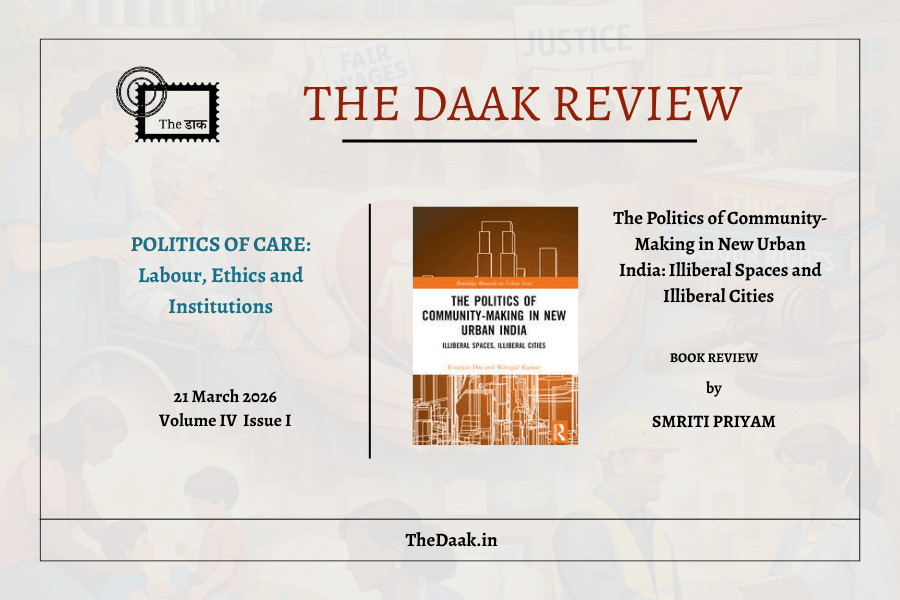
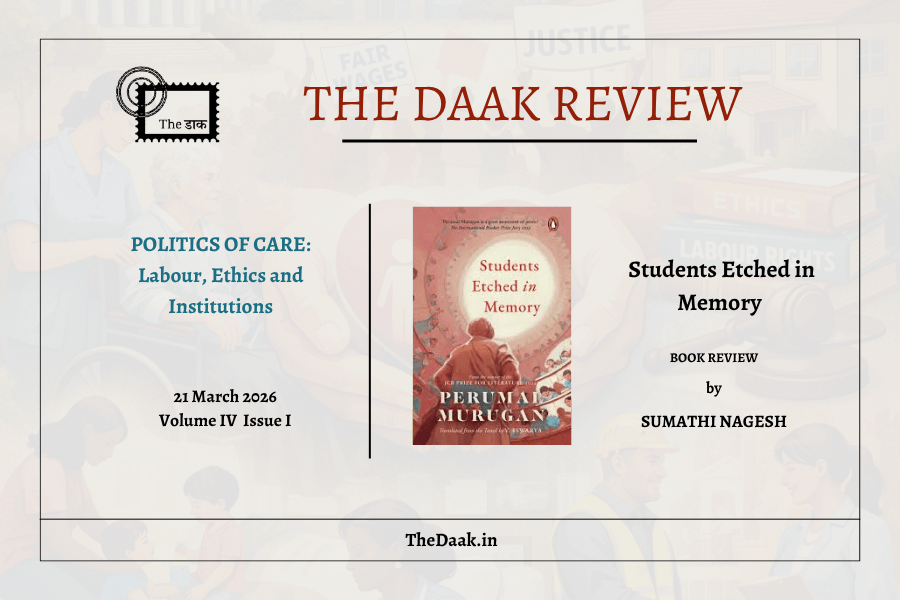
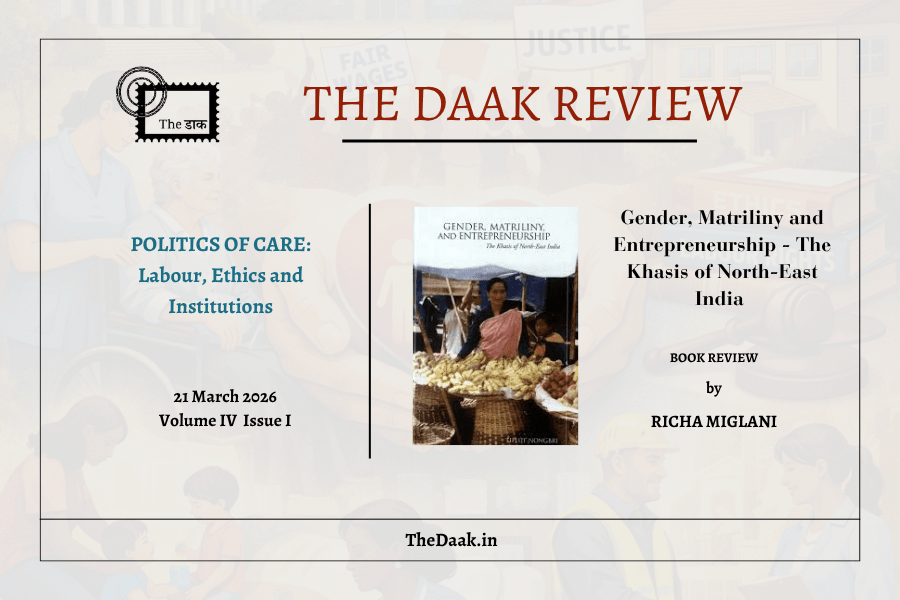
 TheDaak review
Leave a comment