

Cantoras by Carolina de Robertis, Knopf Doubleday Publishing Group, 2019, 336 pages, ISBN9780593082461, Rs. 449
Set in the late 1970s in Uruguay, Cantoras is the story of five women in an increasingly political and oppressive climate who try to carve out a safe, affirmative community on a remote island away from their lives in the city. The term cantoras is a Uruguayan code word for ‘lesbians,’ but translates literally as ‘women who sing.’ Flaca, Anita or “La Venus”, Romina, Malena, and Paz arrive at the coastal Cabo Polonio, trusting each other to be ‘one of them’. The women escape Montevideo, the capital city, going through “the process,” where gatherings are restricted, free speech is limited, political prisoners are plenty, and violence is common, especially against women. All characters are deeply affected by the violent and oppressive traits of their homes. The women often discuss that they believed the city and country they have called home would never fall under a dictatorship. Despite the shock of the changing political conditions, their biological families and peer groups expect them to study, have a ‘decent’ job, marry a man, have children and lead lives as good women. However, this home feels like a man-made prison where they must hide who they are. Excusing themselves from their families, the women travel together to the coastal village of Polonio, sparsely populated, barely constructed, and holding a vast ocean for its visitors. Closer to nature, in its unadulterated form, with trees, sand, ocean, and open skies, the women feel liberated from the shackles of heteronormativity and patriarchy.
The characters and the reader know that this is a haven that isn’t the reality of these women’s lives; they must return to their homes, parents, husbands, schools, and jobs, earn money and keep the front of being perfectly normal women. However, Carolina de Robertis emphasises the importance of even a temporary feeling of liberation that gives one the hope that there is a world out there, based on nature, open by the seaside where the male gaze, patriarchal expectations, constant surveillance and violence elude women. The getaway to nature aids the women in understanding their true nature and aspirations by providing a refuge from gender-based violence and the male gaze. Romina, a young activist whose brother is arrested for being involved in a political party, who faces the repercussions of her political involvement by imprisonment and assault, revels in the ocean at the confirmation that the violence she faced has not led to an unwanted pregnancy. Malena, who is usually quiet and solemn swims the furthest into the ocean feeling freer than in her life back in the city. Despite the initial tensions between former lovers Romina and Flaca, and Flaca’s new lover Anita, a married woman distressed from her husband and wifely duties, deemed “La Venus” for her beauty, and Paz who is a teenager, neglected by her mother and struggling with the thin line of her first queer experience being an assault, the women form a familial bond with each other, much like what is discussed today as ‘chosen family’ accepting each other’s sexual orientation, gender expression, background, views, and aspirations to be truly free.
At the end of the trip, these women go back to their lives. This is where the contrast of the experience becomes so stark; they return to what seems “normal,” to their butchering jobs, their safe ways which keep them and their families out of trouble, entitled husbands, and the general restriction of movement, expression, and emotions. The capitalist life where these women are supposed to be prim and proper, feminine, silent, dedicated to their husbands and children, and respectful is deemed natural for them; constantly reinforced by mothers, sisters, fathers, peers, and the norms of the dictatorial society. There remains little space for dissent, openness, and most of all, their queerness- experiences they feel inclined to and long to feel in their haven in the coastal, isolated village. Letting a ‘crazy idea’ sink in, the women pool their resources together to buy a shack in Polonio. Despite their family’s backlash and judgement, the women get the house deed in their name, the first in their lives, a house, a home, in their name, their own. Away from the male gaze, free to act how they like, the women, especially Paz, face flak and are arrested by soldiers patrolling the small village. Once again, the women are told by authorities, families, and husbands alike that these are the women to stay away from and focus their attention on their true nature, of being wives and mothers.
Through the tumultuous journeys of their lives, broken relationships with their biological families, heterosexual marriages, societal expectations, and heartbreak among themselves, Flaca, Anita, Romina, Manela, and Paz see their little, women-owned shack as a lighthouse, their guide, and center from all else, from all the military violence, homophobic oppression, and understanding of who they truly are in their experiences and their lived realities. It is when they are together and in their haven, that they feel the freest and the most of themselves, and this binds this unlikely family together.
Orbiting away from The Prow, their very own home, on paper and in unconditional acceptance, the nuanced and well-developed characters navigate their truth and the oppression they face differently. Flaca, with accepting parents, continues to live an outwardly queer life as much as she can, taking Paz under her wing, who establishes her own relationships and a smuggling business to support herself. Romina, meanwhile, tries to keep her nature hidden, carrying the burden of being a good, unproblematic daughter for her family. Malena stays secretive, and La Venus explores a whirlwind of relationships and motherhood. At the end of every experience, the women gather back at their home, gaining respite and accepting each other as a community and family. The characters’ pull for their little shack stems primarily from a longing for freedom, and the dictatorship is, indeed, eventually overthrown.
However, this is where Robertis reminds us that life is deeply complicated and intricate. Deep anxiety and trauma remain constant for the Cantoras. The violence, the insecurity of never finding stability in queer relationships, the conversion therapy for their homosexuality, and the societal expectations and disapproval of their families all thread through their lives over the decades. As things become safer, democratic, and affirmative, the story reminds the reader that the intensity of homophobia and patriarchy will always lead to some losses and some gains, and some families will always be left behind. The reality for queer people and especially queer women, continues to persist even today. The end of the book takes the reader back to the coastal village, but this time in 2013, where the ocean and the island have become a hub for queer people, free to be themselves, free to marry legally, and for tourists to explore its queer history. The isolated shacks, small shops, and trees are now considered a hidden gem for queer people, and the cantoras, the remaining four visit it again when they have grown well into their 60s. Their resonance with their ocean reflects in their friendship spanning decades, and their sense of survival, community, and queer love, which has always existed and continues to exist outside of the man-made city, governance, and gendered rules.
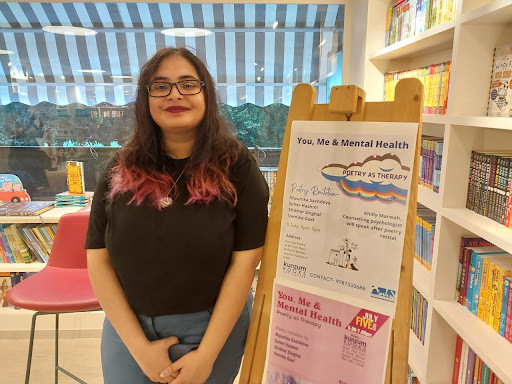
Nipunika is a content creator, writer, poet, and podcaster with a background in Political Science and Education. They are passionate about understanding people, education, podcasts, and social media and the ways they can be used to bring about social transformation. They have a wide range of interests, from curriculum studies, comparative politics, early childhood care and education, artificial intelligence, gender and sexuality, mental health, and intersectional feminism


 TheDaak review
Leave a comment