
Neither Settler nor Native: The Making and Unmaking of Permanent Minorities
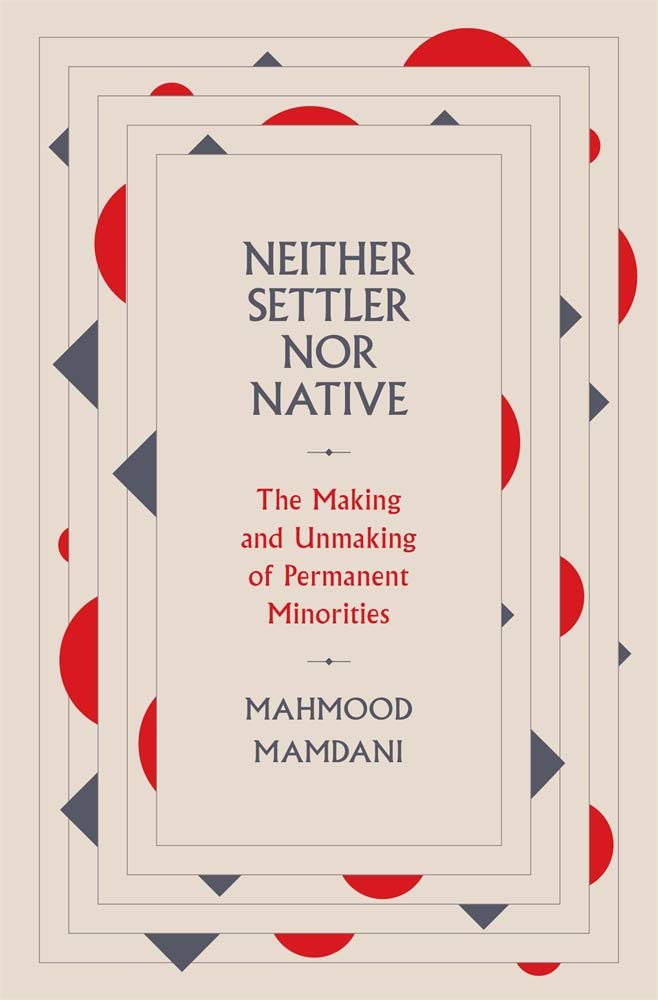
Neither Settler nor Native: The Making and Unmaking of Permanent Minorities by Mahmood Mamdani, Cambridge, Massachusetts: The Belknap Press of Harvard University Press, 30 November 2020, 451 pages, ISBN: 9780674987326, £26.95
As the situation unfolds in West Asia (October 7, 2023), the world witnesses’ atrocities unthinkable for a sane mind. What makes these crimes thinkable is the question one must ask before dealing with the dilemma of whom to support or whom not to. ‘How do I perceive the non-state armed actor – a terrorist or a resistance group?’ ‘Is it a state acting in defence, or is it state terrorism?’ Is becoming a state a solution, or is it a problem? Mamdani’s work might help us navigate through these questions.
When does a settler become a native or a native, a native? asks Mamdani. Never. Answers the book, published by him in 2020, entitled Neither Settler nor Native: The Making and Unmaking of Permanent Minorities. In this seminal work, deeply explained and proactively argued, Mamdani is against the prevailing idea taught in university courses that the project of the modern nation-state began following the Treaty of Westphalia in 1648. The book traces the founding moment of the modern nation-state instead to two developments in Iberia in 1492. One was the ethnic cleansing of Muslims and Jews by the Castilian monarchy to establish a national homeland for Christian Spaniards. The other was the taking of overseas colonies in the Americas by the same Castilian monarchy again through ethnic cleansing.
What had begun after Westphalia was a particular form of nation-state: the liberal nation-state, which introduced the idea of tolerance towards minorities, which had to be imposed on the nation-state long after its birth to stop the bloodshed it was causing. By situating the birth of modern nation-states amid ethnic cleansing and overseas domination, Mamdani claims that the nation-state has been less an engine of tolerance than of conquest (p. 2).
Since the beginning, the ‘nation’ for Europeans has been a culturally homogeneous polity, for civilisation and tolerance was introduced to secure civil peace at home. Minorities were tolerated in exchange for their political loyalty to the state. Tolerance was a characteristic of the post-Westphalian nation, as without it, the nation-state collapsed (Sowerby 2013: 256). But this was the political modernity of Europe. In the overseas settler colonies, where there was no clear distinction between nations and non-nations, political modernity meant conquest, not tolerance, as only those deemed civilised had to be tolerated. Others, owing to their cultural differences from Christian Europeans, had to be first made civilised before earning the right to be tolerated. The term ‘Native’ was introduced to describe those deemed uncivilised. (pp. 2-4). For Mamdani, modern colonialism and the modern state were born together with the creation of the nation-state; thus, nationalism and colonialism were co-constituted.
Divided into six chapters spanning across 355 pages, the book has been heavily based on primary sources. It follows a case study model, and the five case studies are carefully chosen to address the central idea of the book in unison. It could be clearly felt that the work of the author would have been incomplete if any of the five cases had been skipped. The citations of literary works and quoting sources like court judgments and newspaper headlines help build a strong base for the arguments original to the author, some of them are noted below.
The first case study that Mamdani takes explains the “making of permanent minorities” in the Americans (p. 37). He questions the settler-native narrative of the Americans. The Indians, whom the European settlers ethnically cleansed in their nation-building exercise, were referred to as ‘native Americans’ or the original inhabitants of the United States. On the contrary, the author reminds his readers that the Indians were the original inhabitants of the land, not the polity (p. 339). Since the creation of the US, Indians have been denied equal rights and citizenship even if they were born in their native territory under the pretext of ‘reservations’, a fallacy used as a smokescreen to deny ‘native Indian rights equal to those of Americans. The Indians follow their own “Customary laws” instead of “Congressional laws” (Civil Law), both of which Mamdani highlights were colonial constructs (Newton 1984: 233). The Indians, therefore, do not enjoy equal rights because they were not part of the United States, formed after the European settlers arrived, and are ruled by the decree of the Congress, a body in which they have no representation as people. Historically, they have been treated as wards of the white settlers as a marker of colonisation, not sovereignty (pp. 77–85). Colonialism, thus, as Mamdani proves, is a legal process in the US, not just cultural, and is very much ongoing.
In Germany, Mamdani argues that the settler-native narrative of the Americans, spearheaded by ethnic cleansing, inspired Hitler’s project of extreme nationalism (p. 101). Hitler realised that the creation of a homogenised nation-state was possible and that ethnic cleansing could be one of the options for achieving it. However, by criminalizing Nazi crimes at Nuremberg, the Allies avoided shifting the narrative towards the political system that enabled genocide. Mamdani argues that genocide is not solely a racist act; it is also a productive one, the outcome of which is the creation of a nation-state. By depoliticizing genocide and framing Nazism as a criminal act committed by Germans, rather than an expression of nationalism, shielded the Allied states from scrutiny.
Mamdani shows us that political identities are not permanent and could change in the same way they were constructed, as they did in South Africa. The Truth and Reconciliation Commission (TRC) sought to pin blame on individual perpetrators and provide restitution to individual victims, delinking the association of criminal acts from any political affiliation. But unlike Germany, it did not leave the political system that made violence possible unaddressed; it tried to renegotiate and reconcile possible solutions through dialogue. Despite its shortcomings, the commission did succeed in dismantling one of the two pillars of the settler-versus-native distinction in their country: race as a political identity. The other pillar of distinction that remained was that of tribe, and with it the existence of customary laws, which are discriminatory and preserve the distinction of us versus them. The case of South Africa is the only model in the book for the ‘unmaking of political identities’ and forms the basis of the argument that Mamdani further proposes that decolonising the political is practically possible.
Through the case of Sudan, Mamdani explains that the settlers’ colonialism requires no actual settlers, just a group defined as a settler and another group defined as a native. In Sudan, there were no actual settlers, but the Arabs were defined as settlers by the British. The British used census enumeration to identify people and divide them into tribes and races. The practice of taking censuses also gave more importance to race than culture. In some cases, one could be speaking Arabic at home but not be counted as Arab because of their racial identity as African. Colonialism made ethnic violence thinkable because it made ethnicity an important contour of public life and politicised it, which has often resulted in extreme political violence (p. 196).
“Zionism is the most perfected expression of European political modernity in a colonial context”, argues Mamdani in the case of Palestine (p. 250). At the core of political Zionism is the effort to build not just a Jewish religious community in the Holy Lands but a Jewish state (p. 256). The author asks readers to keep the settler-immigrant distinction in mind. Immigrants are unarmed; settlers come armed with both weapons and a nationalist agenda. Immigrants come in search of a homeland, not the state; for settlers, there can be no homeland without a state. For immigrants, the homeland can be shared; for the settlers, the state must be a nation-state where all ‘others’ are tolerated guests. Failure to understand this distinction perpetuates two serious intellectual errors. The first error is to claim that religion is irrelevant to Zionism; the other error, the flipside of the first, essentialises Zionists as Jews, thus, making any opposition to their project antisemitic. Mamdani explains how the first error makes Zionism and Zionisation incoherent; the second makes it seem that the conflict is between Israel and those who hate them, rather than between settlers and the community they dispossessed (p. 254).
The book has provided new frameworks for study. Mamdani, while conveying more in fewer words, has successfully explained the central argument of the book: that the existence of the modern nation-states continue to sustain the boundaries of who belongs and who doesn’t. The existence of minorities and majorities with clear cut differences makes the very structure inherent to conflicts, as in the nation-state, one can only be the oppressor or the oppressed, the majority or the minority, the nation or the other. And that the decolonisation of political identities is yet to be accomplished. Any scholarly investigation pertaining to the historical, political, legal, or ethnic dimensions of the five mentioned case studies would be deficient without a thorough examination of the perspectives and arguments so adeptly presented by Mamdani. The book could therefore be of great help, especially for students and scholars from the disciplines of legal and political history, peace and conflict studies, postcolonial studies, identity politics, international politics, and other related areas. Furthermore, the writing style of the author makes the book easily accessible for people with non-academic backgrounds as well.
References
Newton, NJ (1984), “Federal Power over Indians: It’s Sources,Scope and Limitations”, Online:https://scholarship.law.upenn.edu/cgi/viewcontent.cgi?referer=https://www.google.com/&httpsredir=1&article=4625&context=penn_law_review
Sowerby, Scott (2013), Making Toleration: The Repealers and the Glorious Revolution, Cambridge, MA: Harvard University Press.

Syed Rubeel Haider Zaidi has completed his bachelor in Political Science from Jamia Millia Islamia in 2021 and his Masters from Conflict Analysis and Peace Building again from Jamia Millia Islamia this July. Presently he is preparing to get enrolled into PhD program.
Nationalism without a Nation in India
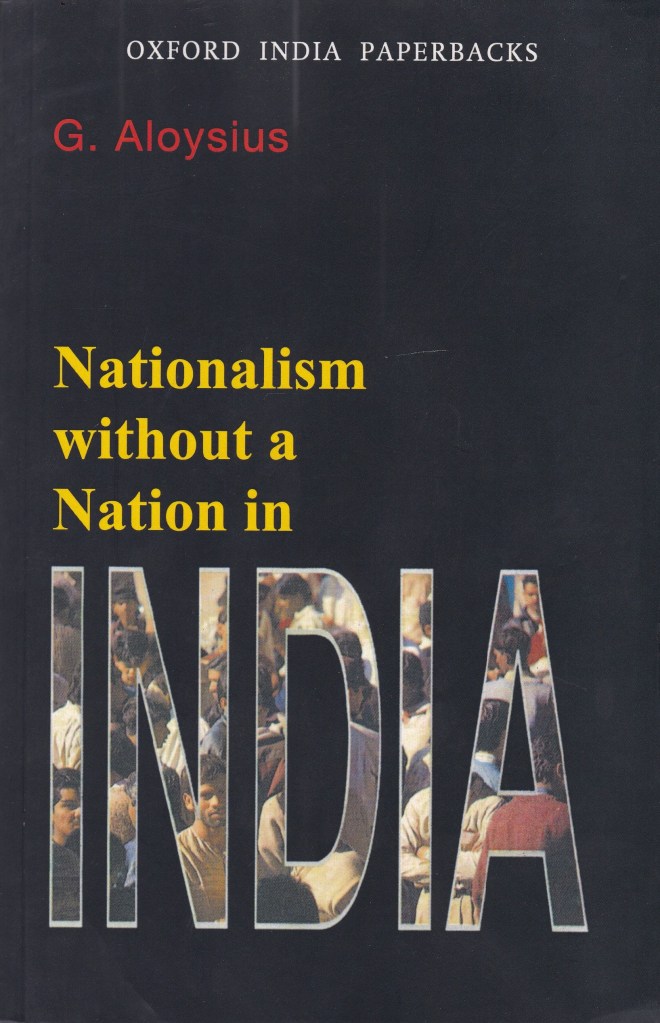
Nationalism without a Nation in India, by G. Aloysius, Oxford University Press, Pages. 283 pages, 216*138 mm, ISBN: 9780195646535, Price: 399 INR
By Amir Raza
In today’s India where majoritarian nationalism has gained prominence and is being actively pursued by the BJP and RSS, it becomes crucial to explore alternative perspectives on nationalism. In the ecosystem of hyper Nationalism which promotes the exclusion of marginal communities, G. Aloysius’s Nationalism without Nation presents an alternative discourse to understand nationalism and also challenges conventional definitions of nationalism that are often tied to specific ethnocultural identities or territorial boundaries. His work encourages us to consider nationalism a multifaceted concept transcending traditional boundaries and encompassing diverse identities and affiliations. It allows a more nuanced exploration of how people construct and express their national identities.
G. Aloysius the author of this book is a distinguished academic whose writings delve extensively into the realms of caste, nationalism, modernity, and the marginalized subaltern communities within the Indian subcontinent.
At the heart of G. Aloysius’s Nationalism without Nation lies the fundamental assertion that traditional notions of nationalism are inherently exclusionary and limiting. The dominant discourse often associates nationalism with a fixed territorial boundary and a homogenous group of people who share common characteristics, such as language, ethnicity, or religion. The author draws upon a wide range of interdisciplinary perspectives to support this argument. From postcolonial theory to cultural studies, sociology, and anthropology, the author presents a compelling case for reevaluating the traditional parameters of nationalism. Through meticulous analysis of historical and contemporary examples, the book demonstrates how the conventional emphasis on a singular exclusive identity suppresses diversity and perpetuates exclusion.
Aloysius begins by scrutinizing the Eurocentric model of nationalism that has been applied to India, highlighting its inherent limitations in capturing the multifaceted nature of Indian society. He contends that this model fails to adequately address the intricate interplay between various socio-cultural, religious, and regional identities that were pivotal to the Indian nationalist movement. By critically examining the works of prominent historians who have perpetuated this dominant discourse, Aloysius exposes the oversimplifications and omissions that have obscured the nuanced realities of Indian nationalism.
One of the prominent contrasts explored is between the dominant mainstream nationalism and the aspirations of subaltern groups. The book illustrates how mainstream nationalism, often championed by the ruling elite, seeks to project a singular narrative that may disregard or marginalize the diverse identities within the nation. This is juxtaposed against the subaltern voices of Dalits, Adivasis, and other marginalized communities who challenge the dominant narrative and demand recognition of their own distinct experiences and contributions.
Aloysius emphasizes how the struggle for cultural and linguistic recognition also reflects competing ideologies within nationalism. The example of language movements, such as the Dravidian movement in South India, highlights how linguistic identity can be a driving force for asserting autonomy and cultural distinctiveness within the larger national framework. These movements demonstrate the clash between the desire for linguistic self-determination and the state’s efforts to maintain a unified linguistic identity.
The concept of the “Homogenizations of Power” within culture (p. 57) serves as a critical lens through which G. Aloysius examines the dynamics of nationalism in India. This phenomenon often marginalizes or suppresses diverse cultural practices and viewpoints that do not align with the dominant group’s values or interests. Aloysius argues that this homogenization of power within culture has been employed by those in positions of authority to reinforce their control and influence over the nation’s identity. By promoting a standardized cultural identity, these power structures can legitimize their rule and maintain social order. This can lead to the suppression of marginalized groups, whose voices and cultural practices are often excluded or overshadowed.
On the other hand, ‘Appropriation of Power’ alludes to external influences shaping nationalist discourse. Aloysius suggests that dominant narratives often borrow Eurocentric models, neglecting the intricate socio-cultural realities of India. By scrutinizing historical and contemporary examples, Aloysius exposes how these twin processes contribute to the exclusion of marginalized voices and cultural practices.
However, Aloysius also highlights the resistance of subaltern or marginalized groups to this homogenization process. These groups challenge the dominance of a singular cultural narrative and seek to assert their own identities and histories. This resistance takes the form of cultural expressions, art, literature, and social movements that defy the attempts to impose homogeneity. By foregrounding previously marginalized voices, Aloysius challenges the hegemonic narrative that has often relegated them to the periphery of historical discourse.
The book also scrutinizes the conventional narrative of the Indian freedom movement, challenging the idea of a singular united nation rallying against British colonial rule. Aloysius argues that India’s social and cultural diversity has led to the existence of multiple “nationalisms,” often tied to regional, linguistic, and communal identities. The author contends that these diverse forms of nationalism coexisted and sometimes clashed within the broader struggle for freedom, thereby questioning the notion of a monolithic nationalistic movement.
However India, with its diverse tapestry of language, region, religion, caste, and tribe, strategically addresses subnational aspirations post-independence. Notably, the Indian Constitution, as elucidated by scholars like Granville Austin in The Indian Constitution: Cornerstone of a Nation, serves as the bedrock for accommodating these aspirations. The constitutional framework reflects the nation’s commitment to pluralism, effectively recognizing and safeguarding the interests of various identities. Through the reorganization and creation of states, the state has adeptly addressed surging subnational aspirations, fostering integrity and cohesiveness. However, it is imperative to acknowledge that while strides have been made in accommodating diverse aspirations, there remains a need for continued attention to the aspirations of marginalized groups, particularly tribes in mainland India, ensuring a comprehensive and inclusive approach to national identity.
The book also offers a thought-provoking critique of Mahatma Gandhi’s role and impact within the Indian nationalist movement. Aloysius argues that Gandhi’s vision of nationalism often overshadowed the diversity of voices and perspectives within the movement. He critiques Gandhi’s emphasis on ahimsa (non-violence) and satyagraha (civil disobedience), asserting that these principles, while important, did not always resonate with or adequately address the concerns of all segments of Indian society. Aloysius contends that Gandhi’s approach marginalized more radical and militant expressions of resistance that were adopted by other groups and individuals, particularly those from marginalized and oppressed communities.
Furthermore,the author challenges Gandhi’s stance on issues such as caste and untouchability. He points out instances where Gandhi’s efforts to address these social injustices were insufficient or even perpetuated existing hierarchies. Aloysius argues that Gandhi’s views on caste and his interactions with Dalit leaders like B.R. Ambedkar fell short of creating meaningful and lasting change.
Aloysius’s critique also extends to Gandhi’s focus on Hindu-Muslim unity. He argues that while Gandhi’s intentions were noble, his approach did not adequately address the complex religious and communal dynamics present in India. Aloysius suggests that Gandhi’s vision of unity often privileged Hindu perspectives and overlooked the diverse religious identities and aspirations within the nationalist movement.
While G. Aloysius provides a thought-provoking critique of Mahatma Gandhi’s role in the Indian nationalist movement, scholars like D.R. Nagaraj and Mushirul Hasan have highlighted instances where Gandhi advocated for the rights and upliftment of marginalized communities. Scholars like Rajmohan Gandhi and Sudarshan Iyengar offer insights on how Gandhi utilized religious principles for utilitarian purposes, emphasizing unity and communal harmony rather than fostering division.
While the book offers a valuable critique of the conventional narrative of a unified nationalist discourse, this seminal work has its own limitations as it strictly focuses on specific regions and movements within India. The book primarily examines South India and certain linguistic and caste-based movements, potentially leaving out important aspects of the broader national freedom movement that took place in other parts of the country. This narrow geographic scope may lead to an incomplete understanding of the complexities and dynamics of the entire Indian nationalist struggle.
In the broader context of Indian historiography, this book prompts a reexamination of conventional narratives. Aloysius’ work disrupts the prevailing tendency to homogenize and simplify the complexities of nationalist discourse. By acknowledging the existence of multiple nationalisms, the author encourages readers to appreciate the intricate tapestry of identities, ideologies and aspirations that characterized the pursuit of independence. The book challenges historians and scholars to adopt a more nuanced and inclusive approach to understanding India’s past.
Aloysius’ analysis also holds relevance beyond the realm of academia. The book’s exploration of diverse nationalistic expressions carries implications for contemporary debates surrounding nationalism and identity in India. As the country continues to grapple with questions of cultural pluralism, social justice, and communal harmony, Aloysius’ insights serve as a valuable resource for fostering a deeper and more nuanced understanding of challenges and opportunities presented by India’s rich diversity. As a result, the book stands as a significant contribution to both Indian historiography and the broader discourse on nationalism and identity.

Aamir Raza is an Independent Researcher based in New Delhi, India. He holds a Master’s degree in Political Science from Jamia Millia Islamia University, New Delhi. He has been previously associated with Lokniti-CSDS and the Institute of Perception Studies as a Researcher. His areas of research interest include Electoral politics, representation, minority studies, ethnic politics and democratisation.
The Politics of the Governed: Reflections on Popular Politics in Most of the World

The Politics of the Governed: Reflections on Popular Politics in Most of the World by Partha Chatterjee, March 2004, 200 pages, ISBN: 9780231130622, ₹495
By Pallavi Raj
The book is a collection of essays, built from the lectures Chatterjee delivered at Columbia University. The collection will be of specific interest to scholars and readers of democratic politics and the role of institutions like state, civil society and leaders in the political arena. In The Politics of the Governed: Reflections on Popular Politics in Most of the World, Partha Chatterjee by viewing India as representative of most of the regions across the globe moves away from the prevalent understanding of many discourses like modernity, citizenship, nation-state and democracy. The book conceptualizes not only the idea of political society, but argues that it is where political modernity is being forged in contemporary time. The book puts forth the debates related to nationalism, America’s hegemonic role post and pre-9/11 attack and population citizen debate.
The book begins by posing a conflict that lies at the heart of politics across the world, i.e., opposition between civic nationalism and particular demands of cultural identity. This opposition, Chatterjee argues, characterizes the transition that took place from the conception of democratic politics grounded in popular sovereignty to the democratic politics being shaped by governmentality. In this context he refutes Anderson’s classification of nations being in the “homogenous empty time”(p. 6). This is the time not affected by any particular event and is also empty as a number of events can fit into it and it is due to this time that people who have not met each other and who are living distant from each other are able to relate to each other and are able to identify themselves as a part of single nation. This time is also the time of the capital or modernity. And any resistance to it leads to an assumption that it is either coming from humanity’s past, something pre-modern, something that belongs to pre-modern, thus, classifying capital and modernity as ultimate triumphs. However, Chatterjee, through several examples of the postcolonial world, depicts otherwise. For instance, how an industrialist can delay the closing of a business deal on account of pending confirmation from their astrologers or voters who had set fire to themselves to mourn defeat of their beloved political leaders, or leaders who openly make claims of providing jobs to only their own clan keeping the others out. Chatterjee calls this as the presence of ‘dense and heterogeneous time’ thus, refuting from classifying these phenomena as modern or pre-modern, or even the co-presence of several times because this would again lead us falling into the trap of utopianism of Western modernity. And these times are not just products of the pre-modern past but new products of the encounter with modernity. That is the reason Chatterjee argues for calling it the heterogeneous time of modernity (p. 7).
Further he also discusses the shortcomings of modern political theory whether liberal, communitarian, Marxist or republican and their failure of taking governmentality in their consideration. The understanding of community in all these theories are those which are regulated by legal order of private property, i.e, the community of property owners who are able to govern themselves. Consequently, it is those who are not able to govern themselves are those to be governed forming the political society. Chatterjee has retained the old idea of civil society as bourgeois society as used by Hegel and Marx and brought it to the Indian context where civil society in India, as he argues represents the high ground of modernity, a group of “culturally equipped citizens” (p. 34). In a formal structure of state with a constitution, law, everyone constitutes a part of civil society, since everyone is a citizen who has rights which are equal to any other fellow citizen of that state. However, as Chatterjee argues, in reality, things are not the same. Most of the citizens in India are only contextually or ambiguously part of the civil society and that too not as an active member. They are not regarded as proper members of the civil society and are also not regarded as such by the institutions of the state (Chatterjee, 2004). However, the story does not end here. It also does not mean that they are excluded from the domain of politics or are out of reach of the state. Since they reside within the territorial domain of the state, they have to be looked after and hence, controlled by the governmental agencies. And the processes that involve their interaction with these agencies do materialize in the form of political relationship with the state. And it is here precisely where the ‘politics of governed’, as the title suggests, takes place. To political society, he gives a space that lies between state and civil society, a space of various activities and institutions with several mediations taking place mostly with frequent violations of law so as to receive welfare and goods. It becomes imperative here to bring the distinction cited by the author between population and citizen that came up with the emergence of mass democracies in the advanced industrial countries of the West in the twentieth century. Citizens inhabit the domain of theory, they carry the ethical connotation of participation in the sovereignty of the state. On the other hand, population constitutes the domain of policy, population is descriptive and empirical without any normative burden. They can be classified, identified and are amenable to statistical techniques like census and surveys. It is this population which becomes the target of any economic policy or might as well cause political mobilisation.
The book mentions the members of the People’s Welfare Association (squatter residents of Rail colony Gate number one) in this context and how they have to use the terms like refugees, landless people, day laborers, homestead, below the poverty line, all categories of governmentality in a petition in order to protect their homes from getting destroyed and uprooted. This is argued to be a testament to the fact that members of the political society cannot escape themselves from what Rolando Vasquez refers to as ‘parameters of legibility’(Vasquez, 2011). In order to claim even livelihood and basic living conditions, one has to fit in such categories, since the epistemic territorial practices are of a nature that anything that lies outside its domain is automatically made invisible, is excluded from the real and is even unnamed. To make it more clear, there might be people near the railway colony who might be landless but not below poverty line and there might be some who may be all landless, below poverty line and refugee at the same time. Where do we place them then? These are some of the questions put forward when we read this text deeply.
In talking about the global dimensions of the politics of the governed in the second half of the book, Chatterjee brings up the larger debate of the political aspect of globalisation, i.e., What happens to the state? With global dispersal of various activities like manufacturing and production, there is also centralisation of control and administration. The larger task of the national state controlling the economy is put into question. The author also embraces the views of Michael Hardt and Antonio Negri about a new kind of stateless empire with United States forces at the top. The book states a very important contradiction in the existence of the empire itself. Although the empire does not go to war or conquer territory and its main objective being maintaining peace and democracy, it does not lay out any guideline or toolkit for it. Moreover, world over, there is a resistance towards it. To support his argument, he cites cases of Europe and North America where any kind of assembly meeting of the leaders of MNCs or international financial institutions is disrupted by demonstrators without any central organisation. Chatterjee also questions the leadership and the response towards acts of terror, specifically 9/11 when the President of the United States immediately announced that the country was at war and the attack being analogous to the Pearl Harbor attack. Instead of pacifying the situation, they chose to speak for ending states like Afghanistan, Iraq, Syria, Libya and Islamic militants in Lebanon and Palestine. The author argues that in the absence of any clear enemy or targets, the whole onus falls on unconcealed religious, cultural and ethnic hatred.
In the second last chapter, Chatterjee touches upon the contradictions of the politics of secularism in India. First, the incapacity of Indian political leaders to separate the domain of politics and religion. Second, an absence of procedure to determine who was to represent minority communities in their deals and negotiations with the state. He uses a controversy in West Bengal related to growth of religious schools, i.e., madrasas and the urgency for their modernisation to explain the problem of political representation of minorities in a secular democratic state. Although the Left Front in West Bengal played a crucial role in providing that political representation which allowed for modernizing the curriculum of funded madrasas, yet, recently the growth of private madrasas and rise of imams as trusted leaders in politics for the rural poor has brought up several questions of representation. He highlights that such situations can increase the possibilities of communal violence along with posing a challenge for opening up of democratic politics of secularism so that the question of political representation for religious minorities could be negotiated.
Chapter seven examines the impact of the ‘global city’ on political society and urban politics in Calcutta with the rise of a new middle class, composed of a managerial and technocratic elite, in the 1990s. The state is sponsoring this process through the eviction of squatters and clearing of slums to make space for business districts, shopping malls, office buildings, and segregated residential clusters for the affluent. In the last chapter of “Are Indian Cities becoming bourgeois at last?”, he analyzes the growing impact of global cities on political society, more specifically on urban poor and politics in Calcutta. One factor related to it was the change in nature of the socio-political dominance of the wealthy and the cultural leadership of the middle class that existed till two decades of independence. However, caste-like associations sustained by patron-client relationships still did not end, proving an incompatible position in the definition of bourgeois public life of a modern city. He explains the role of urban poor as a population group in the functioning of political society. With the twin effects of the rise in democracy and development in the 1970s and 1980s, the nature of political society consisted of an overlapping demand for electoral mobilization and welfare administration. The primary reason for urban poor to be taken care by the government is based on twin foundations that completely made them devoid of any citizenship per se. First, they provide easy labor and services which are essential to maintain cities. Second, if they are not cared for, then they can endanger the safety and well-being of the citizens. So even if they are looked after, the primary rationale is that of benefit in terms of social, economic and political outcomes. For example, if slums are provided with sanitation facilities, it is expected of them to not dirty the streets or parks.Thus, huge sections of urban poor cannot be treated as citizens in the substantive sense because their habitation and livelihood are most often premised in the violation of law. The main theoretical argument he puts forward is that the conception of citizenship and its emphasis on relentless homogeneity stands in sharp contrast to the governmental administration of development and administration that produces heterogeneous society, with multiple populations groups targeted through multiple policies at multiple points of time. The author also suggests that it should be the task of political associations to mold the empirical discreteness of the population into a moral community.
Chatterjee also brings in an interesting paradox in the last chapter about the modern Indian imagination of cities. The paradox lies here: the place where colonial modernity was conceived in India along with the production of India’s nationalist elite are the Indian cities, but generations of scholars, thinkers , novelists and artists in the age of nationalism invested most of their time and energy in producing an idea of a rural India that would fit the modern age and not of an Indian city. Chatterjee talks about the post-industrial society where there is a decline of traditional manufacturing along with growth of service sector, there is new segregated and exclusive space for people in service sectors usually called technocratic or managerial elite, and these new high-technology industries are located in the newest and environmentally most attractive spaces of the metropolis. He states that even though the new metropolis is globally connected, it is disconnected from large sections of population who are considered as politically disruptive or dangerous.
Chatterjee uses important concepts like modernity, empire, population and citizenship for understanding the larger context of development, democratic politics and even neoliberalism to a huge extent. With the rise of majoritarianism, damage due to development in terms of environment, livelihood, poverty, destitution, displacement, growth of urban poor and refugee crisis is explicitly visible. The book emphatically argues that it is important for every government across the world to descend from the high echelons of civil society to political society. It is evident that today drastic changes for transforming any realm of society could not be taken without the consideration of people of any democracy. Farmers’ protest recently was an evident example in this context. Social movements have changed over the years, so has the way to govern and forms of governmentality. There is a growing crisis of legitimacy across the globe. For example, the massive economic crisis in Sri Lanka recently. Thus, there is growing urgency to ponder upon the functions of state, its role for welfare, its extent, its sovereignty and moreover its larger effects on both population and citizen in the modern world. In a context where questions of national security are raised every now and then for electoral mobilization, Chatterjee has put light on the lives of those who live on the margins, in the illegal spaces, in slums, near railways, under the bridges, on footpaths, fearing each day about their home and one time meal. This also strikes us with the paradox that modernity brings with itself. And that is precisely the reason why the book stands so relevant and urgent today. However, while reflecting on the conceptual categories of political and civil society through examples of rural Calcutta in India, he tries to explain the popular politics in most of the world which can be insufficient for explaining ‘politics in most of the world’, as the title suggests. However, the Indian case does help in highlighting various critical issues relevant for various countries today in the world.
References
Chatterjee, P. (2004, March 10). The Politics of the Governed: Reflections on Popular Politics in Most of the World. https://doi.org/10.1604/9780231130622
VÁZQUEZ, R. (2011, March). Translation as Erasure: Thoughts on Modernity’s Epistemic Violence. Journal of Historical Sociology, 24(1), 27–44. https://doi.org/10.1111/j.1467-6443.2011.01387.x

Pallavi Raj is currently a PhD Scholar in Centre for Comparative Politics and Political Theory, SIS, JNU. Also teaching as a guest faculty in Miranda House, University of Delhi. My research interests revolves around Phenomenology and Culture, Political Philosophy. Also, have been trained as a classical singer in Bhav Sangeet
India’s Undeclared Emergency: Constitutionalism and the Politics of Resistance
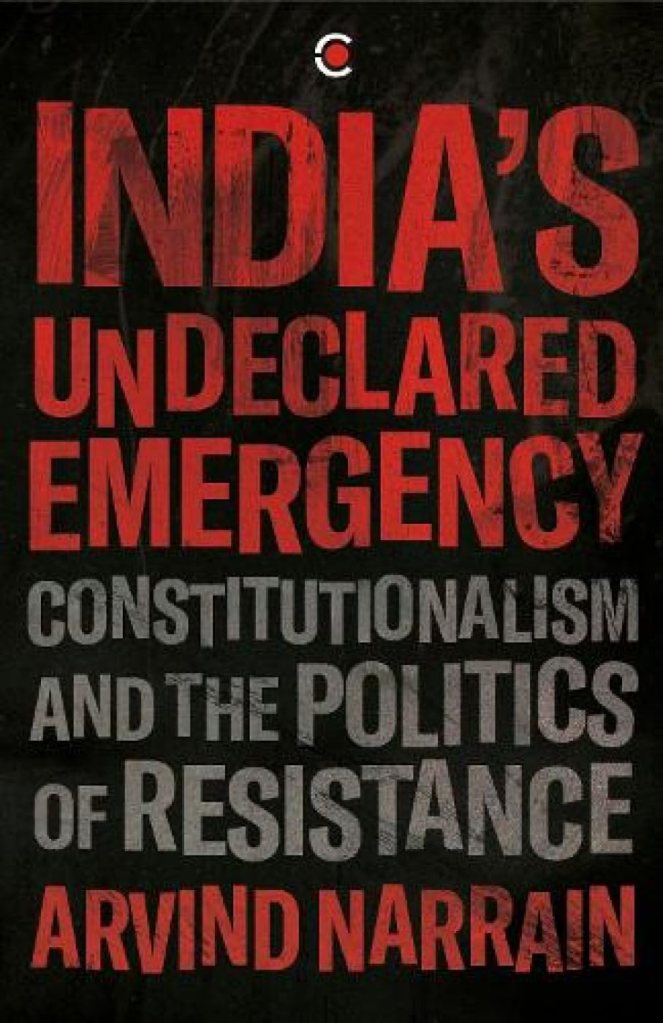
India’s Undeclared Emergency: Constitutionalism and the Politics of Resistance by Arvind Narrain, Westland Publications Private Limited, Paperback, Published: January 2022, 342 Pages, ISBN: 9789395073042, Price 799 INR
The history of nations identified as a part of the ‘third world’ has been a testimony to the struggle waged by the people against European colonialism and a bid to reclaim the right to freedom and self-governance. But what happens in these post-colonial societies when the promise of freedom comes to be marred by the exercise of absolute power? Arvind Narrain’s book India’s Undeclared Emergency is a quest for understanding two watershed moments in the political history of India: The Emergency of 1975-77 and the rise of National Democratic Alliance under Prime Minister Modi post-2014. Tracing the rise of authoritarianism in India since the dawn of Indira Gandhi’s regime, he delves into the transformation of the ‘nature of Emergency’ in India. Under the auspices of the Modi government, what has emerged is an Emergency which is ‘undeclared’ in character, but manifests itself both through the mandates of the state as well as popular mobilization. The legacy of centralized control of the state continues to live in old forms and new.
The book begins with a short introduction and comprises five chapters. The first two chapters provide an insight into the Emergency era of 1975 and the governance and legislative measures it was rooted in. The third and the fourth chapters are an elucidation on the Modi Era and the nature of Emergency it has catalyzed. The final chapter concludes the book on a hopeful note, initiating a discussion on the future course of action to tackle the current day totalitarianism that exists in the garb of a mass political culture.
The beginning of the era of Emergency
The book begins by familiarizing the readership with the conditions that existed within the ‘overt’ Emergency which was declared by Indira Gandhi in 1975. The author views it as the beginning of a regime that enabled centralization of power and routinization of state excesses. In the first chapter titled “Authoritarian Rule: The Emergency of 1975-77”, he provides a detailed description of the instruments deployed by the state under the declaration of Emergency. These ranged from Constitutional provisions like Article 352 (declaration of Emergency), Article 353, 358, 359 (the executive powers that the government acquires under Emergency); to laws like Maintenance of Internal Security Act (MISA), 1971. Such legislative measures were accompanied by censorship of the media, demolitions and forced family planning. The author provides a detailed analysis of the same through multiple examples and case laws that formed the backbone of the Emergency. However, it is in Chapter 2 titled “Roots of the Emergency: Preventive Detention” that he goes on to locate the most effective tool of quelling dissent in Article 22 of the Indian Constitution. The mapping of the Emergency 1975-77 is extremely comprehensive and expansive, giving the reader an insight into the ground zero of the institutionalization of extraordinary measures, both through a coverage of de facto incidences as well as judicial reasoning in the cases challenging the imposition of Emergency.
The Dawn of the ‘Undeclared Emergency’
The author proceeds further with an in-depth description of the sequence of events as it has unfolded under the Modi regime. It also constitutes the longest portion of the book. He begins with the argument that even post-Emergency, India functioned only as a 50-50 democracy (p. 57). Post-2014, an ‘undeclared’ emergency has been promulgated in the country through repression of dissent, creation of a climate of fear and a continued use of laws of exceptional nature. In the third chapter titled “The Modi Era: The Undeclared Emergency”, the author focuses on the role of the state in creation and maintenance of the conditions of Emergency. The utilization of laws such as the Unlawful Activities Prevention Act (UAPA) enabled a widening ambit of criminalization, role of agencies like National Investigation Agency (NIA) and judicial failure to perform the function of a counter majoritarian institution has been the highlight of the current era of emergency. This is demonstrated through the documentation of the Bhima Koregaon case, anti-CAA protests and the role of the media. The author goes on to assert that the point where this ‘undeclared Emergency’ makes a departure from the Emergency of 1975 is the manner in which it has paved the way for a complete control of social and political life. This symbolizes a shift from the ‘authoritarian state’ of 1975 to a ‘totalitarian state’ of the current age. A detailed analysis of the same is provided in the fourth chapter titled “Slouching towards a Totalitarian Future”. The book further notes that the Modi regime has successfully created an Emergency of unprecedented and magnanimous proportions. It has achieved this through the creation of a vast civil society network of the Hindu Right, enabling mob violence and hate speech as well as imbuing the law with a Hindutva sensibility.
The Way Forward
In the final chapter of the book titled “What is to be Done?”, the author has tried to delineate a silver lining by endeavoring to chart out a path for the future. Instead of creating a blue-print, he draws on examples of past resistance and instances of dissent that provide us with glimpses of a hopeful future. He emphasizes on reassertion of the “normative state” (p. 199) and constitutional values. Further, he underlines the importance of humor as dissent, bureaucratic dissent and dissent rooted in cultural contexts to bring home the argument that creation of an inclusive nationalism and a unity rooted in diversity is the key to meting out the challenges that lie ahead.
Comprehensive yet Disjointed
The book is empirically rich and is extensively researched. It is illustrative of a good qualitative study as the author took recourse to secondary literature to utilize suitable theoretical ideas as well as citation of case laws and media reports to give the reader a glimpse into the string of cases that form a part of the ‘undeclared emergency’. The book would have enriched had the author provided some instances of judicial reasoning in cases that he talks about in the greatest detail, like, the Bhima Koregaon case as well as the Anti-CAA protests. This would have exposed the reader to the skewed judicial logic that becomes instrumental in denying the most fundamental relief to the under-trials in the form of bail.
However, where the book falters is the disjointed perspective with which it sees Indian political history. While the Emergency of 1975 and the rise of Narendra Modi are indeed significant events that have shaped the political landscape, it is difficult to see them as divorced from or towering above a tradition of politics of excess that has existed in India since Independence. The legal inheritance of India is burdened by a British baggage that viewed dissent as a threat. The framers of the Indian Constitution borrowed heavily from the Government of India Act, 1935. This is exemplified by the provision of President’s Rule (Section 93 of the Government of India Act which became Article 356 in the Indian Constitution). Its first usage in independent India could be traced to as far back as 1951 in Punjab. The British legacy of this kind further found its place on the outlook of the various organs of the government. The judiciary continued to see the constitution as a continuation of British traditions (Kannabiran, 2004: 60). This was observed in A K Gopalan v Union of India, where the detenu continued to languish in jail for offenses invoked by the British even after independence. The executive acquired powers to issue directives in an “unfiltered and unfettered manner” through Article 73 and Article 152 of the Constitution (residuary powers) (Narsappa, 2018: 133). All of this was accompanied by a proliferation of laws like Armed Forces Special Powers Act (AFSPA), Terrorist and Disruptive Activities (Prevention) Act (TADA) and Prevention of Terrorism Act (POTA). It represented the creation of a culture where the state equated violence with power and reduced socio- economic problems to law and order issues (Kannabiran, 2004:4). Hence, it is perhaps better to visualize the two events as a crescendo to the continuum of state excesses that has been a part of India even under home rule and which entails a ‘crisis of legitimation’ for the state (Baxi, 1982). One starts to see a glimpse of the acknowledgement of this fact by the author in the second chapter when he traces the history of preventive detention in India. But this is a trajectory that the author abstains from adopting in further chapters. What probably needs to be recognized is that Emergency, whether overt or covert, is not an aberration. It is the product of a long flawed political, social and legal structure that needs repair.
Nevertheless, the author has sought to produce an extremely comprehensive analysis of the centralized rule of two eras, charting out their similarities and departures quite succinctly. Further, the book is fairly well-rounded, not only in terms of the corpus of laws, executive decisions and judicial reasoning that it covers, but also in terms of the interdisciplinary character that it embodies. The author, while being a lawyer by training, has made efforts to include arguments of political scientists like Hannah Arendt, Christophe Jaffrelot and Juan Linz as well as economists like Thomas Pikettty. The widespread documentation of cases and judgments that the book has undertaken, is a delight to read for a seasoned academic as well as for a reader who is not familiar with the intricate details of the political history of India. Such profound documentation becomes instrumental in holding truth to power by sketching out the devil from the intricacies of legal technicalities as well as popular culture. What makes this book a truly academic read is the way in which it goes beyond a purely doctrinal analysis and tries to give an insight into the diverse aspects (social, political and economic) of how the ‘undeclared emergency’ has unfolded in India.
References
Baxi, Upendra. 1982. The Crisis of the Indian Legal System. Vikas Publishing House Private Limited.
Kannabiran, Kandala Gopalaswamy. 2004. The Wages of Impunity:Power, Justice and Human Rights. Orient Longman Private Limited.
Narsappa, Harish. 2018. Rule of Law in India: A Quest for Reason. Oxford university Press.
Anjali Mathur is a PhD scholar at Jawaharlal Nehru University, Delhi. Her current thesis concerns itself with analysing the selective and curated application of laws in service of the logic of populism and how that can impact and shape long standing constitutional values. She has presented at the workshop under the project ‘Geographies of Populism’ organized by Aalborg University, Denmark. She has also made a presentation at Ulster University, Northern Ireland titled ‘Honour and Chivalry: Investigating the Ingredients of Anti-Terror Laws in India’ as well as at Aligarh Muslim University titled ‘India as Aid Donor and Significance of Aid in International Politics’. Her fields of interest include Political Philosophy and Constitutional Law.
Amusing Ourselves to Death Public Discourse in the Age of Show Business
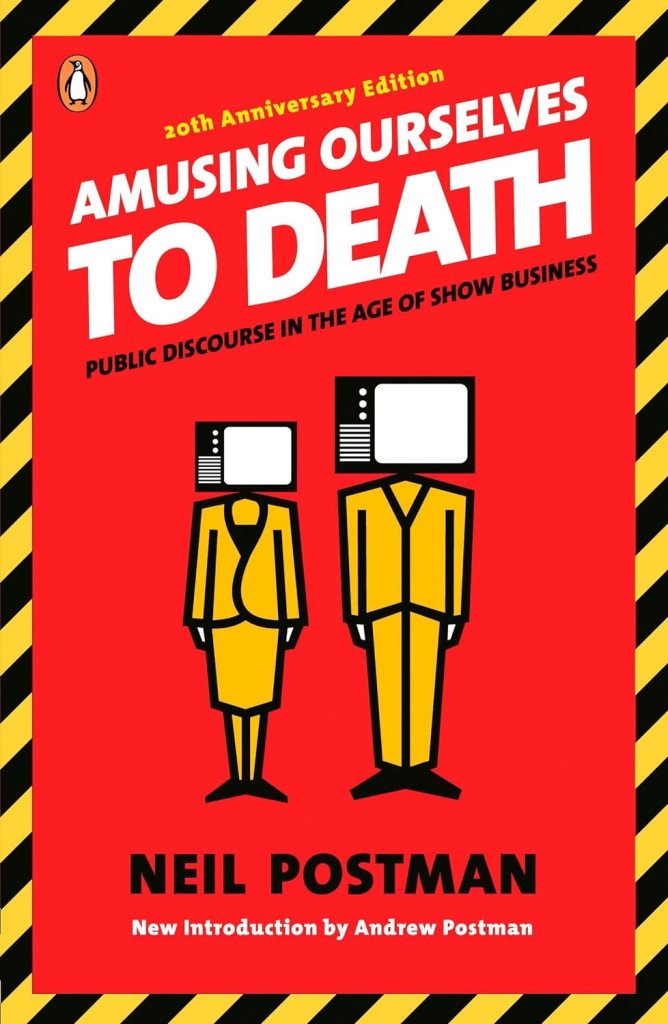
Amusing Ourselves to Death Public Discourse in the Age of Show Business by Neil Postman, Penguin USA, Anniversary edition (1990), Paperback, 208 pages, Dimensions: 1.52*12.95*19.56, ISBN 014303653X, Price: 845 INR
It’s been more than three decades since Neil Postman’s magnum opus Amusing Ourselves to Death has been published, but its ideas and arguments remain more relevant than ever. The book is not a dystopian novel per se, but it works as a grave reminder that we don’t have to prepare for a dystopian future; we might as well be living in one. All we need to do is look inward and around us.
Postman’s work was written keeping the television medium in mind but the prescience of his arguments makes it possible to be extrapolated and applied to any medium that has taken the audio-visual tool forward.
Postman makes it clear very early on that he doesn’t have an issue with Television as a source of entertainment, it’s only when it tries to be taken seriously as a cultural medium that it becomes a problem. Its tendency to co-opt almost every serious mode of discourse such as news, politics, science, education, commerce, religion among others, and turn them into entertainment packages. The problem, therefore, won’t solve itself if we start watching better content on television because it’s not the content which is the contention here but the form. In his own words, it’s not what we watch is the problem but the fact that we watch is. Unlike the panglossian view that accompanies whenever a new technology is introduced to the world, Postman questions this unconditional surrender and naive belief in technology’s neutrality. The faith in technology’s capacity to advance culture and the teleological understanding of progress has blindsided us to its ideological onslaught. It has a hegemonic impact on us in a way that we unquestionably surrender ourselves to it.
Postman weighs in on both George Orwell’s 1984 and Aldous Huxley’s Brave New World (both dystopias). He argues that rather than an Orwellian world, there is more possibility of us living in a Huxleyan world. In liberal democracies, rather than being deprived of information, citizens will be bombarded with information, so much that every piece of information loses its impact and becomes just a source of entertainment. In times like these, people will come to love their oppression. In Postman’s own words “while Orwell feared that the truth would be concealed from us, Huxley feared that truth would be drowned in a sea of irrelevance” (p. xix) . The Trump era saw the worst manifestation of this prophecy where there was an increasing use of phrases like ‘post-truth’ and ‘alternative realities’. Facts and truth have lost their sanctity and perceptions and beliefs have acquired an equal or higher pedestal in influencing people.
The inherent orientation of Television toward entertainment has created the phenomena of show business. In this context, the sole job of journalists, politicians, or even teachers is to entertain their audiences/voters/students wherein every role is reduced to the binary of entertainer and audience. Though Postman wrote his ideas in the context of Television, social media has taken up the job of disseminating information as infotainment very well and has metastasized the problem further. He summarizes by saying that the ‘clearest way to see through a culture is to attend to its tools for communication’ (p. 8).
Canadian Communication theorist Marshall McLuhan once quipped “Medium is the message” (p. 8); Postman took this idea further in his book and argued that medium is just a metaphor, as no medium is innocent and without any agenda, just like language and writing changed humanity as we know it, television will also have irreversible impact on human society. His idea was not to animate mediums such as television or writing with their own brains and thoughts but to convey the idea that the medium that we use to convey our message has a deep ‘implication to enforce their special definition of reality’. To elaborate on his point, he compared ‘technology’ to ‘brain’ and ‘medium’ to ‘mind’. While the television can be seen as just a piece of technology, a mere machine, it also works as a medium that furthers certain ways of knowing and thinking. There is an inherent tension between the ‘form’ and the ‘content’. In fact, the form shares a parasitic, rather than a symbiotic, relationship with the content, where the former decides the direction in which the latter goes.
In Amusing Ourselves to Death, Postman analyzes the phenomena of 24*7 news channels and how they have influenced the way we see, think about, and connect to the world. Here he puts forward his idea of ‘media as epistemology’, as a form of ‘truth-telling’. He questions the role of television, not as a trivial entertainer, but as a claimant to a provider of higher knowledge.
The problem now is not the censorship of information but too much information or an “information glut” (p. 68). We are constantly bombarded with information from around the world in back-to-back fashion. In the context of news channels, this information is interrupted by the catchy leitmotif of the channels followed by a random ad break. For instance, a serious piece of news on rape is followed by news of celebrities breaking up. This haphazardness and incoherence take a toll on the cognition of the person consuming the news regardless of their choice. It not only dissociates the information from its context but it also takes away the seriousness that the information requires. In other words, it increases the triviality and incoherence in discourse and takes the necessary exercise of reflection and imagination.
Suppose one extrapolates Postman’s thesis into a world of social media where every piece of information has to be reduced to a 2-minute capsule video with a catchy background score or a 140-word tweet. In that case, the conclusion won’t be too different. The contrasting images of people sharing videos of migrants walking miles to reach their homes and them making Dalgona coffee and banana bread in the very next story is not lost on most of us. This bizarre juxtaposition plays with the minds of people in more ways than one. While as passive consumers of television we consume it, as a participant in social media we propagate it as well. Postman further makes the point that in this world “there is no reflection time anymore” (Postman ix). The time to pause and think is a rare habit because we are too busy sharing reels, memes, and news bites and reacting to them.
Postman further points out the importance of ‘looks’ in a visual medium and how it’s not people who are the most intellectual but who are the most attractive that get to be the influencers in our visual culture. If one looks at all the news channels, most of the news anchors have catapulted to celebrity status with their own followers based on how they look and how loud they speak.
The nature of debates on news channels contributes very little to the knowledge and comprehension of its audience; their main goal is to entertain the audience and lock their attention. If one shifts the gaze to social media, the importance of “looks economy” is quite visible. The Kardashianification of people’s lives and faces is too rampant to be ignored. Postman argued in the context of the ad industry that “economics is less about science than a performing art” (p. 5); the growing “influencer economy” proves his point correct.
To understand the new media by extrapolating Postman’s thesis on Television would be what Marshall McLuhan called “rear-view mirror” thinking: “the assumption that a new medium is merely an extension or amplification of an older one” (p. 83). In fact, Postman showed how television is not just an extension of the print medium that came before it but redefines the public discourse entirely. It means the social media epistemology is completely different from the epistemology of Television and to understand how it creates a different way of knowing requires one to look at it differently from the television medium. Social media allows the collapsing of every medium into one. It is print, telegraph, photography, radio, television, and telephone all rolled into one. It allows one to interact, watch, write, listen, and speak, but while facilitating all this at once it also takes away the sincerity from all these actions. It amplifies the incoherence and triviality in discourse once started by the television medium. While television increases passivity, social media gives a false sense of activity. Its physical form decides its predisposition to be used in a certain way and not others and thus pushes for a particular form of intellectual tendencies over others.
Postman’s work has given a major insight into looking at technology as a medium and how it influences the episteme of a particular period. Social media has created a new weltanschauung and has amplified the trivial culture. This is where we should pay heed to Postman’s warnings. Though the work is not dystopian literature, it still stands the test of time as a prescient work that reminds us of the dystopian realities lurking within our society as it exists.

Rishija Singh is an Assistant Professor at GITAM University. Email: rishijasingh24@gmail.com
Fahrenheit 451

Fahrenheit 451 by Ray Bradbury, HarperVoyager, 2008, paperback, 227 pages, ISBN: 978-0-00-654606-1, ₹499
“A book is a loaded gun in the house next door. Burn it. Take the shot from the weapon. Breach man’s mind.” (p. 77)
Literature is often a target in authoritarian and dystopian societies because it possesses the power to inspire critical thinking and question authority. Book burnings have been historically associated with authoritarian regimes as a means of controlling information and imposing ideological conformity. Why and what is it about literature that frightens authoritarian governments and compels them to control it? This question and the search for its answer forms the backbone of the classic dystopian novel Fahrenheit 451. Written by Ray Bradbury at a time of great social upheaval in American society, the novel explores the impact literature has on human nature and how ignoring it will inevitably lead humanity to a dystopian world.
The world of ‘Fahrenheit 451’ is a bleak and oppressive vision of a future society where books are banned and intellectualism is suppressed. The title ‘Fahrenheit 451’ is a reference to the temperature at which book-paper catches fire and burns. It is used metonymically to represent the book-burning and censorship that are central to the story. The story takes place in an unspecified city in the United States sometime in the future. This is used to drive home the fact that no culture can claim immunity to such a society, and it can happen to any society at any point in time. The protagonist of the novel is ‘Guy Montag’. He is a loyal member of the fire department. Books are considered dangerous to the stability of the society, and as a fireman, Montag’s job is to burn books and the buildings they are found in. The ironic naming of firemen is reminiscent of the name of the government ministries in George Orwell’s 1984. The totalitarian government of 1984 had four ministries – The Ministry of Truth, which was responsible for disseminating propaganda; the Ministry of Peace, which was responsible for military activities; the Ministry of Love, which utilised torture for reeducation; and The Ministry of Plenty which kept the populace in a state of perpetual poverty as a means of control. ‘Fahrenheit 451’ follows the same pattern with fire departments and firemen who are responsible for burning things. Conversations with a new friend and a tragedy during one of his raids make him question the purpose of his existence and he becomes curious about the forbidden world of books. Eventually, he becomes disillusioned by the society around him as he repeatedly tries and fails to make other people, including his wife, realise that media is being used to enslave them and how literature offers an avenue to break those mental shackles.
In the novel, characters use small, portable radios called seashell radios or thimble radios, which are inserted into the ears. Large, interactive televisions called Parlor walls are a central feature in many homes and claim to provide an immersive entertainment experience. Devices like these constantly feed people with information and entertainment, preventing them from reflecting on deeper issues or engaging in meaningful conversations. Bradbury saw the power of the media in achieving both enlightenment and manipulation. He warned against a future where people are so bombarded by mindless entertainment and superficial information that they become passive and apathetic. This bombardment of sensations and emotions, in turn, serves as a substitute for thinking. Bradbury takes a loving view towards literature. His appreciation of the role the written word plays in the development of humans, both at a societal level and at an individual level borders on reverence. The protagonist of the novel seems lost at his own inability to understand why literature moves him so deeply. His journey of realisation is one which all book readers, who struggle to choose between a book or a Netflix show can empathise with.
“Books were only one type of receptacle where we stored a lot of things we were afraid we might forget. There is nothing magical in them, at all. The magic is only in what books say, how they stitched the patches of the universe together into one garment for us” (p. 107)
In classical democratic systems, the state is often likened to a multifaceted edifice upheld by three fundamental pillars: the executive, the legislature, and the judiciary. These three pillars work in tandem to create a functioning society while simultaneously creating checks and balances on each other. In the modern world, Media has emerged as a fourth pillar. It is a potent force that shapes public opinion, holds power to account, and acts as a crucial check on the functioning of the other three pillars. By serving as a bridge between the state and the public and providing citizens with essential information about government actions, the media indirectly influences the decision-making process. The emergence of social media and entertainment as integral components of media has significantly transformed the landscape of information dissemination, public discourse, and accountability. Entertainment, often as infotainment, has become intertwined and indistinguishable from news and information on social media. This power of the media as a propagandist tool can be clearly seen in today’s world where even justifications for war are primarily consumed by the public via Instagram posts and TikTok.
It is important to understand the political and social climate of 1950s America when this novel is written to fully appreciate the dynamics of literature and entertainment on societal freedom. All modern retellings of WWII and the Cold War cover how propaganda was utilised by the Nazis and Communists to brainwash the public and stifle free speech. However, the political paranoia, censorship, and the suppression of dissenting voices employed by the US government are less frequently brought up and discussed. Senator Joseph McCarthy led the Red Scare campaign to root out suspected communists and sympathisers in various aspects of American society. The House Un-American Activities Committee (HUAC) held hearings in the 1950s to investigate alleged communist influence in Hollywood and the entertainment industry. Through this book, Bradbury warns of the dystopian society that will be created when intellectual freedom is limited and independent thought is suppressed for ideological objectives.
“So now you see why books are hated and feared? They show the pores of the face of life.”
(p. 108)
Fahrenheit 451 is not limited to a critique of society and institutions. Most of the public in the novel is depicted as being apathetic, passive, and conformist. They do not question the government’s decisions to ban books and suppress intellectualism. “Remember, the firemen are rarely necessary. The public itself stopped reading of its own accord.” (p. 113). Rather than fighting for their freedom, the public is itself complicit in their own oppression. They prefer to engage in shallow and mindless forms of entertainment and this lack of resistance, in turn, allows the government to control and manipulate their beliefs and values.
“It didn’t come from the Government down. There was no dictum, no declaration, no censorship, to start with, no! Technology, mass exploitation, and minority pressure carried the trick… Today, thanks to them, you can stay happy all the time, you are allowed to read comics.” (p. 76)
The novel also touches upon how relationships in such a superficial society are often devoid of genuine connections. The public’s inability to form deep emotional bonds contributes to the isolation and alienation prevalent in the society. There are strong parallels between the worldviews of the fire chief Captain Beatty and Mustapha Mond, the Resident World Controller from Aldous Huxley’s Brave New World. Like Captain Beatty, Mond also believes in restricting access to literature, philosophy, and scientific knowledge that might lead to individual contemplation and dissatisfaction. He believes that limiting intellectual and artistic pursuits helps prevent disruptions to societal harmony. Seen in this light, the novel serves as a cautionary tale on the dangers of complacency, apathy, and the willingness to sacrifice intellectual freedom in exchange for a false sense of security and comfort. A critical citizenry and an engaging media landscape are necessary to safeguard individual liberties and preserve an open and free society.
The denouement of the book is a breath of fresh air. After evading his pursuers, the protagonist stumbles upon a group of nomadic intellectuals who are aware of the workings of the dystopian society they live in and consequently live in hiding. They live a simple life on the fringes of society and help those who are persecuted by the government. Despite being aware of the evil that pervades their society, these ‘Book People’ don’t seek revenge. They are not planning for an uprising or creating secret groups to make people aware of disinformation within them. They disregard violence to attain goals, preferring to engage in passive and positive resistance. Their approach is completely opposite to the hyper masculine media of today, where all conflicts are solved with bullets and bombs. The Book People’s actions are driven by a long-term vision. They do not shy away from the culpability people hold in the direction the society takes. Rather, they place the blame squarely on the shoulders of people who erode their own freedoms bit by bit. They believe that by preserving literature and knowledge, they are preparing for a future in which a more enlightened and open society may emerge. By sharing books through an oral tradition, they are engaging in a form of resistance that can help plant the seeds of change in the minds of people using the power of literature.
“Don’t ask for guarantees. And don’t look to be saved in any one thing, person, machine, or library. Do your own bit of saving, and if you drown, at least die knowing you were heading for shore.” (p. 112)
The term ‘classic’ in literature generally denotes a book whose themes reverberate through time and culture. Some people use it to signify books from a certain time period, and some use it for books that have reached a certain level of critical acclaim or popularity. For me, there is one more criterion. A book that affects the fundamental way the reader examines their own life and society. Bradbury’s dystopia will horrify you with its forces of censorship and conformity. At the same time, it will make you realise the essence of what makes literature so vital to humanity. This classic is an essential reading for anyone who seeks to understand the forces that create a dystopia and better understand where our world stands.
Aditya is an avid reader of fictional novels and is currently serving a self-imposed exile from bookstores until he completes his reading list. He can be reached at adityatemail@gmail.com
Merchants Of Virtue: Hindu, Muslims, Untouchables In Eighteenth-Century South Asia
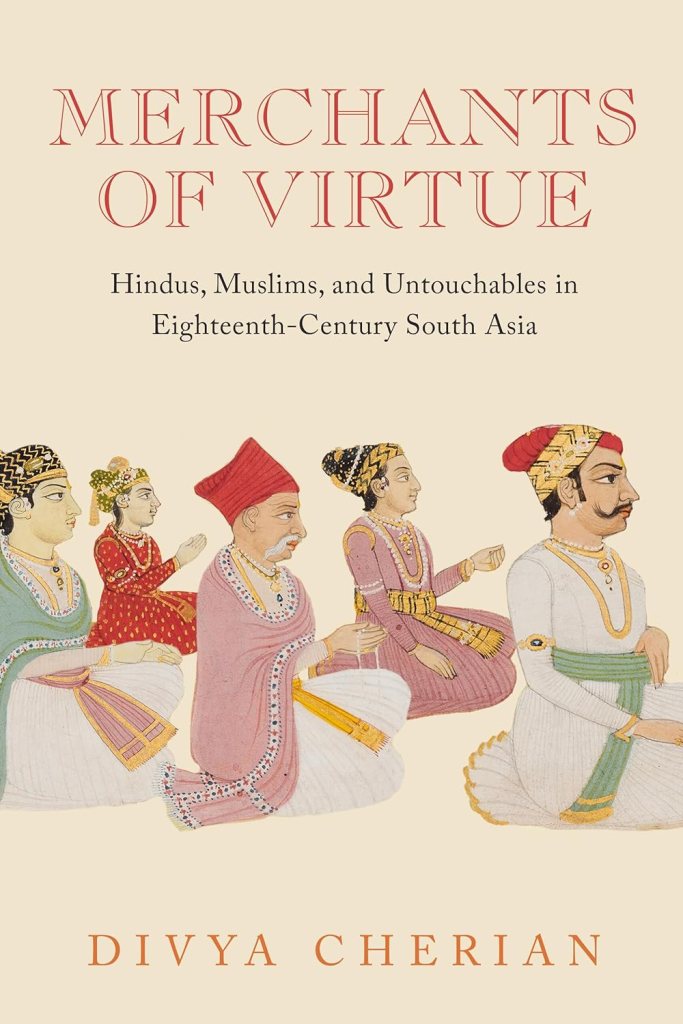
Merchants Of Virtue: Hindu, Muslims, Untouchables In Eighteenth-Century South Asia by Divya Cherian, Navayana Publication, New Delhi, Paperback, Published: 2023, 272 pages, 6 x 9″, ISBN: 9788195539277, ₹599.
“The everyday social is the domain where the first experiences of social are formed.”
– Gopal Guru, Sundar Sarukkai (2019)
Understanding caste in its quotidian forms unveils the construction of the ‘everyday social.’ When exploring the histories of caste, the consideration of ‘everyday lives’ and ‘everyday practice’ becomes crucial. Going beyond textual analysis, caste-related events, and movements, it is essential to scrutinize the operations of caste within the fabric of daily life (Jawaare, 2019). Divya Cherian’s Merchants of Virtue is part of this quotidian caste history.
One of the book’s central concerns is probing the role of merchant castes in the histories of caste. By focusing on the Kingdom of Marwar, particularly Maharaj Vijay Singh’s reign (1752-93), Cherian illustrates how merchant castes enforced their caste ideals and influenced the development of the Rathore State. She asserts that the ‘Hindu’ self within the region emerged in opposition to ‘achhep’ or untouchables. The ideals of vegetarianism and bodily austerity as markers of Hindu identity, are again products of the very same process.
Hindu ‘self’ in the pre-colonial period developed as a reaction to Muslim presence. While reacting to the Muslim ‘other,’ the Hindu ‘self’ gets expressed and solidified (Thapar, 1989). Countering this claim, some scholars have denied the strict categorization as ‘Hindu,’ ‘Muslim,’ and argue for hybrid and sectarian identities (Talbot, 1995). In both these arguments, religion or faith assumes the central position. Instead of this, Cherian argues that, to comprehend the precolonial Hindu ‘self’ and Hindu-Muslim relations, the central role of caste, particularly Untouchable castes, must be considered. This requires a focus on the bodily ethics associated with caste in its quotidian forms.
For any kind of historical inquiry, the question of ‘sources’ is important. The book relies on an examination of more than seventy volumes of the Jodhpur Sanad Parwāna Bahīs (JSPB). The JSPB depicts the quotidian relation between the state and its constituents in the form of – orders, petitions, demands, etc. The Bahis, which bear the imprints of merchants’ administration, are embodiments of Rathore Documentary Culture. Her engagement with vernacular literature, particularly in the early modern period, undoubtedly offers a distinct understanding of South Asian history.
The book is divided into two parts. The first part, titled “Other”, delves into how the Rathore state’s orders aimed to express distinction from perceived untouchables, covering topics in three chapters: ‘Purity’, ‘Hierarchy’, and ‘Discipline’. In the second part, “Self”, the book explores the recasting of elite identity through the elevation of merchant ethics. It examines how the state, led by Merchants and Brahmin administrators, enforces mercantile values and endeavors to shape a ‘Hindu caste body’ through bodily discipline. It contains three chapters- “Nonharm”, “Austerity”, and “Chastity” The initial chapter, “Power”, provides background insights into these changes, while the ‘Epilogue’ discusses their afterlives of those changes and the symbiotic association between Marwari merchants and Sanatani Dharma in colonial and post-colonial period.
While investigating the role of merchants in South Asian history, the author argues that in the eighteenth century, merchants made the leap from ‘participants in state machinery to leaders of political change’. Their roles as courtiers, administrators, and scribes, coupled with dominance over income-generating positions, facilitated this transformative shift. Scholars have widely acknowledged the rise of merchants as a ‘political class’ in the Mughal period itself. Post-Mughal Rajput State formations have also shown similar kinds of patterns.
The first chapter of the book delves into the social, political, and economic transformations in the Marwar region post the fifteenth century. It primarily focuses on the reign of Vijay Singh (1752-93) and the subsequent changes in the Rathore state. Cherian explores Vijay Singh’s initiation into the Vallabha sect in 1765 and his deliberate efforts to present himself as a devotee of Krishna, which leads to the creation of a shared bond with Jain and Vaishnava traders. The reference to merchants and certain brahmin castes being grouped under the common term ‘Mahajan‘ was a consequence of their active participation in the administration. Key positions within the state organization, such as Diwan, Bakshi, Hakim, Kotwal, and Sayar, were primarily occupied by those Jain and Vaishnava merchants. In essence, Cherian demonstrates that Krishna-centered devotion and economic debt conditions allowed merchants to translate their economic success into social and political status. This transformation ultimately brought the king into a closer alliance with merchants.
“Living next to a leatherworker violates my dharma” (p.46)
“If they drink water there, my dharma will remain intact” (p.47)
Mahajans strategically employed state authority to uphold social distance from the ‘achhep’ or untouchables. The above quoted petitions underscore the Mahajan’s endeavors to establish a distinct, autonomous, and untainted sphere for the Hindu ‘self,’ invoking dharma to justify social segregation. The individuals labeled as ‘achhep’ in these records encompass various groups such as Turuk, Chamars, Dhed, Thori, Bavari, Bhangi, Bhambi, Meghwal, and Halalkhor. Despite evolving definition of who precisely falls under the category of ‘untouchable’, for the elites as Cherian observes, the ‘Bhangi body’ remains at the core of untouchability. The stigmatization of the bhangi body is essentially associated with the nature of their labor. Those ‘achhep’ are not regarded as full human beings, as implied by terms like ‘kamin‘ (lowly) and ‘pun jat‘ in archives, and even Muslims are also categorized under ‘achhep’.
Chapter 3, titled “Hierarchy”, delves into state intervention in religious traditions and practices, exploring the consequent formation of the ‘Muslim Other’. The chapter examines the shaping of the imagination of Muslims in Rajput courts, through the lens of state-sponsored Rajput narratives, with a specific focus on Prithviraj Chauhan. These narratives defined Muslims as ‘others’ and ‘political enemies.’ The chapter highlights the significance of depictions in Udaipur and Sisodia courts in creating categories, a scenario where Muslims are collectively portrayed as a unified entity. For the Rathore state, the concept of ‘Hindu’ is realized by excluding Muslims and ‘achhep’, reflecting an attempt to carve out an independent and autonomous space within Hindu society.
Chapter 4, titled ‘Discipline’ delves into how the designation of ‘achhep’ in Marwar is shaped by referencing the practices and moral values of the elite. ‘Nonharm’ is depicted as the moral conduct anticipated from the elites, with the killing of animals essentially linked to untouchables and deemed an immoral and criminal activity. The state’s insistence on vegetarianism led to the establishment of strict surveillance regimes. Groups associated with the dead or the meat were labeled as ‘low’ and ‘other,’ with such acts were considered both immoral and criminal. Cherian provides detailed insights into these dynamics, particularly in the cases of the Thorī and Bāvrī castes. This historical context can be viewed as a precursor to the concept of the ‘criminal caste’ during the colonial period. The State’s adoption of a policy of public surveillance is emphasized, turning every individual in the State into an informer essentially, the ears and eyes of the State. Cherian emphasizes that the vegetarian policy played a crucial role in shaping Hindu identity in Marwar. This underscores the notion that, when it comes to food, the dietary choices of upper castes are accepted as the universal norm.
The three chapters in Part Two extensively explore the regulation and control of the body within the higher castes, elucidating how the Hindu ‘self’ became the exclusive domain of the upper castes through the imposition of bodily discipline. The Rathore state, advocating extreme non-violence, enforced a complete ban on killing animals. In this context, a historical review of non-harm and vegetarianism is also undertaken. Prior to earlier attempts by the State to impose these values, they were limited to the kingly class, as seen in the cases of Ashoka or Akbar; however, in the Marwar region, it was equally applied to subjects as well. The state exhibits an extraordinary sensitivity towards the killing of animals, evident in detailed orders, such as directives against using cow dung in rainy days, covering oil lamps, and refraining from killing ants. However, in stark contrast, these documents only make three references to female foeticide!
The body is regarded as an ethical space in the pursuit of ‘virtue’. State-sanctioned bans on activities such as betting, drinking, and abortion are also a part of creating the ‘Ideal Caste Body,’ heavily influenced by the ethics of merchant castes. Interestingly, these bans appear to be more specific to the ‘Mahajan‘ caste rather than being universal, as observed in the case of animal killing. This can also be observed in the regulation of the sexual lives of the Mahajan castes. The ‘Caste’ and ‘State’ act as a regulating entity to prevent cases like lagvad and chamchori (illicit affairs), which contributes to the definition of ‘immoral sex’ and underlines the attempt to control the body as a means of shaping the Hindu ‘self.’ In summary, body control is an endeavor to actively influence the formation of elite Hindu identity with rituals, spatial practices, dietary choices, and sexuality emerging as symbolic representations of this identity. Notably, these processes unfolded within a legal framework, adding a distinctive dimension to the formation of elite Hindu identity.
In the ‘Epilogue’, Cherian briefly explores the role played by Marwari merchants in the Sanatan Dharma Movement, emphasizing their response to colonial modernity by adopting the sanatani way. The significant involvement of Marwari merchants in supporting the revival of Sanatan Dharma is evident through financial contributions to organizations and printing houses that publish literature associated with Sanatan Dharma. Notable institutions benefiting from Marwari investments include Venkateswara Press in Mumbai, Kalyan Magazine, Geeta Press in Uttar Pradesh.
In the final stretch, Cherian argues that in the contemporary period, caste differences are rooted in ‘somatic and sensory engagements’, perpetuating themselves at an everyday level. Here, the affective responses to caste differences need to be taken into consideration. To understand this, it is essential to focus on what Joel Lee has termed the ‘affective theory of caste’ (Lee, 2021). Cherian discussed this argument in the context of disgust and caste ethics.
Overall, Merchants of Virtue highlights the merchant castes’ capacity to reshape caste ideology based on the principles of non-violence and vegetarianism. It emphasizes the role of non-brahmin castes and concurrently calls for a “recognition of caste in its everyday forms, the centrality of touchability/untouchability.. and bodily ethics” as a crucial step towards annihilating caste.
References
Guru, G., & Sarukkai, S. (2019). Experience, caste, and the everyday social. Oxford University Press.
Jaaware, A. (2018). Practicing caste: On touching and not touching. Fordham Univ Press.
Lee, J. (2021). Disgust and untouchability: towards an affective theory of caste. South Asian History and Culture, 12(2-3), 310-327.
Talbot, C. (1995). Inscribing the other, inscribing the self: Hindu-Muslim identities in pre-colonial India. Comparative studies in society and history, 37(4), 692-722.
Thapar, R. (1989). Imagined religious communities? Ancient history and the modern search for a Hindu identity. Modern Asian Studies, 23(2), 209-231.

I have completed my Masters in Political Science from IGNOU in 2023 and am also eligible for Junior Research Fellowship(JRF). My scholarly pursuits primarily revolve around exploring the intersections of Caste, Gender, Body, and Sensory Studies, with a particular focus on Dalit writings in Marathi. Additionally, I have a keen interest in reading fiction and I passionately follow the world of cinema.
The Adivasi Will Not Dance

The Adivasi Will Not Dance by Hansda Sowvendra Shekhar, New Delhi, Speaking Tiger, 2015, 200 pp, ISBN 9789385288937, ₹299
by Alok Ranjan
Indigenous peoples are framed as a cultural other for the non-indigenous to affirm their civilisational status. This framing is useful for naturalising the extractability of their labouring, sexual and political bodies. The developmentalist ideology cites their seclusion from modern political and cultural processes to explain their material plight. It includes both welfare and neoliberal developmentalism that warrant populations to embrace statist and capitalist expansion, respectively, to join the road to human progress. Instead, a decolonial form of writing interrogates the points of contact between the indigenous and non-indigenous lifestyles, the traditional and the modern, self-sufficiency and development. Hansda Sowvendra Shekhar’s The Adivasi Will Not Dance firmly occupies this strand of writing, wherein the Santhal Adivasis of Jharkhand are displaced from their home, land and dignity. In a searing collection of ten short stories that serve as a powerful reminder of the ordinary vulnerabilities affecting Adivasi communities in India, the book brings into question the locations of hospitals, rented urban homes, railway stations, and an official stage for what they have to offer the people entering the presupposed mainstream. These locations that are usually thought of as representing universal-egalitarian spaces become sites of prejudice and predation. This anthology delves deep into these people’s lives, providing readers with an exploration of the social injustices they endure, both beyond and within their villages.
Shekhar captures a sensitive and nuanced complexity of Adivasi existence that is one of the most remarkable elements of The Adivasi Will Not Dance. He handles issues of witch-hunting, prostitution, women’s abuse, and human trafficking squarely, rendering it impossible for the reader to gloss over the distress of these communities. In the most disturbing story of the collection, “November is the month of the migrations”, Shekhar narrates the journey of a 20-year-old Talami, symbolising extreme poverty, as she heads to Bardhaman district with her family to work on zamindars’ farms. At a railway platform on her way, she is compelled to engage in a sexual transaction with a policeman for pieces of cold bread pakora and a note of fifty. This story sparked controversy, with accusations of vulgarity and women objectification. The book was banned by the Jharkhand government in 2017, and the author was suspended from his job as a medical officer. However, a bold style allows Shekhar to persuade the reader to get involved in the scene of violence rather than as witnesses conveniently informed of it.
The opening chapter, “They eat meat!” tells the tale of a Santhali family having to modify their food habits after they migrate from Raurkela to Vadodara, where vegetarianism predominates. The family is asked by the homeowner not to reveal their tribal identity in the neighbourhood. “If they ask you where you’re from, please, will you just tell them that you’re from Jharkhand? Just that much, nothing more.” It reminds readers of how cities profile populations based on their identities and mandates cultural alikeness to accommodate them. The story is set in Gujarat in 2002 and ends in a neighbourhood coming together in solidarity to face a rioting mob. Some other stories look closer at disparities and scandals near community life. “Baso Jhi’’ is a story of a patriarchal superstition- of Basanti’s expulsion from the village by her sons and neighbours after declaring her ‘dahni’ or witch following three consecutive deaths in their village Sarjomdih. Here, the often overlooked questions of gender and age surface in the context of Adivasi sociality. In “Merely a Whore,” we navigate the harrowing landscape of prostitution alongside Sona, who yearns for love and a kiss before being brutally assaulted with verbal abuse by her beloved client. In an elongated tension within a short story space, a double inability of the central characters is manifested. The story narrates a sex worker’s intimate challenge of love to a man frustrated with his incapacity to kiss, expressing masculine domination as the only refuge of romantic incapability in her body.
From mapping different facets of Santhali living, the author arrives at a definitive stance. In a conscious political move, Shekhar closes the book with a narrative of defiance. The titular story, “Adivasi Will Not Dance,” subverts the cultural appropriation coupled with the political domination of Adivasis in the backdrop of their material exploitation. It portrays a dramatic story of Mangal Murmu, an old dance troupe instructor who has instructed dance groups for many years but declines to perform at an event organised in honour of the President of India, as he is troubled by the consciousness that his relatives are being uprooted because of a power plant. This story is inspired by an actual incident of tribal resistance when President Pranab Mukherjee visited Jharkhand in 2013 to lay the foundation stone of a thermal power plant in Godda. Mangal Murmu’s bold proclamation, “Unless we are given back our homes and land,…We Adivasis will not dance,” symbolises defiance of governmental-developmental regimes that prey upon indigenous culture for diversity exhibitions while endangering the Adivasi way of existence and their supporting landscape. Still, the audience of this proclamation can be meaningfully extended to include the whole culture industry, academic community and representational politics.
Nonetheless, the book’s title and the preceding discussion should not lead a reader of this review to understand the book as an account of Adivasi’s rebellion against the state. It does not focus predominantly on issues of political power and governance. The affirmative tonality of the final chapter is preceded by a reflexive attitude, centring around conventional predicaments of human relationships and poverty. It helps the author portray Adivasis as inhabiting a common human world of aspirations, disappointments, jealousy and despair. Shekhar imagines Adivasi existence beyond cultural essentialisation. Thus, the book features a mother losing her fever-stricken son to poverty while she is out to work, a village family framing a boy for a rape charge, two boys from rich and poor family backgrounds developing contrasting morality and reputations, and a woman looking to revive a relationship with her earlier partner after marriage. These are stories of conspiracy, distress and desire common to all forms of living, including Adivasi lifeworld.
The book neutralises the dual gaze of cultural contempt and exoticisation. In brief fictional accounts, it gives Santhals human characteristics non-determined by their expected human nature but indulged in encountering multiple sites and aspects of the arrangement of human livelihood. This is not done, of course, in negligence of the oppressive systemic processes that Adivasis are peculiarly placed under. Against a prejudiced view of Adivasi struggles as composed of intelligible actions, this collection brings to the surface powerful speech declaring that the Adivasi will not dance to a tune that disregards their dignity and rights.
This book should merit readers’ attention as a Santhali author’s engaging catalogue of real-life predicaments of Adivasi livelihood, poverty and migration, moving beyond the stereotyped imageries perpetuated in popular discourse and the patronising gaze of political and academic elites. Simple language gives violence a routine quality, while the directedness of depictions is used to stir the reader’s comfort rather than fantasy. His storytelling style does not telegraph the unfolding events, which can be pretty shocking when they occur. Yet, these episodes of violations are not dramatised or given an event-like character, except in the final titular chapter, thus highlighting the everyday nature of the humiliating experiences endured by Adivasis. It challenges the reader of their intuitive thinking to follow the Santhals in their journey even as one is tempted to predict the directions. They don’t begin from our landmarks, nor do they reach the destinations.

Alok Ranjan is a PhD Scholar at the Centre for Political Studies, Jawaharlal Nehru University, New Delhi. He studies the state, political action and informal power; and enjoys good music.
Properties of Rent: Community, Capital and Politics in Globalizing Delhi

Properties of Rent: Community, Capital and Politics in Globalizing Delhi by Sushmita Pati, Cambridge University Press, 2022, 320 pages, 15.88 x 2.54 x 23.5 cm, 978-1316517277, Price: 989 INR.
by Ishan Sahi
What we call land is an element of nature inextricably interwoven with
man’s institutions. To isolate it and form a market for it was perhaps the
weirdest of all the undertakings of our ancestors.
—Karl Polanyi, The Great Transformation (1944)
Properties of Rent studies two urban villages in South Delhi-Munirka and Shahpur Jaat. Urban villages of Delhi are a product of its southward expansion, when the Delhi Development Authority Passed an order to acquire 34,070 acres of land under section 4 of the Land Acquisition Act,1894, it distinguished the village settlement area from the agricultural land of the villages based on a land settlement report of 1908-1909 which separated the two areas by a line drawn with red ink. This red line which once demarcated the taxable from non-taxable land became the legal demarcation of the rural from the urban, and resulting in the nomenclature lal dora villages (p.3). It goes beyond considering rent simply as a form of accumulation and considers the emergence of specific housing properties under the impetus of rent maximization. The two villages became a part of the expanding city of Delhi in the 1950s and 60s, and their agricultural land was taken over by the DDA. The red line also signified that the building bye-laws of the DDA did not apply to these villages which led to the evolution of creative housing configuration in the two villages.
The book focuses on the role of community organizations and cooperatives as informal sources of credit for developing rental properties. The book traces the broad occupational trajectory of the landholding communities, especially the majority Jat landholders. The Jat landholders expressed the sentiment of feeling shortchanged by the compensation they received for their land in the 1950s and 60s. The book then shows how the Jats of the two villages accumulated capital across generations through jobs in the lower bureaucracy, the sale of construction goods and the transport business. Community cooperatives were one of the significant sources of credit, which allowed the landholders to develop their properties for rent. This trajectory was not shared across all the communities, especially Dalits who borrowed money for developing their properties under relatively unfavourable terms and their current living conditions are marked by precarity despite being landlords(p.174-198).
The two villages follow distinct trajectories of development determined not just by the absence of the DDA bye-laws but also by distinct connections to the globalized production chains that reached Delhi after the economic reforms of 1991. Munirka witnessed the proliferation of the one-room set, which allows maximum units in a single building. This caters to a large number of migrants from the north-eastern states, of whom 85% are Manipuris (p.152). They have been working in Delhi’s burgeoning service sector economy, from jobs in the BPOs (Business Processing Outsourcing) to restaurants that have sprawled across the city. This community has also faced xenophobic attacks from their landlords, an issue that we shall touch upon later.
Properties in Shahpur Jaat were rented out to two categories of tenants—artisans working in garment factories and high-end stores of designer clothing. In the 1980s, Shahpur Jat emerged as a garment manufacturing hub and began housing many artisans, mostly Bengali Muslims from the North and South 24 Parganas (p.95). With the economic reforms, elite entrepreneurs sought to develop areas like Shahpur Jat which were away from the city’s arterial roads, into markets for niche consumption (p.91). The village of Shahpur Jat became a favourable location because of the availability of cheap labour, low rents and their ‘rustic rurality could be curated, packaged and sold’(p.91). This trajectory of property development has led to sky-high valuations and pushed the landowning community to further gentrify the area.
Expectedly, the relationship of the landholding communities and their tenants reflects their economic and social location. The north-eastern migrants renting properties in Munirka have been subjected to racist abuse and even sexual harassment. After the incident of the rape of a minor manipuri girl in 2014 by the son of her landlord. The Youth Brigade Munirka an organisation devoted to fostering a sense of Jat solidarity issued emotive appeals to the resident community. The Jat centric nature of the organisation did not sit well with residents of the Jatav and Nai communities. The ambition to remain politically relevant and led YBM to expand its membership base expanding its membership base. It is now led by a Jatav and a tenant and has enlisted as an organisation by the Delhi Police which supported North-Eastern students. The YBM also campaigned for the inclusion of women in the voting process of the RWA, a demand which was begrudgingly accepted (p.189).
This shows the paradoxical position of landowning communities in urban villages with rent as the primary source of income which ensures that the landowners have to include and address the concerns of the tenants however this does not eliminate the racism and xenophobia which even takes violent forms. They feel threatened from the cultural erasure which is a consequence of being absorbed into a large city like Delhi and being surrounded by the radically different cultural norms of their tenants who outnumber them significantly.
However, rental markets also force the Jat landlords to form a common front with other communities like Jatavs and Nais in Munirka as well as address the concerns of their tenants. In the case of Shahpur Jat which has seen property values sky-rocket, presenting the area as a safe, secure, and a well-curated space is in the best interest of the landlords. The book chronicles the modernizing influence of rental markets on the landlords in great detail. The differences in the kind and speed of the changes are a function of the demands of the rental markets and the social location of the tenants.
Shahpur Jat shows a different aspect of this dynamic. While landlords compete amongst themselves to attract high net-worth commercial tenants, they also make sure that the tenants cannot form a collective front or become members of the Resident Welfare Association. Though occasionally volatile, the landlord-tenant tensions in Shahpur Jat pale in comparison to the situation in Munirka. This is helped by the extremely high rents that landlords here can extract from their tenants. The aesthetic changes catering to the tenants raise both the rent and value of the properties in the village. This has led both individual landlords and extended families organised through the kinship group of the Kunbas which are spatially organised act like joint stock companies to improve whole portions of their village which cannot be done by a single family (p.124).
Properties of Rent is an important contribution to the literature on cities in the Global South as it highlights the relationship between rent and built structure. The book studies the networks through which the value and rental spaces are produced in globalizing Delhi. It complimentsthe literature on world-class spaces and cities focus on the politics and networks of finance and expert bodies which world-class built form of cities in the global south (Ghertner 2015a; Roy and Ong 2011). While the one-room set is a defining character of Munirka, its emergence is also a consequence of the burgeoning service sector economy. The adda and the commercial properties of Shahpur Jat are parts of another circuit of Delhi’s economy which produces distinct spaces and very high valuation. In this way, the book contributes to the literature on the production of spaces through informal practices (Palat Narayanan and Véron 2018). The simultaneous examination of the circuits producing spaces and value makes Properties of Rent a necessary work for those interested in the relationship of rental accumulation and built structure in the India where the planning regime is an informalised entity (Roy 2009).
Like all important works, Properties of Rent also suffers from some limitations. It describes the movement of values across landscapes as mysterious (p.91). But then it demonstrates how migrant flows into the city and their position in the global circuits of production either as BPO workers or as craftsmen working in emerging boutique fashion stores shows how value moves across space and time dispelling any notion of mystery, especially when read with the literature of spatial transformation that accompanies financialized economic growth (Harvey 1991; Ghertner 2015; Roy and Ong 2011; Palat Narayanan and Véron 2018). Without this hesitation in drawing conclusions from its empirical material, the insights of the book would have come forth with greater clarity.
The book also characterizes the improvements made to their properties and the area by the landlords of Shahpur Jat as ‘gentrification’. But if we are to define gentrification not just as improvement to properties seeking higher rents but also as the displacement of poorer existing residents then we have to ask some questions about this characterization (Ghertner 2015b). The presence of garment factory workers in the Shahpur Jat attracts the high-end commercial tenants who would lose out if the factory workers were to be removed. It is also interesting to ponder why it is that the gentrification of Shahpur Jat is happening only to the benefit of the landowners and not at their cost. After all, the tenants are significantly richer than them and should have been able to buy these lands and displace the original landowners, had the land not been in the confines of lal dora villages. This shows the limitation of the lens of gentrification, understood as market induced displacement associated with rising rent accompanied by aesthetic improvements in built structure in the context of the different forms of property regimes and informality that characterizes the land market in the global south (Ghertner 2015b).
Despite the occasional misses, Properties of Rent is an important and ambitious monograph. Empirically rich, it is a fertile ground for further theoretical exploration of the relationship between circuits of accumulation and built form of cities. Across its breadth we can trace how agricultural villages whose lands were acquired by the government evolved as they were surrounded by a globalizing city. This allows us to see how a natural product like land gets commodified and transformed to cater to the needs of migrant workers and rich elites of Delhi through specific housing innovations like the one-room set and the adda.
References:
Ghertner, D Asher. 2015a. Rule By Aesthetics: World-Class City Making in Delhi. Rule By Aesthetics. Oxford University Press. https://oxford.universitypressscholarship.com/view/10.1093/acprof:oso/9780199385560.001.0001/acprof-9780199385560.
Ghertner, D. Asher. 2015b. “Why Gentrification Theory Fails in ‘Much of the World.’” City 19 (4): 552–63. https://doi.org/10.1080/13604813.2015.1051745.
Harvey, David. 1991. The Condition of Postmodernity: An Enquiry into the Origins of Cultural Change. 1st edition. Oxford England ; Cambridge, Mass., USA: Wiley-Blackwell.
Palat Narayanan, Nipesh, and René Véron. 2018. “Informal Production of the City: Momos, Migrants, and an Urban Village in Delhi.” Environment and Planning D: Society and Space 36 (6): 1026–44. https://doi.org/10.1177/0263775818771695.
Pati, Sushmita. 2022. Properties of Rent: Community, Capital and Politics in Globalising Delhi. Metamorphoses of the Political: Multidisciplinary Approaches. Cambridge: Cambridge University Press. https://doi.org/10.1017/9781009043694.
Roy, Ananya, and Aihwa Ong. 2011. Worlding Cities: Asian Experiments and the Art of Being Global. Malden, Mass.: Wiley-Blackwell. http://site.ebrary.com/id/10484883

The writer is pursuing a PhD in Sociology from Humanities and Social Sciences Department of IIT Bombay on the Production of World-Class Space in Banaras. He has an interest in Indian Politics and Political Economy. He did his bachelors in Political Science from the Banaras Hindu University(2011-14) and Master’s in the Jawaharlal Nehru University(2015- 17) before joining the PhD program in IIT Bombay in 2019.
India’s Nuclear Titans
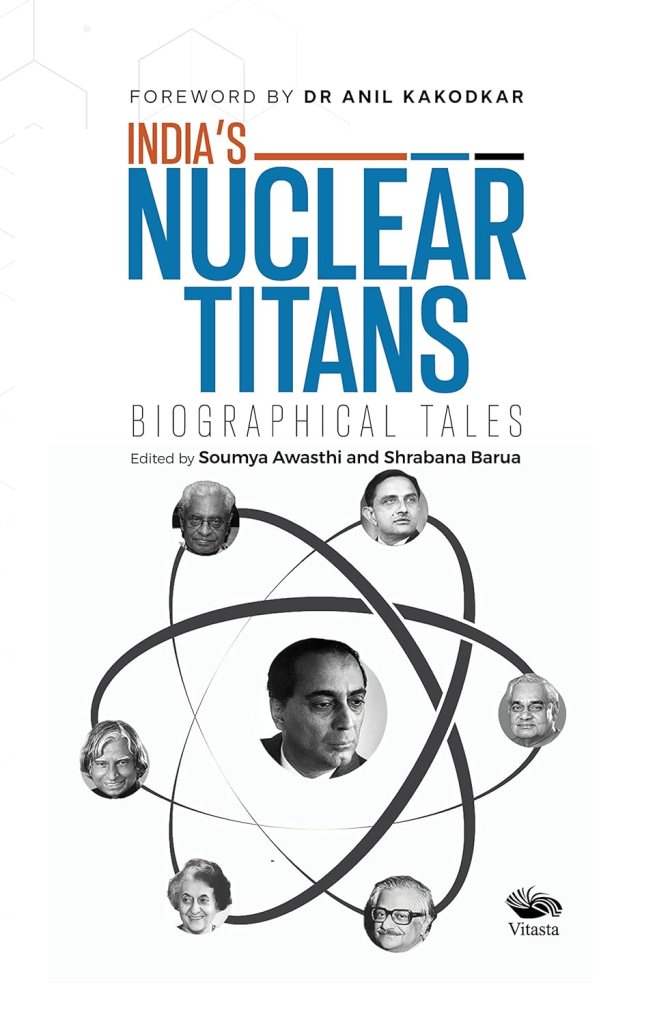
India’s Nuclear Titans: Biographical Tales by Soumya Awasthi and Shrabana Barua (Eds.), New Delhi: Vitasta Publishing Pvt Ltd, 2023; pp.xlvii+327, ISBN: 9788196041373, ₹595 (Hardcover).
It has been twenty five years since India became an overt nuclear power. The nuclear tests conducted by India in 1998 marked a watershed moment in the country’s nuclear journey. It put an end to the ambiguities surrounding India’s nuclear program right from its origin. Since then India’s nuclear policy has travelled a long way in defying the global non-proliferation regime on the one hand and engaging in nuclear cooperation with the US for civilian purposes on the other. As Indians we do take pride in our country’s nuclear ‘exceptionalism’ but how many of us are aware of the sacrifices and contributions of the individuals who helped give shape and vision to India’s nuclear policy? The nuclear India we see today is the result of the toil and hard work of several individuals who contributed to India’s nuclear program in different capacities. In this regard, Soumya Awasthi and Shrabana Barua’s edited book titled India’s Nuclear Titans: Biographical Tales published recently celebrates the life and works of ten such personalities who envisioned, implemented, strategized and diplomatically guarded India’s nuclear ambitions since the early decades of independence.
The volume is certainly not the first of its kind as India’s nuclear history has been well documented earlier in the works of authors like George Perkovich, Raj Chengappa, Robert Anderson, Amitabh Mattoo and many others. India’s Nuclear Titans is different from the earlier works in two ways, firstly, the book traces some of the recent developments in India’s nuclear policy which the earlier works were unable to cover. For instance, New Delhi’s quest to “catapult itself into the nuclear map of the world” (p. xiiii) by transforming its relationship with the US from one of engagement to that of cooperation has been well documented in the book. It has also underscored the fact that despite becoming a declared nuclear power, India has remained loyal to its commitment for a phased elimination of nuclear weapons from the world and also offered its assistance to the UN in this regard in 2008 (p. 307). These issues had neither been addressed in Perkovich’s India’s Nuclear Bomb: The Impact on Global Proliferation (1999) nor in Raj Chengappa’s Weapons of Peace: The Secret Story of India’s Quest to be a Nuclear Power (2000) as the timeline of both these works were confined to the year 1998 when India became openly nuclear. Secondly and most importantly the book brings forth a new way of reading the nuclear history of India through the lives of the people who not only toiled in making India a nuclear power but also developed its nuclear strategy. The book does not limit its focus to scientists and politicians alone, it goes a step further to shed light on the role played by nuclear strategists as well as diplomats. This is a remarkable departure from the earlier works on India’s nuclear history that mostly discussed the contributions of either the nuclear scientists or the politicians. The book is a collage of the life stories of ten characters, a peep into which will help the readers gain a holistic understanding of India’s nuclear history which is rather complicated and debated.
The book has been divided into four sections- the first section includes four chapters that deal with the eminent scientists of India- Homi J. Bhabha, Vikram Sarabhai, Raja Ramanna and APJ Abdul Kalam. The common factor binding all these scientists was their zeal to harness the benefits of scientific and technological progress and channel it towards the development of the nation. The relentless efforts of these scientists to establish an indigenous nuclear program were unparalleled. For example, in Chapter one gets to learn about the pivotal role played by Homi J. Bhabha in establishing the Tata Institute of Fundamental Research (TIFR) in 1945 and the Atomic Energy Commission (AEC) of India in 1948. Needless to say, these institutions went a long way in shaping India’s nuclear destiny. Both Bhabha and Jawaharlal Nehru were in favour of using nuclear energy for peaceful purposes but at the same time, they also kept the option of building a nuclear bomb open (p.309).
After the untimely demise of Bhabha in an airplane crash, India’s nuclear program was ably guided by one of his bright disciples- Vikram Sarabhai. Even though Sarabhai’s greatest achievements are alluded to India’s space program yet one cannot turn a blind eye to his contributions in the field of nuclear science and technology. The second chapter depicts how Sarabhai led both the AEC and DAE at a critical juncture and filled in the void created due to Bhabha’s death. However, Sarabhai’s pacifist worldview meant that he was not much in favour of building a nuclear bomb and in that sense his position was a departure from his predecessor (p.43).
We mostly remember Bhabha and Sarabhai as the pioneers of India’s nuclear program but that leads us to ignore the valuable contributions of another prominent scientist named Raja Ramanna who also harboured a great love for music. This book does justice to Ramanna by dedicating a separate chapter that sheds light on his numerous feats as a nuclear scientist. The third chapter of the book points out how Ramanna wanted India to become self-sufficient at the nuclear level. It was due to his efforts that the CIRUS reactor was brought to India. Ramanna also headed the Study of Nuclear Explosions for Peaceful Purposes (SNEPP) project which was ordered by Prime Minister Lal Bahadur Shastri.
If Bhabha, Sarabhai and Ramanna had laid the basic foundations of India’s nuclear program, it was Dr. APJ Abdul Kalam who had steered it to higher levels. The fourth chapter celebrates the life and works of the former President of India- APJ Abdul Kalam. In this chapter author Rajaram Nagappa provides us a glimpse of Kalam’s pursuits in making India self-reliant when it came to the manufacturing of delivery systems/vehicles that would carry and deliver strategic weapons on specific targets located deep within enemy territory. In the 1980s Kalam headed the Integrated Guided Missiles Development Program (IGMDP) at the Defence Research and Development Organization (DRDO). Today India possesses surface to air missiles and Inter Continental Ballistic Missiles (ICBMs) of varied ranges like Prithvi and Agni but the brain that oversaw the making of these capabilities was none other than the ‘missile man of India’- APJ Abdul Kalam. He had the foresight to make India’s strategic deterrence more credible and strong.
The second section of the book succinctly depicts how two of India’s most decisive Prime Ministers- Indira Gandhi and Atal Vihari Vajpayee showed exemplary courage and determination in ordering the nuclear tests of 1974 and 1998 respectively. Chapter 5 and 6 sum up the political life of Gandhi and Vajpayee and also focuses on the role played by them in nuclear decision making. Decisions on sensitive matters like the nuclear policy of a country are not taken in vacuum, both internal and external variables combine to influence them. This fact has been well acknowledged in these two chapters where the authors Sitikanta Misra and Yasemin Develi (pp. 119-151, 172-178) draw our attention to how the interplay of multiple factors like domestic political pressure, discriminatory nuclear regime (NPT and CTBT), and external threats from China and Pakistan determined the decisions of the two political leaders to conduct nuclear tests. For example, Indira’s decision to conduct the PNE (Peaceful Nuclear Explosion) in 1974 was not only influenced by the Chinese threat and Beijing’s collusion with Pakistan but also by domestic political considerations as the Congress party’s support base saw a sharp decline in many parts of the country coupled with the increasing popularity of Indira’s political rivals like JP Narayan and Morarji Desai (p. 133).
The major contribution of the book lies in the third section which accounts for the contribution of three nuclear strategists in moulding the government’s nuclear policy from time to time. They are K. Subhramanyam, Jasjit Singh and C. Raja Mohan. As members of the National Security Advisory Board (NSAB), K. Subhramanyam who was hailed as ‘India’s Kissinger’ (p.183), the fighter pilot turned strategist Jasjit Singh and the IR scholar with a nuclear physics background C. Raja Mohan were the main architects of India’s Draft Nuclear Doctrine in 1999, whereby the nation adopted the No First-Use nuclear policy and in the process projected itself as a responsible nuclear power.
Through their narratives, these strategic analysts also helped in convincing the Western capitals that India’s possession of nuclear weapons served the sole purpose of deterring its nuclear-armed neighbours from coercion or blackmail. Another common factor between the three strategists is their dedication towards educating the young scholars on matters related to national security and they also built institutions like the Institute of Defence Studies and Analyses (IDSA) and Center for Air Power Studies (CAPS) to this end. The only prism through which these strategic thinkers viewed the world was national interest. This fact is attested to Subhramanyam and Raja Mohan’s changing stance towards the USA in the post Cold War period and how both of them lobbied in favour of the 2005 Indo-US Nuclear deal.
The fourth and final section of the book caters to one of the finest and seasoned diplomats of India- Arundhati Ghose. Vijaylaxmi Yadav enlightens the readers on how Ghose representing India in the diplomatic forums did an outstanding job to protect India’s security interests. Out of her several achievements in the field of diplomacy, the one that stands apart is the way in which she negotiated India’s stance on the CTBT treaty. She was resolute in not accepting the arbitrary terms of the treaty which allowed the Nuclear Weapons States (NWS) to carry out tests by using modes other than explosive testing. Besides nuclear diplomacy, she also suggested the government to forge stable relations in the West Asia North Africa (WANA) region where the strategic landscape keeps on evolving.
India’s Nuclear Titans therefore presents before its readers a bunch of facts about the lives of those individuals who in varied ways influenced the making of the self-reliant and confident India that we see today. Interesting anecdotes like Raja Ramanna’s love for music, Jasjit Singh’s obsession with his red turban, punctuality of K. Subhramanyam or for that matter the chain smoking habit of Arundhati Ghose, make the book an exciting read. Also the main focus of the book i.e. the hard work, dedication and sincerity of all these personalities is itself an inspiration to the readers.
As is the case with writing biographical tales, the book has ended up being a tad more on the informative side rather than being analytical. A separate chapter could have been added on the pioneering role played by Jawaharlal Nehru in laying down the foundations of India’s nuclear program. Moreover, some of the scientific jargon used in the book makes it difficult for a layman to understand them. Notwithstanding these minor deficiencies, the editors and the contributors deserve appreciation for being able to compile the stories of ten Indian stalwarts in one volume. No doubt that it leaves the readers wanting more. It is an academic book not only for students of security but it does give a vivid picture to anyone who is interested in knowing the nuclear history of India.

Dhritiman Mukherjee is presently pursuing Ph.D. at the Department of Political Science, Presidency University Kolkata. His research interests include Nuclear deterrence, India-Pakistan Relations and Theories of International Relations.
Women in Indian Borderlands
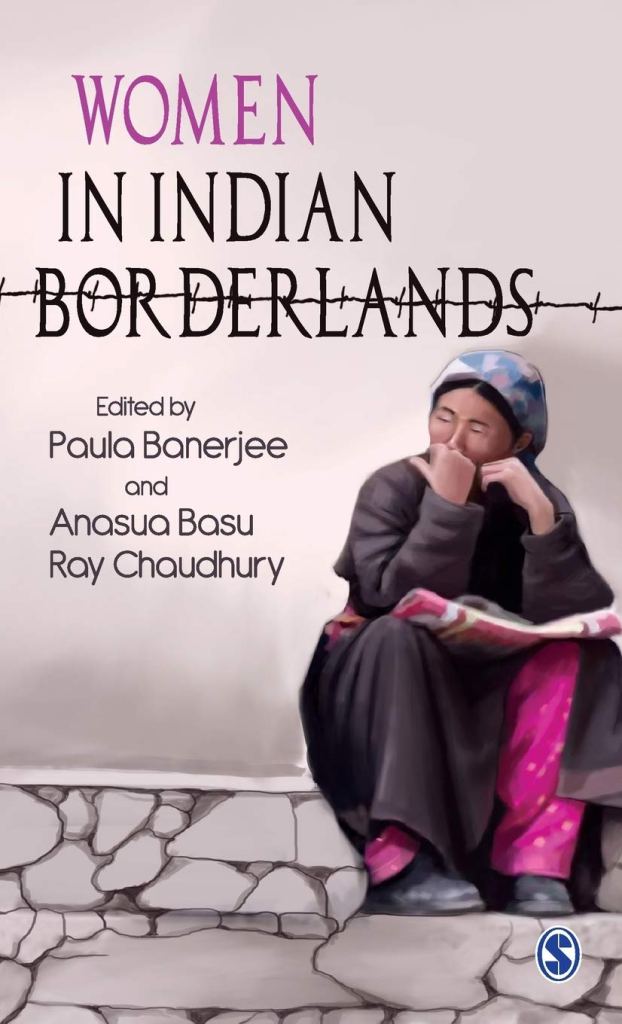
Women in Indian Borderlands by Paula Banerjee and Anasua Basu Roy Choudhury (eds), New Delhi: Sage Publications, 2011, pp. xxv + 234, `595, ISBN: 978-81-321-0650-0 (HB), Price: 953 INR.
The literature on border studies has primarily examined borderlands as spaces of exclusion and has expounded on how the state performs its sovereignty through policing. Border studies scholars have moved beyond the state-centric geography and primary theorization of border vis-a-vis security to explore the multifaceted processes of border-making in diverse socio-spatial contexts and geographical scales. Border studies present an effective way of incorporating the missing narrative of people into the sanitized discourses on national security.
Academic attention has been dedicated to issues such as smuggling and civilian deprivation in the borderlands, yet a noticeable gap remains in the exploration of gender perspectives. This void continues to be effectively addressed through the application of a gendered lens, initiated by Gloria Anzaldúa in 1987 through her study of the U.S. and Mexico border. Paula Banerjee and Anasua Basu Ray Chaudhari’s edited volume, Women in Indian Borderlands, makes a substantial contribution to filling this gap by delving into the lives of women along the Indian borders. The book is a collection of ethnographic studies, employing a gender lens in examining the contours of the borders drawn on the landscape and the mindscape of people living on the borderland. While each chapter could be treated as a stand-alone, what ties them together is a rich tapestry of the borderland produced using ethnography as the research methodology. Ethnography involves the in-depth study and observation of people and cultures in their natural settings. It provides a nuanced understanding of the social dynamics and lived realities within the border regions. The chapters succeed in conversing with each other through the depiction of a shared narrative on the borderland, revealing commonalities such as material disadvantages resulting from marginalized positions, persistent violence or the possibility of violence, complex relations with surveillance and security and gender-specific realities.
Enabling the visibility of minorities among minorities, the essays closely trace the experience of women living on the borders and attempt to portray the complex relations between gender and borders. Borders are gendered spaces, reflecting and perpetuating gender roles and identities, thus shaping the individual’s experience of the borderland. Borders are presented as grey zones characterized by endemic violence due to their distance from the centre, disconnect from the mainland and active contestations of inclusion and exclusion. Women bear a disproportionate burden of patriarchal structures, facing heightened vulnerability due to marginalization, systemic violence and the security challenges inherent in the borderland environment. The chapters prioritize the exploration of women’s daily experiences in private and public spaces, aiming to broaden the discourse beyond the predominant and sometimes singular focus on sex trafficking as the representation of gendered issues in the borderland.
The book can be seen as a follow-up to Paula Banerjee’s Borders, Histories, Existence: Gender and Beyond (2009). Adding an ethnographic account to the historical perspective adopted by Banerjee in her earlier work, this book demonstrates the ability of borders to unite the differences and divide the similarities by shifting the lens from the macro level to micro-practices along the borders, with gender at the centre of analysis.
The authors capture the unique gendered experiences of living on the South Asian borders through an examination of three distinct borders: Bengal-Bangladesh, Kashmir-Pakistan, and Northeast-Myanmar-Bangladesh. The ‘borders’ examined include the international boundaries, Line of Control (LOC), Line of Actual Control (LAC), and Actual Ground Position Line (AGPL). The book is split into four sections- West Bengal, Jammu and Kashmir, Northeast, and Voices- with two chapters each. The first chapter by Paula Banerjee addresses two of the most contentious issues surrounding the borders- migration and sex trafficking. Through an intense demographic study of three districts located on the Indo-Bangladesh border in West Bengal, Nadia, Murshidabad, and Malda, Banerjee demonstrates the historical nature of east-west migration and how the overbearing emphasis on sex trafficking renders all other offenses against women insignificant.
Anasua Chaudhary’s chapter highlights both the spatial and metaphorical aspects of the borders by delving into Partition as a living present and its gendered impacts. She picks up the case of ‘double displaced’ Muslim women of Hooghly district, who had migrated to Bangladesh during the Partition following the communal riots only to migrate back to Hooghly as the Bangla speakers across the border did not accept the Urdu-speaking Shia Muslims. The interviews demonstrate how women had to negotiate multiple borders of the sect, community, patriarchy, and conflicts to find a dignified life that continues to betray them. The section titled Jammu and Kashmir brings to the attention the invisibilized suffering of the ‘displaced and disposable’ borderlanders in the J&K.
The chapter by Anuradha Jamwal and Suchismita points to the contradiction in how military operations like the Kargil War and Operation Parakram are perceived in the borders and the mainland. While the mainland celebrated the victory and moved on, border villages like Kerni were converted into minefields, fields and habited lands were fenced out, and self-sufficient villagers became displaced, poor, and destitute overnight. Women became more susceptible to landmines since they were responsible for grazing cattle and collecting firewood. Physical and psychological deprivation meted out to women underlines the impact of structural violence. Sexual violence also persists at the hands of the military, the militants, and often, their own family members.
Adding to this narrative, Sumona DasGupta, in her chapter, looks into the psychiatric distress and suicidal tendencies that ail the women in these regions, exacerbated by insecurity, the constant threat to life and lack of access to medications. With the men being maimed, missing, or dead, women are left with no choice but to shatter the public-private divide and seek employment, making them the sole wage earners and, inevitably, the heads of the household. The competition amongst the women due to limited resources, “politics and economics of firewood” (p. 103) has further disrupted communitarian life and alienated them from the material and emotional safety net that a close-knit community offered.
The fifth and sixth chapters, by Sahana Basavapatna and Anshuman Ara Begum, are located in the Northeast. The former points to the instability of the Other created by the borders and the overlap in the meanings of terms like ‘economic migrants,’ ‘refugees,’ and ‘stateless’ (p.127) by examining the case of Chin ‘refugees’ in Mizoram. Unlike other states, Mizoram has exhibited a benevolent attitude towards the Chin refugees from Myanmar due to the historic migration and common lineage traced to the Luhasi mountains. The Chin women recognised both as kin and a dangerous presence, eke out their lives at the doorsteps of violent abuse. The creative ways in which the system accounts for the rights of ‘illegal’ women migrants become the centre of the narrative of the fifth chapter. The use of the law against domestic violence by Chin women to protect themselves despite not being legal citizens of the country sheds light on the maneuvering space that impersonal laws present to those who implement them. Organizations like the Ferrando Integrated Women’s Development Centre that assisted the Chin women domestic workers and judges who consciously looked away from their illegal status during trials are the agents of the system that enable this.
The sixth chapter focuses on the arbitrary nature of fences and the deprivations they cost the lives of the women of West Garo Hills, mainly in the form of loss of agricultural lands, disruption of cross-border trade and feeling of entrapment in one’s land. The final section, titled the “Voices” consists of chapters by Aditi Bhaduri and Chitra Ahanthem and is in narrative format, with the women of the borderland recounting their experiences of negotiating the multiple disadvantages arising from being on the fringes of both the nation-state and the society. The multiplicity in the experiences of women is highlighted as the Border Security Force becomes the protector and the intruder, boundaries become porous and rigid, and the ‘other side’ a haven and hell.
The diversity in the accounts presented by women highlights that women do not experience the world identically despite sharing a gender identity. Their experiences are also mediated by other identities like religion and ethnicity, calling attention to intersectionality. For instance, Sabranti Karmakar, who is serving as a constable with the BSF, perceives her work as a service to ensure security and peace. In contrast, the perception of BSF in several other accounts is marked by unrelenting anxiety and resentment. The common thread joining these multiple narratives is endemic violence and poverty, which have contributed to both affinity and estrangement among women.
The book successfully presents an impactful analysis of the complex association between gender and border. The work confronts the bird’s eye view adopted by the state in its foreign policy head-on. It demands the relocation of the narrative to the micro-practices of the people negotiating with the lived realities of being in the proximity of the ‘foreign’ who, especially in the South Asian context, were intimate before the boundaries were drawn by the forces distant to them. Employing a gender lens in understanding the actuality of borders not only gives voice to the silenced suffering of women but also enables bringing to attention the non-traditional security concerns, the relational identities of people, and the inadequacy of theoretical abstraction in perceiving the nuances of borders.
However, the book lacks a wholesome account of the borderland since the ethnographic study is not complemented by an account of the evolution of bordering practices adopted by the state. The state is invisible in the narrative, and a gendered account of policies adopted by the state and their impacts could have added to the richness of the accounts. The diversity, or the lack thereof, in the border practices of the state pertaining to distinct borders is hence missed out in an otherwise comprehensive account.
The book tends to portray women predominantly as passive victims, offering scant instances of women’s acts of resistance—exceptions being figures like Parveena Ahangar, founder of APDP, and NGOs for domestic workers in Mizoram. Yet, the counterargument lies in the book’s commitment to eschewing an isolated celebratory history, instead embracing a broader array of narratives originating from the ordinary. The book also misses significant aspects of the narrative, particularly those from the other side of the border and the Indo-China border. These omissions highlight opportunities for additional research and exploration. The essays serve as the inaugural phase in a broader initiative to integrate a gender perspective and incorporate the human element into the field of International Relations and governance studies. This collection is strongly recommended for those intrigued by the application of a gender lens, border studies, ethnographic research, and gaining insights into India’s position within South Asia.

Manjima Anjana is a PhD scholar at the Department of International Relations and Governance Studies, Shiv Nadar Institution of Eminence, Delhi NCR.
Across the Purple Moor

Across the Purple Moor – A Novel by Kalpana M Naghnoor, Bangalore, Aakar Publications, 2023, 192 pages, dimensions: 8.2”X5.2”, ISBN: 978-81-963208-1-2, Price: 299 INR
Emotional neglect and abuse form the core of Kalpana Naghnoor’s novel, Across the Purple Moor. The book talks about women and their emotional struggles and suppressions. The story is narrated across multiple timelines and generations and tells a tale of how trauma changes an optimistic, confident girl, Rushali into a nervous and self-reproachful woman. Rushali is not mired in the cliched struggles of physical or sexual abuse but a more universal human need of ‘acceptance’. In the protagonist’s own words, “I was hurt without bruises and apparency, and those glossed-over violations which are not written in the annals of law as punishable” (p. 10).
Across the Purple Moor opens with a 47 years old Rushali living with an incorrigible, abusive, insecure husband. The ray of hope in her life is her daughter, Trisha who is a lawyer. Trisha is a confident and gritty woman and makes no apology for who she is; she is doing everything she can to support a rape victim who is under threat by her perpetrator. The story then shifts to the time when Rushali was a girl of 7 years. Rushali comes from a family of wealth, leading an opulent lifestyle. Raised (rather not raised) by her mother, Maya, with an insouciant attitude towards parenting (who loves her card parties more than spending time with her daughter). She quickly brands her exceptional daughter as being a disruptor. Rushali is emotionally neglected by her mother who is most of the time absent due to her hectic social life; Rushali’s feelings, thoughts, emotions are never validated by her mother who lives in a constant fear that Rushali is not acting as per the idealistic expectations set by her. Maya shows no affection whatsoever to her daughter, their relationship is marred by a dreary coldness and rejection. The silver lining in Rushali’s childhood is her father who treasures her, her maternal grandmother who indulges her and her nanny who spoils her somewhat. Case in point how she allowed little Rushali to pour out her milk in the washbasin almost every day. To illustrate this further, the 7-year-old Rushali, draws pink cows with red udders and purple moors in an art test; much to her mother’s mortification. She had to color them bizarre as she felt compelled to share half the crayons with her classmate who had forgotten to bring them to an art test.And this classmate didn’t believe in, ‘beggars can’t be choosers’, he didn’t take the pink crayons or the purple ones, leaving it with the poor Rushali who had to make do with the rest. Instead of giving her a kindness certificate the insensitive school nuns were aghast about the painting and affirmed her mother’s deepest fears that she had a ‘streak’ in her. But her compassionate, wise father felt that it turned out to be a great painting with the limited options she had and embraces her eclecticism in front of the draconian school staff, and her apathetic mother. In fact, he goes on to frame this painting in his study. And her nanny also chooses to look beyond the purple moors, and red udders and said the 7-year-old girl has a heart of pure white. But her mother was disappointed in her. In the protagonist’s words, “Maya had it all and when her disapproval came my way, I felt like a complete loser” (p. 14). Rushali learnt to live without the care and love from her mother and accustomed herself to her taunts and indifference.
As fate had it, when Rushali was around 17 years old, her favourite people, her father and grandmother, were gone too soon, leaving her alone with her antagonistic mother. But Rushali pulls through these circumstances strongly. Maya’s grief and dependence on Rushali now that her husband and mother were dead, lead somewhat to cessation of day-to-day hostilities between Rushali and Maya. This truce though is short lived, till Rushali meets the charming Mohan. Rushali’s mother does not approve of Mohan. In her typical indifferent manner, she labels Rushali as a rebel, and chooses to be absent from her nuptials. Rushali, all of 19 years, still not marred by the woes of life, is assertive and confident, chooses to marry Mohan without her mother’s presence at a civil court ceremony. After the wedding when Rushali and Mohan try to seek Maya’s blessings, her nonconformist mother greets her with a banana smoothie (which Rushali hates) rather than a Banana shikaran. Who would offer a new bride a gift they hated and the least of all a mother.
The charming lovelorn Mohan turns out to be a husband from hell. Though Mohan is a womanizer, and suffers from nosophobia, Rushali gives it her all for this toxic marriage to work. Going about her life in a frantic flurry of keeping her house perfect, in trying to be a great cook, an equally great mother and an author, still caring for Mohan; she is on a path of being the paragon of virtues. She tries to meet all of Mohan’s needs and demands.
Eventually however, Rushali had to come to terms that ‘what she thought to be love, was actually Stockholm’s syndrome. Though still wealthy, having a retinue of maids, and a perfect marriage in society’s eyes, Rushali is tormented with verbal abuse, neglect and even manipulation by her husband for her maternal wealth. He constantly criticizes the way Rushali looks and dresses. He relies constantly on ad hominem arguments. He heaps her with insults and curses every day. Mohan’s mean-spirited, extended family does nothing to help her confidence, taunting and jibing her for every move in her life. The ugly face of patriarchy raises its head too many times in their marriage. Despite Mohan’s parents having four kids of their own he constantly taunts her that she, ‘the daughter-in-law’ never did enough for his parents in their old age.
Due to her mother’s constant disapproval and lack of support all her life, Rushali believes that she’s somehow inexplicably flawed and is guilty. Rushali has convinced herself that she was willful and rebellious as a child which has turned her fate into this. As a self-doubting, desolate, tormented woman who lives mostly in her head tormented by the shadows of the past; she has reduced herself to become submissive in every way, believing that her daughter will have a more secure life if she does that. But will she? Will Rushali ever break free from these shackles?
The book brings out the lingering harm of childhood emotional neglect. The mistreatment by her mother has scarred Rushali for life. The book indicates that though as a child Rushali learnt to block the negative feelings she had for her mother, she could never really shake that chronic sense of emptiness or emotional numbness that comes and goes. Though distressed and distraught she’s still kind, lovable and most dutiful. Despite being neglected by her mother, Rushali becomes the diligent caregiver for Maya, her mother who now lives with Rushali’s family. Though she never heard a kind word from Maya, Rushali is always affectionate and warm towards her mother.
This book raises other important issues. The author does a commendable job of questioning societal values, victim-shaming, the broken culture that pervades today and an almost ineradicable inequality towards women. At one-point Rushali seriously considers divorcing Mohan. But her daughter growing up in different homes, custodial battles, and the fact that Mohan would never agree to the divorce deterred her. When she did approach a lawyer, she was advised by him, “ Mohan has never physically abused you, and it looks like you live well. Which judge will think you are suffering enough to break up the institution of marriage which this society holds dear?” (p. 65). The author reiterates that women may strive to deal with abusive relationships at the outset, but when they don’t get any kind of help or support from family, society and or even from the legal system they may reach the mindset of learned helplessness.
The book is thoughtful; the narrative is full of warmth and unspoken sadness. Reading the novel is also delightfully funny in some parts. Looking through Rushali’s eyes, it’s comical to see those pesky relatives or ‘nomads’ as she calls them. But that doesn’t make the book any less poignant. This book has sentences that read like poetry and paints stunning vivid imagery. It transports the reader back in time when Bangalore was a garden city, taking one back to all the popular spots in the city. The characters are relatable, etched beautifully and come to life; not only with Rushali, but also in the supporting character arches.. Though the story revolves around the protagonist Rushali, it also gives a glimpse of life through the different lens that various other women experience, like Rushali’s headstrong daughter, or her faithful maid or her Anglo-Indian pedagogue and of course Maya. The unexpected ending is a fitting denouement to this realistic, heart wrenching novel.

An avid reader herself, Rajeshwari is a published author of two books. She loves cooking, sucks at jigsaw puzzles, is passionate about styling and spends far too much time on social media. Follow Rajeshwari at https://oftiarasandtacos.com/
The Handmaid’s Tale

The Handmaid’s Tale by Margaret Atwood, Vintage, 1996, 512 pages, Dimensions: 12.9*3.1*18.8 cm, 9780099740919, Price: 499 INR
By Gautam Kumar
A Tale of Feminist Dystopia
Margaret Atwood is a Canadian poet and novelist of remarkable repute. A range of themes run through her vast oeuvre, especially feminism. The Handmaid’s Tale was a critical success. It came out in the twilight of the second wave of feminism. It’s a dystopian fiction strongly rooted in reality. A coup is organised. Power is seized. The Republic of Gilead, a Christian theocracy, is established in the United States. What does it mean for women? Everything! Atwood tells us. It’s a violent retreat into the state of impossibilities, an attack more serious than simple curtailment of freedom. Deep down, it’s an anti-feminist counter-revolution. Almost total. This regime controls not only life but also death. Whispers are heard. Movements surveilled. Heart-beats counted. Touch is a crime. Thinking is blasphemy. Patriarchy is watching everybody. It is an all-around attack on the very idea of scope, of anything.
In the Republic of Gilead, women are split within and without. Characters of a certain age are divided by the past and the present as if the coup tore their existence into halves. In their minds, they keep shuffling between the borders of a dream they were striving close to through feminist advances before the coup and a nightmare they are living now. Once on the way to becoming a rightful shareholder, now they stand utterly disenfranchised. Here, memory also becomes a source of pain. There are also women of the older generation, such as Aunt Lydia, who religiously work to inscribe the mandate of this theocratic regime into the minds of the younger ones. It’s painfully interesting to see how this regime ideologically antagonises women of one generation to the next. It produces a rupture into the possible histories of women’s solidarity across time. The older ones teach the younger ones to be submissive, to blame themselves, to prize whatever form of freedom they have now, to see themselves as a vessel, to just re-produce in order to replenish the stock of children. It’s a national duty. This nascent nation is suffering from a low rate of fertility due to pollution and radiation in a post-war situation. Women are coerced into offering their wombs; they give children to the fathers of this nation. Handmaids constitute a special category for this task. Mostly, they are women left with no family network after the coup. They are now exterior to the structure of family and kinship in this new nation. They serve an important purpose though; they reproduce children. With a biblical precedent as justification, they are forced to live on the periphery of kinship criteria and rejuvenate national demography. Their sexual exploitation is religiously sanctified. However, child-bearing is the central ideology around which any woman’s life revolves in Gilead. Offred, a handmaid and the protagonist, gives a moving description of the way the Commander fucks the lower part of her body. Only the lower part. All this while, his wife sits with her in such a way that they seem to be one flesh. All women together are a single piece of flesh in this Republic. Beyond the womb, there is no woman! Men can be somatically sterile, but they hold power in Gilead. They reproduce the social order through the power to make laws. Phallus has acquired the political strength to penetrate the lives of women.
This regime carefully partitions womanhood. There are Wives, Handmaids, Econowives, Jezebels, Unwomen, etc. They belong to different classes according to the orthodox biblical assessment. Among them, there is a stark sartorial separation. Wives wear blue, and handmaids red. Econowives are wives of low-class men. They wear dresses of differently coloured stripes. Widows put on black. Jezebels engage in prostitution. Unwomen are barren. The relationships between women of different classes are coloured by varying levels of animosity. Apart from this, there is a recurring reference to colonies, where the ‘the Children of Ham’ or the blacks are resettled. The establishment of Gilead bears strong conservative antipathy towards ‘others’ such as homosexuals. Those who were not willing to follow the diktats of this regime were sent to the colonies. The story gives occasional glimpses into it. Life there must be worse than it is in the heart of Gilead.
Is it all gloomy, then? No. Resistance is essential to this novel. In this dystopia, there are sources of relief too. Life erupts time and again in the novel. The totalitarian structure crumbles a little with a kiss! With an urge of a cigarette. With an act of pilfering. With the mere utterance of a forbidden word. With a feeling of lust. With musings of the past. With thoughts of a different future. With a willingness to know what is going on. These are highly subversive acts in Gilead. A treason. Apart from this, a concerted attempt to dismantle this regime is also carried out by the subversives as secretly as possible. Mayday is their code of communication. When caught, they meet different fates, all leading to death. Some are salvaged or hanged on the wall. Some are sent to the colonies. Yet others are used for ‘particicution’, where they are presented as offenders and handmaids are called upon to punish them, pitching one oppressed against the other. The possibility of resistance titillates the reader throughout. There is no final point, though.
Actually, Gilead itself is in a prolonged state of suspension. Every act is doubtful. Suspicion pervades. An atmosphere of distrust encompasses it. Life is abrupt here; there is no planning. To do so, one needs control, which women have none. True to the spirit of Gilead, the story ends abruptly, in suspense. The protagonist exhibits subversive tendencies from the beginning. A figure of authority gets to know about one such act. Subsequently, the black van comes to take her. She leaves. Where to? It’s up to the reader’s imagination. She leaves on a note of possibility and impossibility. On a note of hope and despair. The van may lead her to anything; salvage, colonies, or escape from Gilead. The metafictional epilogue at the end suggests this regime changes at some point in time. The story is interestingly spread across time. It asks the reader to switch to the past and the present with the protagonist, which is actually smooth. Set against the backdrop of the second wave of feminism, it holds its achievements dear. A real fear of losing them animates this dystopian imagination to a fair extent. This work is a check to complacency. A warning to the tendencies of normalisation. It is an important read to understand the reaches of power. The Handmaid’s Tale is a literary accomplishment which urges us never to take equality for granted, and that retreat from struggle puts it in great peril.

Gautam Kumar is a research scholar at CPS in JNU. He can be reached at gautam365bhu@gmail.com
Getting Lost

Getting Lost by Annie Ernaux, New York, Seven Stories Press, 2001, 239 pages, 8.5 x 5.5 inches, ISBN 978-1-64421-350-6
In 2022, Annie Ernaux received the Nobel Prize in Literature for: “the courage and clinical acuity with which she uncovers the roots, estrangements and collective restraints of personal memory”(Nobel Prize Facts). Getting Lost is her beautifully translated and intimate memoir, which reveals the author’s private struggles with angst, lust, and desire.
Memoirs are a complicated literary genre. Authors have to contend with balancing details that are interesting to the reader, while making mundane aspects of life visible, in addition to interesting. People read them in order to escape their own lived realities, often willing to step into other more fantastic, complicated and even disturbing lives.
What makes for a compelling memoir is difficult to deduce; perhaps because there is no formula to life or the ways in which it is remembered. Patti Smith’s Just Kids (2010, Ecco) recounts her wild days in New York in the company of other artists. Anne Boyer’s The Undying (2019, Picador) documents firsthand the struggles to survive in the face of cancer, and the horrific-ness of a lived experience at the helm of death.
In Getting Lost, French feminist writer Annie Ernaux chronicles in great detail the fraught subtexts of her two-year affair in Paris in the form of short diary entries. Reading it feels like taking a front seat to her deepest vulnerabilities. Yet, these seemingly uncensored notes do not just describe her sexual encounters. They are interwoven with her dreams, and reflections about her life as a writer. In this case, the author’s profoundly honest voice emerges from the written annotations of an impossibly complex context: her illegitimate love affair with a younger Soviet diplomat, dramatically set against the fall of the Berlin Wall and the collapse of the USSR.
The memoir reads like an unsettling archive of one woman’s personal life— a live account of a reckless, lust-driven romance. The writing is a transcription of Ernaux’s handwritten diary (written in French) from a time when she was in a relationship with a married Soviet cultural attaché. Their relationship and her lack of interest in his personality vs. his physical body seem to echo the ways in which Europe looked at and treated the USSR – replete with similar disbelief, suspicion and mistrust.
Ernaux unabatedly invites the reader directly into her subconscious through this log-book of personal desire and despair. Getting Lost chronicles her pain and vulnerability as she experiences the addictions of obsession and passion. The meticulous documentation of her thoughts reveal how her feelings transform overtime. Her voice is unique because it is permeable to the point that while reading, one wonders if these could be one’s own thoughts.
The level of personal detail in this archive of private thoughts is sometimes uncomfortable, leading you to wonder with the author if S would have approved of her writing this without permission. The vignettes of prose read like flurries of memories: the perils of intimate relationships recounted in such detail that the reader is left wondering whether she seeks affirmation in the ways she invites us to remember with her.
She shares everything, from tender moments: “I gave him the newspaper for the day of his birth” (p. 155) to fears about his attention roving. These are very human and relatable anxieties: the seduction of a lover, the waiting games, the passion, and of course the pain. Even the repetitive angst of waiting for a phone call from her lover: “he hasn’t called yet… (pp. 14), or “last night he called. I was sleeping,”(pp. 15) to: “I’m afraid of seeming clingy and old (clingy because old)” (p. 19).
Although Ernaux’s vulnerability stems from being a single woman and a mistress, her anxieties sound familiar to anyone that has experienced intense emotional attachment: “this waiting for the phone to ring, in addition to his total inscrutability — what do I mean to him?” (p. 21), “when will he call?” (p. 41). Her confessions are sincere, and with it she has also chronicled the effect of oxytocin many of us experience when we first fall in love.
Annie Ernaux’s entries are individually labeled with the month, day and date, and she notes the calls from her lover with a bureaucratic exactitude reminiscent of the Soviet-era. Given this level of detail, the reader gets easily caught up in her drama, punctuated by the passing of time across pages: “it will be six days since the last time S called… “(p. 67). There is also an admirable degree of awareness in Ernaux’s writing, particularly when she confesses: “writing fills me with waiting and with longing for him” (p. 76), as well as denial rooted in contradiction, “…I am overwhelmed with pain (p. 218).”
Ernaux has a particular penchant for mundane yet funny observations, like her lover’s Russian underpants, which construct the serious backdrop of the affair. She notes, for instance: “I had lost a contact lens. I found it on his penis” (p. 33). Although the diary entries do not directly describe the fall of the Berlin Wall or collapse of the USSR, she alludes to events as the articles she doesn’t feel like writing, through her travels to Poland or as discussion from events she attends. This is the specter holding her book together, along with the distant mistrust of her lover.
Ernaux’s short sentences are poetic for their emotional intensity, the pain and loneliness which she tenderly articulates: “I love him with all of my emptiness” (p. 62), something that she experiences as both a writer and a mistress. The book is bound by a constant undercurrent— her fears of rejection: “this morning’s drama: he will call tonight or tomorrow and say it’s over” (p.p. 59). Reconciling her own emotions and the passing of time with pain seems to fuel her writing. The brutal honesty with which she expresses herself is perhaps a way of coping with the realities of her affair: “meeting his wife is a horrifying prospect. I have to be the most beautiful of all, the one who sparkles most, desperately” (p. 29).
Sometimes, she writes in incomplete sentences, which makes it easier to disengage from one’s own thoughts and dive headfirst into her anxieties. She says, for instance, that she makes love not to write about it later, but as if it were here last time— a metaphor for feeling alive. She recounts the familiar devastation of wanting to die when your lover doesn’t call or acknowledge: “perhaps all that attracts him is my status as a writer” (p. 23), to the profound: “truth works in writing, not in life” (p. 27), highlighting the fact that her traumatic passion may be less of a way of coping with the man she calls S, and more with the pain of her lonely life.
The reader gets a sense of her yearning through the things she notices; small things, like their love making: “I almost always take the lead, but in accordance with his desires,” to exoticizing his Russian accent: “the guttural accent which palatalizes and emphasizes the first syllable, making the second one very short” (p. 19). Their relationship feels superficial at best, an enamorment with the exotic.
Throughout the book, she recounts and justifies her affair as one driven by lust and sexual prowess. She does not attempt to analyze her lover and his psyche apart from the reasons he is cheating on his wife, and barely alludes to the past relationships whose failures have likely resulted in the situation she finds herself in. Unlike memoirs that try to infer a contemporary political situation, Getting Lost is just a series of articulations of her inner life and feelings — a mirror to one woman’s angst-ridden and deepest thoughts.
The book is woven together with the worries of retelling and reliving her sordid affair. As the diary progresses, she reveals: “this pain which I am tolerating a little bit better today is caused by the conjunction of two things: the necessity of writing and lucidity about the fact that S doesn’t love me” (p. 135). These descriptions of her painful reality, dreams, erotic experiences, of waiting, wanting and fearing their inevitable break up like his country of citizenship; the jealousy towards his wife and the fragile nature of their affair, which is set to break at any moment: “I live in a state of anesthetized pain” (p. 119). Ironically, at one point she notes: “I should not reread this journal, it is sheer horror” (p. 205).
One does not consider the emotional trauma of re-living the depths of one’s own thoughts. However, in context: “my suffering, like my happiness, is linked to my condition of being a single woman” (p. 87). Mentions of her lover start to fade towards the end of the book, when she concludes: “for the first time since November 6 – the last time I saw S – I waken with an inexplicable feeling of happiness” (p. 239). And yet, we know from her earlier entries, that she writes to remember, to memorialize and perhaps justify their encounters. In her own words: “to lock him in” (p. 62).
By publishing this diary, Ernaux has not only forever memorialized her relationship with S, but has made space for women to freely narrate their lives as stories. And with it, she has raised critical questions about memorialization: what and how do we choose to immortalize, to conflate fact and fiction, private and public? How does power mediate between truth and the domain of privacy? And when we liberate ourselves through our stories, what do we compromise for others involved? Her book, in spite of these concerns, is an example of how our voices are not simply expressions of memories, but that they make space to tackle the injustices of the untold.
Reference:
Nobel Prize Facts, The prize motivation described on the website for the Nobel Prize:
https://www.nobelprize.org/prizes/literature/2022/ernaux/facts/

Shriya is a graduate of McGill University and The New School—currently exploring the intersections of art and policy. Her research interests include Art, Policy, Development, Climate Change, and Population Health.
She can be reached at Shriyaisnot@gmail.com
Metamorphosis

Metamorphosis by Franz Kafka (Author), Classic Fiction, Fingerprint! Publishing, India, Paperback, Published: 01 January 2014, 80 Pages, 22x15x2.5 cm, ISBN:9788172345136, ₹81.00
Franz Kafka’s novella Metamorphosis stands out in the vast realm of classic literature. Kafka’s artistry lies in his ability to traverse the boundaries of the ordinary and the extraordinary, navigating between the rational and the absurd, leaving an indelible mark on the literary realm. This review embarks on an extended journey into the labyrinthine themes of the absurd and silence that intricately entwine themselves in the book. Further, by delving into the factors that categorise this work as an enduring testament to the intricacies of human existence, we can unearth the layers of complexity that Kafka masterfully weaves, drawing readers into his enigmatic world.
At the very heart of Metamorphosis pulsates the theme of the absurd, a concept that shakes the foundations of reality and beckons us to question the very underpinnings of causality. Gregor Samsa’s bewildering transformation into an insect becomes a powerful allegory for life’s inherent irrationality and its defiance of conventional reasoning. The stark absence of a rational explanation for Gregor’s metamorphosis shatters the confines of logic, thrusting into the stark relief that randomness, which often underlies existence, takes most confounding turns. While Gregor’s metamorphosis serves as the embodiment of the absurd, it is the responses of the surrounding characters that deepen the reader’s appreciation of this theme. Instead of the anticipated shock or concern, his family and society respond with indifference, repulsion, and, in a haunting twist, exploitation. This peculiar focus on practical matters over the extraordinary circumstances that they encounter becomes a glaring example of the absurdity of human priorities. Kafka’s deliberate choice to portray such reactions underscores the chasm between individual aspirations and the prevailing norms of society, providing further evidence on the theme of absurdity that pervades the novella.
The futile attempts by the protagonist to bridge the gap between his insectoid form and human desires epitomise the profound emotional chasm he is then entangled in. The isolating silence becomes a mirror to the emotional turmoil he grapples with, echoing the very absurdity of his metamorphosis. Silence evolves into a cloak of emotional repression. Gregor’s family, initially concerned, retreats into this veil of silence, employing it as a defence mechanism to shield themselves from confronting their own intricate web of conflicting emotions. This muteness on an emotional level not only exacerbates the divide between them and Gregor but also functions as a societal parable. It is within this silence that Kafka’s narrative acquires an enduring resonance. The unspoken words and withheld emotions mirror the human experience in ways that transcend the boundaries of time. As we witness Gregor’s struggles and the family’s detachment, the unsaid becomes a universal language; speaking to the isolation, miscommunication, and societal pressures that persist across eras. The silence that envelops Gregor’s transformation encapsulates the profound mystery of existence – a mystery that the novella itself becomes a vessel to explore. While embracing the unspoken, Kafka invites readers to engage with the nuances of human experience that defy the constraints of language. Just as silence can resonate more than words, the silent aspects of Metamorphosis become a mirror to our undisclosed fears, desires, and existential uncertainties.
Kafka’s mastery of storytelling is evident in his narrative innovation. Metamorphosis adopts a straightforward, matter-of-fact narrative style that artfully contrasts the extraordinary event of Gregor’s transformation with the mundane aspects of his life. This juxtaposition generates a dissonance that further amplifies the absurdity of his predicament. Yet, it is the novella’s profound psychological exploration that truly invites readers into the intricate corridors of the human psyche. Here, they delve into Gregor’s innermost struggles, fears, and desires. This profound introspection elevates the narrative from a mere chronicle of physical transformation to a deep meditation on the essence of the human condition.
Metamorphosis unfolds as a masterful exploration of absurdity and silence woven within the tapestry of human existence. Kafka’s portrayal of Gregor’s unexplainable transformation challenges the very constructs of reality, while silence becomes a channel for the breakdown of communication, emotional repression, and societal compliance. The novella’s narrative innovation and profound psychological depths establish it as a timeless classic, urging readers to contemplate the intricate complexities of life.
This seamless symphony of themes illuminates the timeless relevance of the idea “Metamorphosis.” In every encounter with the novella, readers are reminded of the universal struggles that transcend temporal and spatial bounds. Kafka’s narrative craftsmanship urges us to unravel the intricate tapestry of human existence; where silence serves as an echo of unspoken truths shaping our lives. At the same time, absurdity challenges the very foundations of our reality.
Kafka compels us to confront the alien within the familiar, illuminating the fragility of human identity and the arbitrary nature of existence. This narrative immersion underscores the novella’s overarching theme of the absurd, compelling readers to question the inherent order they perceive in the world.
However, it is the silences within the narrative that offer a haunting resonance. Kafka’s strategic omissions, the gaps in information, and the unspoken thoughts of characters create a sense of ambiguity that mirrors the uncertainties of life. Gregor’s inner thoughts, concealed from the reader’s view, become a testament to the isolation and internal struggles that often remain hidden beneath the surface of our public personas. This deliberate withholding of information engages readers in an act of interpretation, compelling them to become active participants in unravelling the layers of the story.
Moreover, the relationships in the novella are defined by what is left unsaid. The inability of the Samsa family to openly communicate about Gregor’s transformation serves as a metaphor for the breakdown of meaningful connections in a world driven by societal expectations and appearances. Kafka’s silence speaks volumes about the emotional chasms that can form within families and society, where genuine understanding is overshadowed by the cacophony of superficial interactions.
Kafka’s utilisation of narrative and silence interplays to evoke a profound sense of existential unease. Gregor’s metamorphosis embodies the alienation felt in a world that often fails to recognize our true selves, while the silences echo the unexpressed anxieties that plague the human experience. As readers, we are compelled to question the significance of what is spoken and what remains unspoken;while paralleling our own navigation of communication barriers and elusive truths. In the interplay of narrative and silence, Metamorphosis becomes a reflection of life’s complexities and paradoxes. The story draws us into its surreal world, challenging us to reconcile the absurd with the mundane, while the silences resonate with the unspoken depths of our own existence. Kafka’s brilliance lies not only in his ability to craft a captivating tale of transformation but also in his invitation to engage with the gaps and uncertainties that shape our personal narratives.
In conclusion, Metamorphosis stands as a masterpiece of narrative and silence, inviting readers to journey through the absurd and the unspoken. The intricacies of Kafka’s narrative immerse us in Gregor’s transformation, while his calculated silences echo the concealed struggles and fractured connections that reflect our own lives. This interplay creates a rich tapestry that captures the essence of the human experience—embracing the tension between what is revealed and what remains hidden, and challenging us to find meaning amidst the enigmatic tapestry of existence.

Peerzada Mohammad Shahid from Bandipora, J&K, Computer Science Graduate from National Institute of Electronics and Information Technology (NIELIT) Srinagar, J&K and can be reached at peerzadamshahid@outlook.com .
Ariel

Ariel by Sylvia Plath, New York, HarperPerennial, Restored Edition 2004, 256 pages, 15.24 x 1.63 x 22.86 cm, ISBN-10: 0060732601, Price: 1248 INR
By K S Sanjana
The Dystopian visions of the Self in Ariel by Sylvia Plath
Dying
Is an art, like everything else.
I do it exceptionally well.
I do it so it feels like hell.
I do it so it feels real.
I guess you could say I’ve a call.
-Sylvial Plath, Ariel, 1962
This is an excerpt from Sylvia Plath’s poem Lady Lazarus published in her collection of poems under the title ‘Ariel’ (1965) two years after her death. Plath’s Ariel is a reflection of her debilitating mental state right before taking her own life. That was not her first attempt at death, but her third and the final one. Ariel paints a dark, melancholic, almost tragic landscape for the reader. The writer A. Alvarez, writing in The Savage God, believed that with the poems in Ariel, Plath made “poetry and death inseparable”. The life of Plath, during the creative outburst that she had while writing Ariel, is significant to take into consideration – her marriage to fellow poet Ted Hughes had been in shatters. Left alone to fend for herself and take care of her two children, Plath was on the brink of a mental breakdown that would consolidate her legacy in the literary world. However, Plath’s poems transcend the boundaries that society set for her and many women like her. Her epistemic bickerings with the world around her on matters of selfhood, motherhood and what it is to lead a life full of exuberating pain poetically inflates everyday incidents into horrific experiences of trauma and despair. Her poems do not glorify death; rather, they pull the reader’s attention to explore life in its dreary state of affairs. Plath’s book Ariel is an assortment of poems that revolve around similar themes of death, longing and alienation, self-destruction and disenchantment with life. In one of the poems titled “Sheep in the Fog”, Plath uses a metaphor to indicate helplessness and confusion; she writes: ‘they threaten to let me through to a heaven starless and featherless, a dark water.’ These lines create a sense of unusual quiet in the disquiet of one’s mind. She also mentions how ‘all the morning has been blackening’– the imagery of blackening is usually associated with nights, but the use of the term here conveys bleakness and gradual deterioration of her mental state.
The extract from the poem ‘Lady Lazarus’ mentioned at the outset vividly portrays her yearning for death. By the reading the poetry, a reader can feel one with Plath’s own attempts at suicide, one in each decade of her life. In the poem, she refers to Nazis and the Jews, using a holocaust metaphor to describe her angsty trials with death. Nazi-inflicted horrors culminated in a mass killing of Jews that was witnessed on the world stage. By likening herself to a victim of the Nazis, Plath recounts how the Nazis were rumoured to have used the skin, fat and ash after burning the Jews to make different products- a lampshade, soap and a ring, respectively. The use of imagery here draws a dark dystopian world that is a reality and conveys her gradual annihilation every decade.
But Lady Lazarus rises again- ‘out of the ash I rise with my red hair’, and then she devours men like air. In the poem, her strong disgust for men and the society that sees her as an object is clear. In another famous poem, “Daddy”, she describes her complicated and troubled relationship with her father. It is no obituary to her dead father but an open letter of sorts that details how oppressed she felt in the relationship (Plath writes, ‘I have always been scared of you’). She also likens herself to a Jew and her father to a Nazi German. She uses Nazi symbolism to juxtapose the role of the oppressor onto her father and portray herself as the oppressed- ’I thought every German was you….You- not God but a swastika’ and ‘I made a model of you, a man in black with a Meinkampf look’. She even goes on to call him a fascist and how he is one of the reasons why she attempted to kill herself when she was merely ten years old.
The poem “Cut” begins with the lines: ‘What a thrill— my thumb instead of an onion. The top quite gone, except for a sort of a hinge…’ It likens the sensation of pain to the feeling of thrill and makes rather strange metaphors to describe the incident where she accidentally cuts her own thumb. The significance of the poem is not immediately clear and with every reading, the depth that Plath conveys through her words grows within the reader. She uses ‘bottle of pink fizz’ for her thumb and ‘soldiers in redcoats’ for blood. The use of striking colours is in stark opposition to the vulnerability and sadness one experiences while reading the poem. She further writes, ‘Homunculus, I am ill. I have taken a pill to kill.’ (Some have noted that she refers to her partner, Ted Hughs, as Homunculus). A ‘pill to kill’ indicating thoughts of self-harm lingers in the author’s mind and stays in the reader’s mind much after having read the poem.
In the titular poem “Ariel”, Plath describes an early morning horse ride that gradually takes a more ethereal turn. She writes about stopping by to eat berries, but the very experience of eating them ‘hauls her through air’ and is unpeeling. This experience though beautiful, might be vulnerable and dangerous even as the dew that flies into the ‘cauldron of morning’. This instability of emotions is expressed in many other poems in the book. Plath’s poems have a certain confessional quality that allows readers to relate to her emotions. Through these poems, the reader is left with an eerie sense of self- one that seems bothered by the words they read in the text, and the prompt after every poem to look inwards. This sense of helplessness and hopelessness creates a cynical view of the outside world. Plath’s poem builds dystopian visuals that inject melancholia and make apparent alienation of the self vis-a-vis the world. The tendency towards self-destruction is evident in many of her poems. In their rawest form, Plath’s poems reveal the human nature that yearns for belonging and stability, yet is settled in a perpetually conflicting state.
In the poem Gulliver, Plath uses the famous tale of Gulliver’s Travels to discuss modern human bondage. She uses nature-clouds that freely go above Gulliver, who is instead held captive by the Lilliputians. This poem particularly seems interesting as it juxtaposes man and nature to reveal the tyranny of bondages that obstruct human freedom. One of the most gripping poems, “The Bee Meeting”, elucidates the fear she experiences from others. (‘Who are these people at the bridge to meet me?…In my sleeveless summery dress I have no protection”… “they will not smell my fear, my fear, my fear.’) The bees here symbolise the critical elements in society. In the poem, she writes- ‘I am led through a beanfield’… ‘Now they are giving me a fashionable white straw Italian hat and a veil’, to express her passive conformity to society. There is a sense of uncertainty that the poet feels as she follows the villagers who are hunting the queen. There is a mythical, almost folklore element to this poem that creates a layer of mystery. The poet is finally exhausted by the constant uncertainty. In the concluding lines, Plath mentions spotting a ‘long white box’ that could probably be a coffin and being cold. The poem alludes to a larger theme about finding oneself in a society which promotes conforming and unquestioning behaviour. Lack of power, vulnerability and confusion about oneself haunts the poet as well as the readers. What does it mean to be their own person? Are we allowed to discover the version of ourselves? How do we manage to be ourselves while also co-exist with others? These questions that Plath raises continue to be perennially relevant.
As a young woman, Plath’s poems illustrate the dystopia that one constantly feels and experiences in everyday life that is enabled in part through the workings of gendered prejudices that the society continues to hold. The negligent, controlling and abusive fathe and later husband legitimise her fears of losing control over her own life; the constant pressure of being a certain kind of woman conforming to the gender roles and norms restricts her from experiencing the freedom that she is denied in the patriarchal settings of the world. Thus, the dystopia of the self is not in isolation from the dystopian exterior where the gendered self finds itself at a disadvantage and deprived. It is an understated fact that societal norms and practices contribute to poor mental health in women. In her other popular work The Bell Jar, Plath portrays what it means to be a woman in 1950s America. For instance, the social expectations of women to be chaste until marriage while allowing men sexual freedom lays bare the problematic notions about womanhood.
The above mentioned themes in Plath’s writings present a dark and grim picture of human life and condition. However, it is in despair that creativity thrives. Plath’s poems read almost like a eulogy to herself- wanting death and destruction and being in awe of it. The condition in which her mind works against herself and her very being captures something intimate that speaks to an audience that finds itself equally tethered to uncertainty and hopelessness. The very being negates its existence to create an illusory purpose for itself, that is, to only deny any pleasure that comes with life. Plath’s poem compels us to think, ‘what is good in this life of bondage, slavery, oppression and pain?’ By using Holocaust metaphors, she aims to render the readers a reference point to her own emotions, thereby offering a hinge between the narrative of a tortured self and the harrowing political realities of the time. Having battled depression for three decades of her life, Plath’s loneliness and withdrawal from the world point to the alienation that one feels in the modern world. Especially in the more modern times of social media, where, despite connectivity, the lack of real connection to fellow human beings and to oneself reveals a more sinister way of life. The lack of real emotions and feelings that constitute the very being of human life is replaced by the illusory sense of ‘connectivity’. The number of friends on Facebook may not add or even account for actual friends in real life. Instagram makes us think that everybody is happy around us and has a fulfilled life, which might as well be just a veneer. It is almost paradoxical that the medium that appeals to us as enhancing human connection ends up heightening the isolation and reclusiveness one already feels.
The dystopia of the self and the everyday is captured in Plath’s poems by laying bare the cruelty and injustice in life. It would be unfair to reduce Plath’s poetry to mere fascination with death and doom. The Plath one gets to know after reading Ariel is deeply sensitive, highly aware of her surroundings and her flaws, fragile yet brimming with creativity. She is a human, a woman who questions the control exercised in her life, the overwhelming and overpowering sway the men in her life had and the society that enabled it- caging her in her gendered boundaries. Poetry was the outlet to relieve her of the burdens of anxiety and depression, as she writes in her poem “Kindness”, ‘The blood jet is poetry, there is no stopping it’. This metaphor intrinsically intertwines suffering and creativity.
It is almost ironic that Plath’s poems offer solace in discomforting thoughts of harm and vulnerability. In the impending doom, her readers distil the essence of profound emotions that ground them and find perhaps some meaning in the meaninglessness of life and existence. To conclude, in reference to her poem “Kindness”, Plath personifies kindness as a kind and nice woman who offers empathy to an unhappy speaker but is viewed suspiciously by the latter. Instead of kindness, argues Plath, it is love that can save an ailing soul. The author believes that niceties that come with kindness are not as deep as genuine love, which is a more authentic and meaningful bond, one that the poet feels for her children, her two roses. The poem was written by Plath only days before her passing. It is evident that Plath knew the remedy to the dystopia she felt and experienced- love, a meaningful human connection. Thus, there is in Plath’s dystopian vision of self, an intangible notion of love, one that craves belonging and embeddedness in the very being it attempts to negate.
References
https://www.poetryfoundation.org/poems/49000/lady-lazarus
https://owlcation.com/humanities/Analysis-of-Poem-The-Bee-Meeting-by-Sylvia-Plath
https://www.shmoop.com/study-guides/poetry/lady-lazarus/analysis/the-holocaust
Sylvia Plath on Living with the Darkness and Making Art from the Barely Bearable Lightness of Being
https://www.litcharts.com/poetry/sylvia-plath/kindness
Sanjana (She/Her) is pursuing her PhD from the Centre for Political Studies, JNU. Her research focuses on Right-wing politics in Karnataka and its interaction with Caste, linguistic and regional identities. Her research interests include Indian Politics, Right-wing mobilization in India, Cultural Studies, Women Studies, Cinema and Representation. Out of her own interest she is currently studying Representation and agency in Indian Cinema to understand the utility of Cinema in political mobilization. As a South Indian born and brought up in the North, through her work she aims to study and bring academic attention to the discourses from the south. Sanjana has published her own collection of poems and has contributed articles to digital websites including Feminism in India. She can be reached at kssanj98@gmail.com
 TheDaak review
Leave a comment