

The Unwomanly Face of War: An Oral History of Women in World War II by Svetlana Alexievich, Random House, 2017, 384 pages, Dimensions : 16.26 x 3.3 x 24.13 cm, ISBN: 978-0399588723, 350 INR]
‘The snapshot was taken two weeks before the start of the war. Ordinary childish faces, ready to laugh… Now they are already in Cossack coats, cavalry capes. The picture was taken in 1942. A year’s difference, but the face is not the same; the person is not the same… the war quickly created its image of people. Painted its own portraits.’ (p.168, Alexievich, 2017)
Olga Vasilyevna and Zinaida Vasilyevna Korzh were two sisters who had been medical assistants in cavalry squadrons of the Russian army. Zinaida Vasilyevna sent this photograph to her mother from the front: on her army shirt shone the first medal “For Courage.” The war had changed Zinaida’s soft, childish features to a confident woman’s gaze, with a certain toughness and severity. While time performs this task much more slowly and imperceptibly, war created its own portraits much faster.
1942. World War II. Soviet women fought on the front lines, on the home front and in the occupied territories. They fought alongside men, saved lives in the no man’s land, took the lives of rivals in unimaginably difficult situations and spent the rest of their lives reliving the harsh memories of the bloody battlefield. How many stories do we know? Too many have been silenced, ignored, forgotten. Svetlana Alexievich, investigative journalist, essayist and oral historian, went on to collect stories from militia fighters, gunners, nurses, radio operators, clerks, postal workers, laundresses, lieutenants and sergeants of various sectors, telegraphers and partisans to create an unbelievably raw mesh of varied experiences. How difficult it must have been to break the ice, to make the women feel comfortable enough to have their traumas recorded, to make them feel it necessary to relive the memories of war again.
World War II, known as the Great Patriotic War in Russia, saw a significant involvement of women warriors. Approximately 800,000 women served in various roles within the Red Army, including snipers, pilots, tank commanders, medics, and partisans. The most renowned female sniper of the war was Lyudmila Pavlichenko, credited with 309 confirmed kills. The Night Witches, a female bomber regiment, carried out daring and dangerous night bombing missions. Women like Aleksandra Samusenko became tank commanders, challenging gender norms. These women warriors played a crucial role in the Soviet victory against Nazi Germany.
More than a million of these women were nurses and doctors, pilots, tank drivers, machine gunners, and snipers. In The Unwomanly Face of War, Svetlana Alexievich has done the humongous task of travelling thousands of miles, visiting about a hundred towns and recording the experiences of these women.This continues to be a ground-breaking work in oral history and an unprecedented analysis of war through a fine-gendered lens. This book also points out how war, like everything else, is very prominently gendered. The stories of each of these women reflect upon the gendered aspect of imagined nationhood and the ‘Otherization’ instilled among the common people during war. This volume also gives a perspective opposite to the ruthless metallism and ‘manly’ protection of the vulnerable.
This is what one of the interviewees (Galina Yaroslavovna Dubovik – Partisan of the 12th Stalin Mounted Partisan Brigade ) had to say while narrating how she changed from a quiet inconspicuous girl to a combatant amidst pen:
“Were women sent on missions equally with men?
They tried to spare us. You had to ask to be sent on a combat mission, or somehow to deserve it. To prove yourself. For that you needed boldness, desperateness of character. Not every girl was capable of it. We had a girl, Valya, working in the kitchen. She was so gentle, timid, you couldn’t imagine her with a rifle. She would, of course, shoot in extremity, but she never yearned for action. Me? I yearned. I dreamed!’’ (p. 216, Alexievich, 2017)
Teenage girls gave up dolls and pretty dresses and chose rifles and uniforms for the sake of their homeland. While a part of the hearts of these women wishes to cling on to the pride and belongingness they inevitably associated with war, the other half desperately wishes the haunting memories to fade away, to tuck them under a thick coat of changed lifestyle post-war. These women challenged traditional gender roles and norms, often facing resistance and scepticism from their male counterparts. Their actions helped pave the way for greater gender equality in the military. Alas, the battlefield isn’t just a geographical space for those who have had to participate in wars. The roars of machine guns and cries of the wounded creep into the living room during the days, into the bedroom amidst nightmares. Svetlana was awarded the 2015 Nobel Prize in Literature “for her polyphonic writings, a monument to suffering and courage in our time” (The Nobel Prize in Literature 2015 – Press release).
Many societies have associated masculinity with qualities like physical strength, aggression, and heroism – qualities often valorised in wartime. This has led to the perception that men are the natural defenders and warriors, reinforcing traditional gender roles. The militarisation of masculinity can also involve peer pressure on men to participate in the war to prove their manhood. Conversely, women have often been relegated to supportive roles, such as nurses, caregivers, and sometimes spies. These roles were influenced by societal expectations about gender norms and capabilities. This survey and the reality of the oral histories collected by Alexievich challenge this perception.
From refusing to bandage a fascist to picking up the wounded and the dead under artillery fire, the medical volunteers played key roles in deciding who would live and who wouldn’t. Having to amputate the limbs of hundreds of half-dead soldiers in very little time for months, some of the women can’t cut up a raw chicken anymore, even after more than 40 years of the war.
“Before your eyes, a man is dying … And you know, you can see, that you can’t help him in any way; he only has a few minutes to live. You kiss him, caress him, speak tender words to him. You say goodbye… I still remember those faces.”
-Tamara Stepanovna Umnyagina, Junior Sergeant of the Guards (p. 323, Alexievich, 2017)
The United Nations adopted the Women, Peace, and Security Agenda in 2000 to address the impact of armed conflict on women and promote their participation in conflict prevention, resolution, and peacebuilding efforts. This agenda recognises the importance of considering gender perspectives in all aspects of conflict. The narratives of Soviet women open up the various levels in which war affects one’s soul and being. Chapters on devastated villages, dead horses, dogs and birds and little medals given to the girls in appreciation, tell stories of paradoxes. Fighting for whom? Fighting against what? This poignant work compels the reader to visualise the black blood trails on white snow in the severe Russian winter.
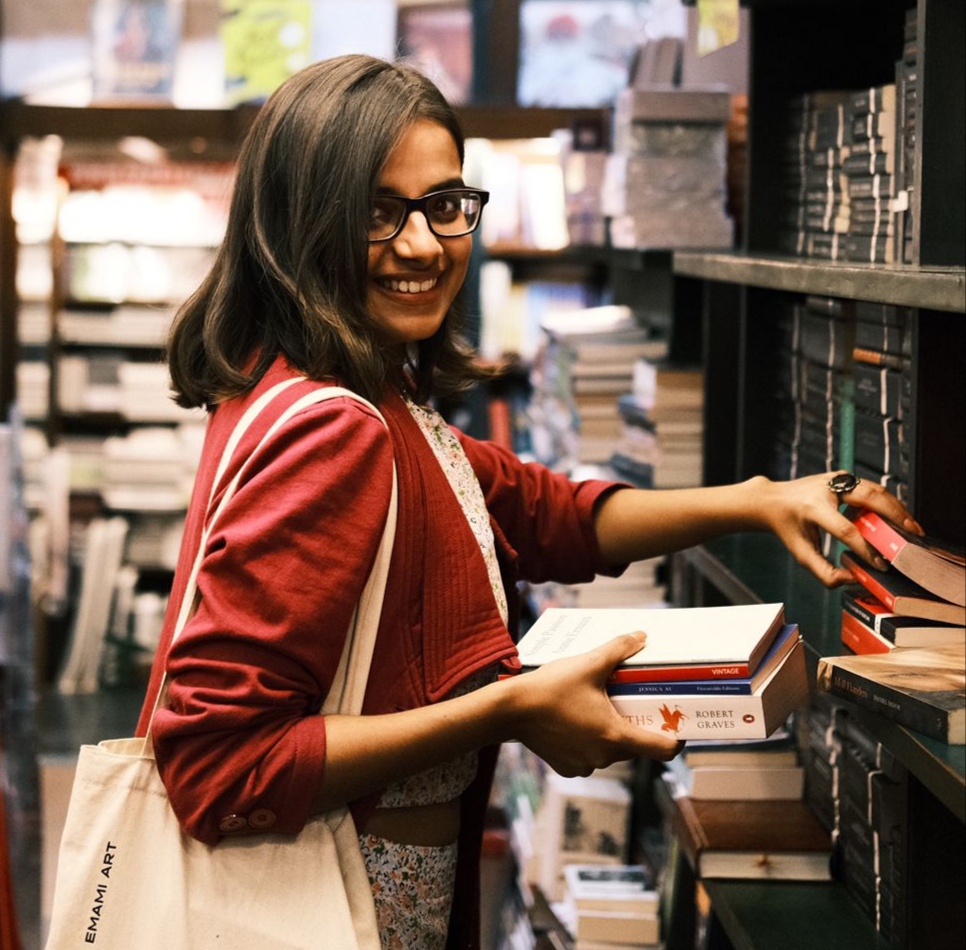
Srilagna completed her education at the Department of History, Jadavpur University, Kolkata. She is a practising researcher and archivist, an avid reader, and an animal lover.
 TheDaak review
Leave a comment