


Book: सौंदर्य की नदी नर्मदा by अमृतलाल वेगड़, पेंगुइन यात्रा वृतांत, Paperback, Published in 2006, 176 pages , ISBN- 0-14-309995-7, Rs.135.
Rivers have been the flowing sagas of history and repositories of ancient civilizational knowledge in India since time immemorial. As a country that derives its name from the river Indus, along the banks of which emerged one of the earliest civilisations of the world, India is dependent upon these flowing veins of water in more ways than what meets the eye. One of the many such intricate riverine relationships can be observed among the people of central India with the river Narmada. Also known as Rewa, it flows through the states of Madhya Pradesh, Maharashtra and Gujarat, and is often considered the lifeline of central India.
Interestingly, due to its position in a rift valley between the mountain ranges of Vindhyachal and Satpura, Narmada does not have any big cities located on its banks, making its waters and the landscapes they create comparatively more rural than the backdrop of an increasingly urbanising country. Besides being the largest west-flowing river of the country, the Narmada, in the words of Vegad himself, happens to be the only river which is subjected to a Parikrama, a religio-cultural practice of walking around the river, from its source to its mouth, which typically takes years to complete. Amritlal Vegad divides this long, perilous journey across its course into small segments of walks, giving readers glimpses from the lives of communities in the Narmada basin through his work Saundarya ki Nadi Narmada, which translates as ‘Narmada, the River of Beauty’.
The lives of the communities settled around the river, Vegad shows, are inextricably dependent on it, whether it is the Patel of Jhurki, who is worried of losing his village homeland to the backwaters of the dam being constructed on the river; the sculptors of Bangrai who rely on the Marble rocks of Bhedaghat for their livelihoods; the Bheels around Shoolpaneshwar who have been involved in the looting of the Parikrama travellers, or the boatsmen and fishermen at the delta area who row parikrama travellers to the river’s meeting point with sea. These interactions and relations, however, have been tested by the march of time and development, as the construction of dams have submerged villages and forced people to relocate; thereby significantly impacting the lives of the communities who inhabit the river basin.
Vegad keeps the rural lives of the basin at the centre, similar to classical writers like Premchand. Both of them write with the gaze of an observer, albeit in different genres of fiction and travel. Premchand wrote about the rural lives of India in a detailed and empathetic manner, with a significant emphasis on the emotions of the characters, as can be observed in his seminal works like Godan. His characters’ lives are witnessed in the frame of their village or city for a long duration of time, through an array of events, without much change being observed in the geographical position of the characters. Interestingly, the writer himself is not present in the story. Vegad, in contrast to Premchand, takes a more moving approach, typical of a traveller, to observe the lives of indigenous communities. He does not stay long enough to have an in-depth understanding of the community, its unique practices, and cyclical processes, but rather covers the entirety of communities residing on the banks of the Narmada, all the while being the central participant in the motion of the journey. The book’s chapterisation mirrors the ten journeys which the writer took between 1977 and 1987. His journey begins in the town of Jabalpur, travelling upstream towards the source of the river in Amarkantak, from where he turns downstream towards the mouth of the river in the Arabian Sea at Vimaleshwar Throughout the course of his journey, he captures different locations on the banks of this river from a traveller’s eye, observing the community’s life as a guest.The author here is bound by his travel and hence not in a position to make any intervention.
The writer’s methodology can be regarded as one of the foremost creative attempts of what in contemporary times is also known as travel vlogging. Although the traveller-author was not equipped with drones, digital or stick cameras, ring light monologues or social media platforms where these journeys could be documented in audio-visual mediums, he instead uses his skills of writing and sketching to encapsulate the rural lives around the banks of Narmada in its’ original, unfiltered and rustic form. His interactions with the communities and stays with the people of the basin are an amalgam of ethnography and travel blogging. During his Parikramas, he travels along the river, like the river. In his own words, the writer acknowledges that he is capturing the river in its wild form for the last time, before it is subjected to mass developmental projects in the form of multiple hydroelectric dams, namely Bargi, Indira Sagar, Omkareshwar and Sardar Sarovar being built across its flow.
Vegad sketches both with charcoal and words, describing the beauty of the flowing Narmada and the picturesque natural canvases that it flows through with incomparable metaphors of life philosophy. He compares its flow touching a gigantic hill with ‘Parvati sleeping in the lap of Shiv’ (p.36), and describes the moon as a ‘Ramta Jogi’, with no discipline or bounds of worldly affairs, compared to the disciplined sun, in essentially suggesting the need of discipline and detachment in balance in human lives (p. 23).
However, Vegad’s metaphoric canvases do meander back to the harsh realities of the lives of the marginalised groups staying in the basin region; it is this social awareness and sensitivity that make him distinct from a cliché naturalist. He is aware of the caste and gender dynamics prevailing in the communities and villages he stays in. Bheel tribes of the Shoolpaneshwar region were famous for looting the Parikrama walkers, and this was considered natural earlier by both the state actors and the ones going for the Parikrama. The mention of the individuals being looted by Bheel men takes place at multiple instances in different chapters, to the extent that it forms an elusive shroud around the region of Shoolpaneshwar and the Bheel tribe of the area. The writer, however, neither villainises nor sticks to any prejudice or stereotype about the tribe. He talks of tribes like Bheel and Baiga, with an ethnographic perspective, representing their practices in his work in the context of their culture, without any labelling. Like the flowing river that he is walking alongside, he keeps his thought process in motion. The only constants in his travel expeditions are the river Narmada and himself, while the consorts of his travel, be it his students or coworkers, keep on changing.
A critique of Vegad’s writing can be seen in his inability to position himself firmly concerning issues like the impact of development upon the lives of the communities of the river basin. When he discusses the impact of the dams being constructed on the river, he addresses it from a separate vantage point every time: from considering its positive effects like creation of canals and the control it can bring upon the drought bound regions to highlighting such negative consequences as the displacement of people it shall cause and the changes in the Parikrama routes as canals change the river’s original course. His position stays ambiguous; it seems as if the author is concerned more with completing the long journey than with dwelling deeply on the problems and issues faced by the riverine communities, such as large-scale developmental interventions. He places multiple philosophical one-liners to give his own perspective about the human emotions being generated in these situations, such as the worries of an uncertain future and grief of losing one’s home as a cost of development, but lacks a critical positioning on the same. Hence, while he covers an array of themes like impact of development, gender, class, caste and tribal interactions, he brings them all back to the river Narmada and his journey along it, while giving merely a sarcastic one-liner.
The epicentre of this book, however, is the motherly veneration expressed towards the river Narmada as the life-giving force, catering to the physical, geographical and cultural needs of the people living in its basin. It reflects in the attitudes of multiple individuals he meets during his journeys. By quoting individuals like the retired government officer at Maheshwar who spent his pension on caring for dogs (meaning unclear) while sitting at a tea shop staring at the river (p. 103), he reiterates the veneration and dependence which the people in the basin have towards her. Vegad draws a comparison between Ganga and Narmada, stating that the culture of India is a bestowed gift of Ganga, but in his opinion, while Ganga is the greatest, Narmada is more experienced (Shreshta Ganga Hai, Par Jayeshta Narmada Hai) (p. 7), commenting upon the enduring presence of Narmada in the Indian peninsula.
This work, in conclusion, can be regarded as a rich, metaphorical amalgam of the natural beauty of the riverine ecosystem and great observational insights into the lives of the communities of the riverine areas. The author keeps Narmada at the centre of these observations and metaphors, and weaves his words around it, which perhaps stands as his ultimate tribute to the flowing waters of Narmada for its life-giving force.
About the Author
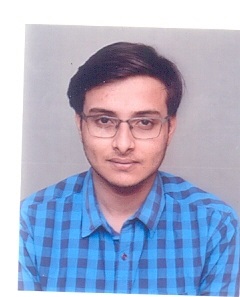
Tejaswin Sharma M.Phil. (Social work), M.A. (Psychology) is currently registered as a doctoral student at the Department of Social Work, University of Delhi. His areas of interest include values and ethics in social work education, mental health, gender and sexuality and organizational behavior.

 TheDaak review
Leave a comment