
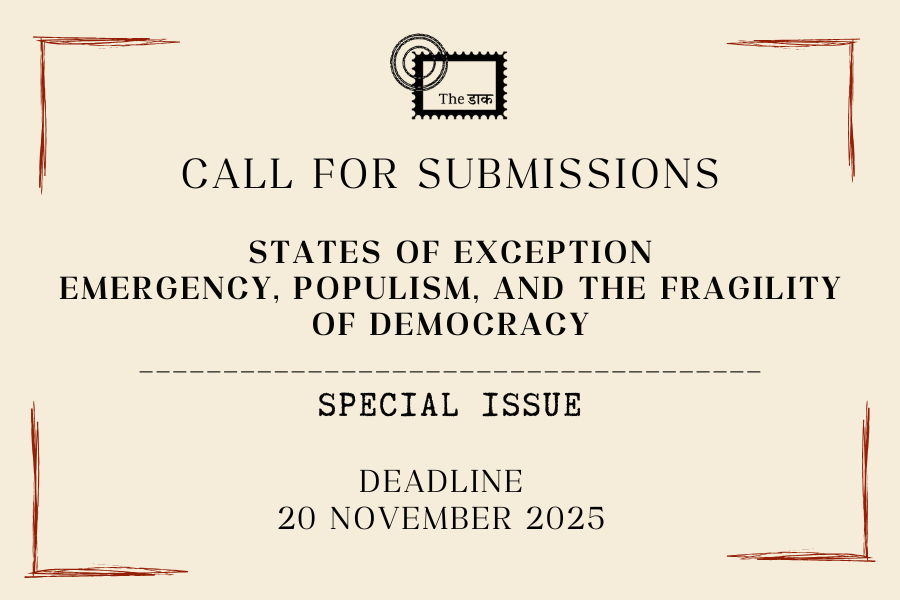
Special Issue | States of Exception : Emergency, Populism, and the Fragility of Democracy
Emergency and the Afterlife of Populism
Concept Note
The Indian Emergency (1975–77) occupies a paradoxical place in the history of democracy. It is remembered as both an aberration and a revelation. It exposed the vulnerabilities of democratic institutions and simultaneously established a template for their manipulation through legal and moral vocabularies of crisis. Nearly half a century later, its shadow continues to fall over contemporary politics, where the suspension of democratic norms often occurs without the formal declaration of an emergency.
This special issue, “States of Exception: Emergency, Populism, and the Fragility of Democracy,” seeks to revisit the Emergency as an intellectual, political, and affective event. It invites contributions that interrogate the continuity between constitutional exceptionalism and the populist-authoritarian practices that characterise many democracies today. What are the forms and processes through which the state of exception becomes normalized? How do charisma, legality, and moral authority converge to produce democratic unfreedom?
Drawing inspiration from critical theorists such as Giorgio Agamben, Carl Schmitt, and Hannah Arendt and from South Asian political thought and historical experience, this issue aims to trace the afterlives of exceptionalism in the evolving relationship between democracy, law, and populism. Furthermore, it aims to open a sustained dialogue on the relationship between legality, institutions and populist power.
By revisiting the Indian Emergency and tracing its reverberations across South Asia and beyond, we seek to explore how democracies live through and sometimes thrive on the logic of exception. In asking whether the state of exception has become the democratic norm, we also turn attention to the subtle processes through which citizens internalise authoritarianism, and to the cultural, moral, and institutional worlds that make such internalisation possible. Ultimately, this issue hopes to provoke new thinking on the afterlife of populism: the persistence of exceptionalism in democratic societies, the erosion of institutional accountability, and the moral economies that sustain popular consent for illiberal rule.
We invite contributions that engage with one or more of the following broad themes:
- Constitutional Exceptions and Democratic Norms : preventive detention, emergency powers, and executive ordinances.
- Everyday Authoritarianism and Bureaucratic Power: policing, surveillance, and administrative discretion.
- Charisma, Populism, and Affective Politics: instruments of legitimacy and moral persuasion.
- Moral and Cultural Economies of Exceptionalism: Literature, cinema, art, and popular culture, Pedagogy.
- Archiving the Emergency: memory, moral justification, and the politics of forgetting.
- Legal-Institutional Dimensions and the Role of the Judiciary
- Comparative and South Asian Perspectives
- Responding to the constitutional crisis: emergence of New Social Movements
- Situating the Emergency in the context of Cold War politics
- Biography and memoirs (first-person accounts of the Emergency)
- Genealogies and Afterlives of Populism in India
All submissions should follow the journal’s style and referencing guidelines. We welcome interdisciplinary contributions from political science, law, history, sociology, media studies, and cultural studies. Essays, archival studies, and theoretically informed creative or reflective pieces are also encouraged. Please submit here. The deadline is 20 November 2025 (has now been extended to 30 November 2025). This issue is due for publication on 30 December 2025. For queries and concerns, write at editor@thedaak.in
- Book reviews (not more than 1200 words)
- Review essays (not more than 2000 words)
- Commentary/Perspective (not more than 4000 words)
- Explainers (not more than 4000 words)
- Research Essay (not more than 7000 words)
Editorial Team
TheDaak Review
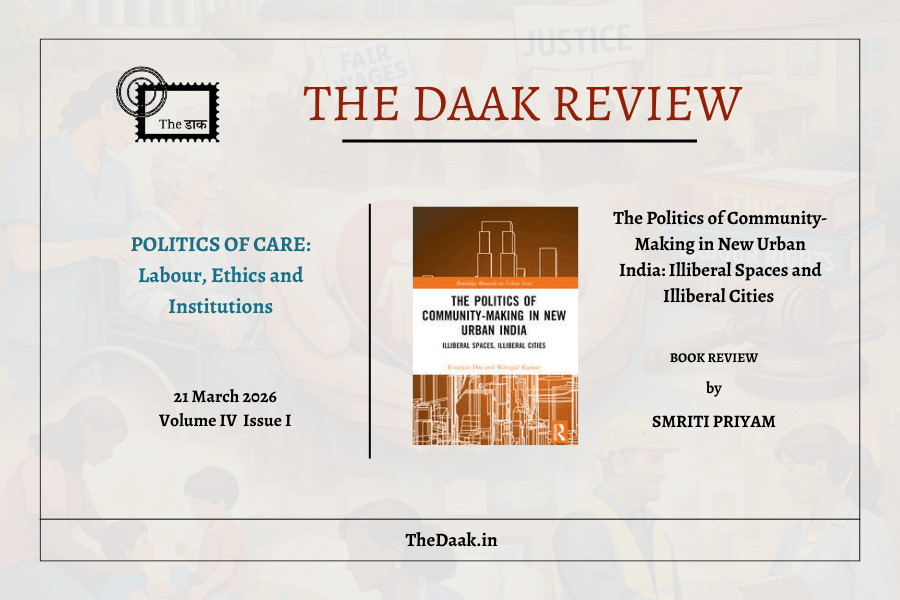
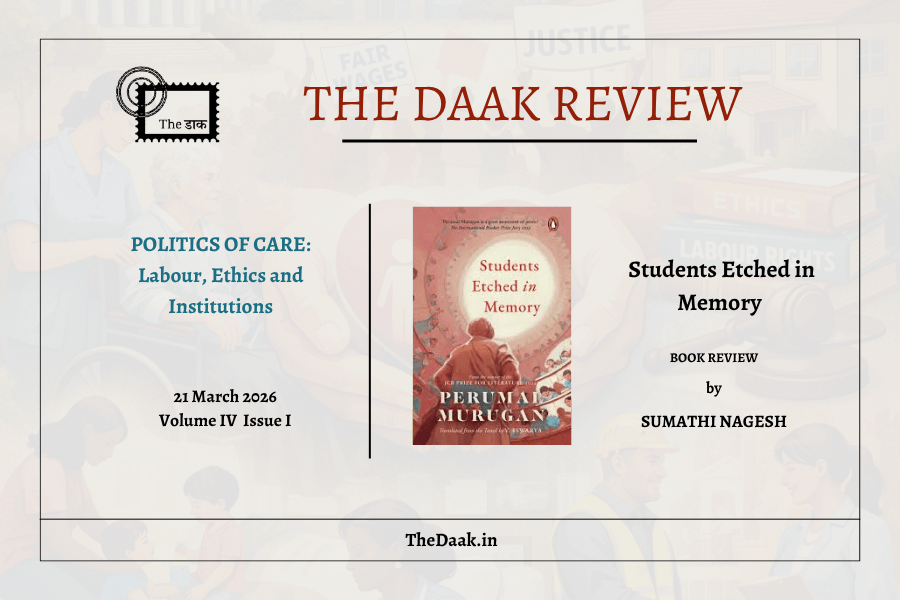
 TheDaak review
Leave a comment