
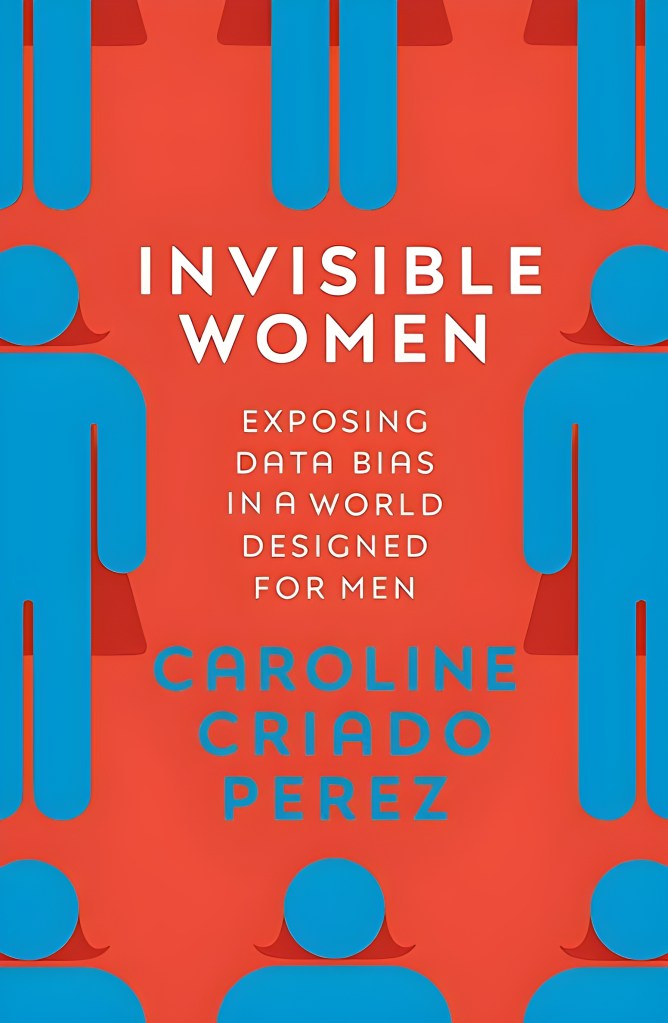
Invisible women: Exposing Data Bias In A World Designed For Men by Caroline Criado Perez, London, Vintage, 2020, 432 pages, 19.8×12.9×2.59cm, ISBN-13: 978-1784706289, ₹421 (Paperback)
From entering public places through feminisation of labour force, to campaigns against sexual harassment to being part of communal politics, women are everywhere (Tharu and Niranjana 1994). Does this new visibility showcase the success of women’s movement to create a gender equitable society, where there is no differentiation based on gender and sex? Or do we still live in a world designed for men? Are women still, as what Simon de Beauvoir (1949) called ‘the second sex’?
Celebrated author and feminist activist, Caroline Criado Perez in Invisible Women launches a scathing attack on the prevailing gender data gap by arguing that lives of men have been taken to represent universality which leaves women invisible. The book has sixteen chapters which have been divided into six parts, each using data to show how women are rendered invisible in the different domains of everyday lives. Women constitute 49.6% of the total population in this world i.e., half of humanity. What explains the absence of half of humanity in the recorded data? The author tries to explore the ‘gender data gap’ which has impacted women severely in their normal lives and has led to the othering of women. She argues that what we construe as gender neutral, is not so, because there are hidden differences which we need to discover. In this context, the book covers how women are not counted, whether it is in history, politics, gaming culture, academics, music, or languages.
The book has used multiple case studies and examples to show bias and discrimination against women. The author discusses the case of public transportation, specifically public buses. Even though women constitute the majority of bus users, there are not enough measures taken to make public transport accessible to them. It would seem like this is due to lack of government resources. However, the author in her book has shown that not spending on the betterment of public infrastructure that caters to the needs of women, is not an issue of resources, but an issue of priorities. But still, there is a paradox. Fear of sexual harassment and crime is the most important reason women prefer to not use public transport. But women are ‘transit captives’(p. 69) i.e., they have no other means of travel.Data shows that peak travel time coincides with peak sexual harassment. But despite this, many women do not report such crimes due to various societal reasons such as shame and stigma, thus leading to a significant gender data gap. The author also shows how male-biased public spaces masquerade as spaces of equal access. Women who do avoid public spaces such as gyms and parks are not being irrational, because there are plenty of accounts of hostility from men when women venture into supposedly gender-neutral spaces. The author portrays how data is lacking in all areas of urban planning and such gender data gaps make it hard to develop infrastructure programmes that factor in women’s needs. And when there is a lack of collection of data along with the use sex disaggregated data in urban design, there is an unintended male bias cropping up in the most surprising of places (p. 78).
The author also brings in the aspect of family, which is considered a private sphere, where women have time poverty as women do both the paid and unpaid work. The concept of ‘working women’ is farce as there is no such thing as a woman who does not work, but there is only a woman who is not paid for her work. The book also further notes that for men, home is a place for leisure and for women it is not. This extra work at home also has a considerable effect on their health. The author also mentioned the case of unpaid maternity leave in countries like the USA where companies, in lieu of profit, do not want to give women a salary when they are on maternity leave.
The book further notes the inherent gender discriminatory nature of the supposed gender neutral policies like in the case of gender-neutral toilets. For instance, women who menstruate,gender-neutral toilets may not be the first choice. Besides, many countries lack adequate public toilets for women ‘in the first place’. In Mumbai, there are 8 toilets for every 8000 women. In countries with no toilets at home or at the workplace, women must go to the fields before sunrise or after sunset, or wait till the working day is over to relieve themselves (p.65). This has effects on their health and has a major effect on crime rates. This also leads to violation of women’s equal right to public places. But all too often the blame is put on women themselves for feeling fearful, rather than on planners for designing urban spaces and transit environments that make them feel unsafe. And, as usual, the gender data gap is behind it. The official statistics show that men are in fact more likely to be victims of crime in public spaces, including public transport. And this paradox has led to the conclusion that women’s fear of crime is irrational and more of a problem than crime itself. Another reason of gender data gap is underreporting by women and the poor classification of what sexual harassment means.
The book also busts the ‘myth’ of meritocracy using data. Reports show that men who believe that they are objective while hiring are more likely to hire a male applicant than an identically described female applicant because male qualities are favoured more than those of females (p. 110-116). For example, the difference between being bossy or being assertive. Studies have also shown that women in academia, for example, may face higher scrutiny and bias based on their physical appearance. Organisations which are explicitly presented as meritocratic, tend to favour male employees over equally qualified female employees. Perez aptly puts it by saying that “‘if in Silicon Valley, meritocracy is a religion, its God is a white male Harvard dropout’ (p. 110). In academia there is a practice of using initials rather than full names, the gender of an academician is often not immediately obvious, leading female academics to be assumed to be male. It is also thought that research associated with men is of greater scientific quality. This can be due to ‘brilliance bias’ (p. 116), which can be understood by a simple example. When anyone is asked to talk about a genius, they generally think about a male. This bias leads us to not regard women as naturally brilliant while regarding male professors to be more knowledgeable and objective. Moreover, there are gendered expectations from women researchers or teachers. In keeping with gender norms,they are expected to deal with the mental issues of students, to not be rude and are not given leadership roles. This is because of historical and cultural factors and by how everything is understood as male default. Exclusion of women from positions of power is often because of what we teach children about the past. We teach children almost exclusively about the lives of men thus leading to a gender data gap.
The book further highlights the biases in the design of the equipment, which are by default manufactured based on men’s bodies. It provides the case of women in the military where it is generally assumed that male equipment can be used for women as well.. However, this is not the case and such assumptions are based on the lack of data on women. Again other instruments like pianos, are designed for the average male hand as if ‘one-size-fits-men is the same as one-size-fits-all’ (p. 176). Many female pianists run an approximately 50% higher risk of pain and injury than male pianists due to this factor. Similarly with smartphones average men can comfortably use the device with one hand – but the average woman’s hand is not much bigger than the handset itself. Women cannot even keep bigger smartphones in their pockets, as they are designed relatively small, so that they can spend on handbags.
In the age of Artificial Intelligence, data is the new oil. Modern technologies based on this gender data gap are bound to create outcomes which are unfavourable for women. Machines not only reflect our biases, but they can also amplify them. So, databases can be blatantly sexist because of the algorithm and these are generally made by man, thus making our world more unequal. This fascinating work raises the serious question: are women’s lives less important than human lives, where human means male?
The book has done commendable job in bringing out this disparity by showcasing the existing gender data gap and how it perpetuates the unfair treatment of women and the idea that women should be invisible or included under the ‘universal man’. It also affects how policies are created, which again perpetuates unfairness by failing to consider or adequately meet the needs of women. However, this work remains incomplete. By gathering data, one can locate the issues and understand them. But what after that? Will it be able to change the structures which are fostering these inequalities? By only focussing on removing the disparity through policy interventions by collecting data, or by bringing women on the negotiating table, will this bring women on an equal footing? This book is like a good movie which ends at the interval. Another limitation is that the author is not able to look beyond the binary between men and women. She does not discuss the issues faced by other genders. She aptly focuses on women. Where are trans-people, who face explicit discrimination? In the process of making women visible, she has left invisible, people of other sexualities. Shouldn’t we build a better world by coming out of the heterosexual matrix? Another factor is that the author recognizes in her introduction that identifiers beyond sex, such as race, ethnicity, culture, and religion, can exacerbate differences in data accuracy, but still, she limits her scope to sex. Through multiple case studies, she makes a reasonable effort to include the experiences of Indian, Black American, and Muslim Bangladeshi women beyond the default of white western women. However, there is still ample room for more diversity in the text to further emphasise the potential harm in data that defaults to white men.
Throughout the book, the data and the reports presented mostly focuses upon western individualistic and capitalist societies. What about other Third World countries? Do we have a mechanism of collect data in a comprehensive manner in such countries, or can data compute all the nitty gritties of a women’s life there? The book could have also mentioned how men also can be a victim of toxic masculinity. There is a domination of homosexual men by heterosexual men. Nevertheless, the author’s mixture of quantitative data and qualitative analysis has made the book a fairly good read. Exposing such biases even in our daily lives is a starting point in our aim to make this world a better place for people of all sexualities, and Criado Perez is helping us to undertake the first step in this difficult journey.
REFERENCES
- Perez, Caroline. Invisible Women: Exposing Data Bias in a World Designed for Men. United Kingdom: Random House
- Tharu, Susie, and Tejaswini Niranjana. 1994. “Problems for a Contemporary Theory of Gender.” Social Scientist 22, no. 3/4. 93–117. https://doi.org/10.2307/3517624.

Prabhat Sharma has completed his masters in Political science from Centre for Political Science, JNU in 2023. His research area is working of politics of memory in India.



Leave a comment