

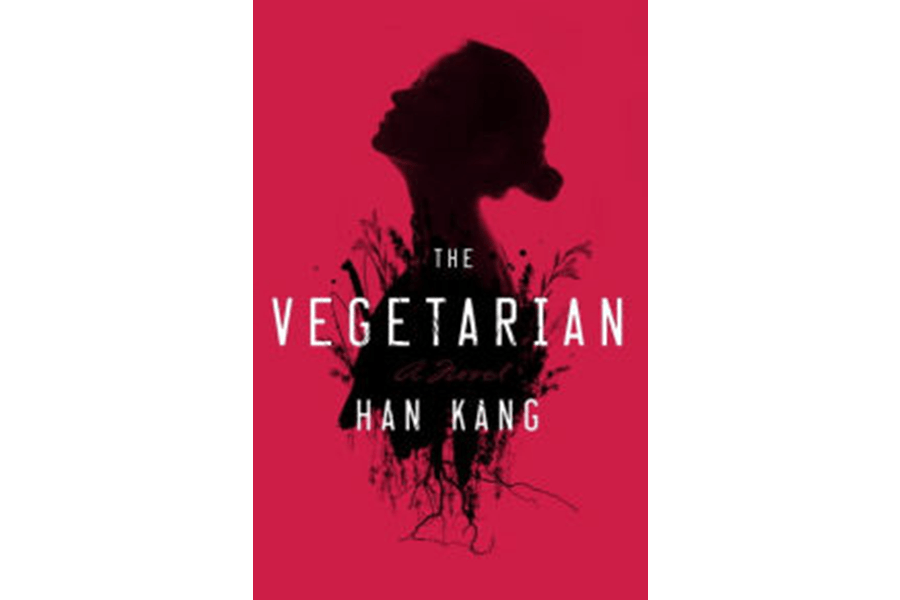
The Vegetarian: A Novel/Han Kang: Deborah Smith. London: Portobello Books, 2015.
By Chetna Rani and Rahul Singh Panwar
The Man Booker 2015 prize winning novel, The Vegetarian by Han Kang leaves you at a loss forwords. With eyebrows scrunched, you try to piece together what you just read (especially if you read it in one sitting, it is a 183 page novel). If I was asked, how I felt about the book the moment I put it down, I would probably shake my head a few times, trying to build a cohesive opinion and settle on the word ‘disturbing’. It is not easy to shake off this unnerving, churning feeling when one reads The Vegetarian. Set in Korea, it is a story of the collapse of a loveless marriage. Yeong-hye and Cheong are in a marriage born out of convention, not choice. Mr. Cheong reduces Yeong-hye to an “ordinary wife who went about things without any distasteful frivolousness.”(p. 4) She is completely unremarkable to him in every way. In the first part of the novel, any semblance of marital monotony they share crumbles when, one day, Yeong-hye throws away all the meat in the freezer and resolutely announces that she is going to be a vegetarian. Well, this is highly inconvenient for Cheong. He worries her fuss will embarrass him in public gatherings. The meagre explanation his wife offers for her sudden renunciation of meat is, “I had a dream” (p. 10,11,17.) We know that the dream is dark, gory and deeply unsettling. In translating the Korean novel in English, Deborah Smith does a remarkable job in describing the dream through visceral imagery. The reader can close their eyes and see it; feel it creeping under their skin. The writing is graphic, for instance, “…my bloody hand, my bloody mouth. In the barn, what had I done? Pushed that red raw mass into my mouth, felt it squish against my gums, the roof of my mouth, slick with crimson blood.”( p. 12) Frustrated with Yoeng-hye’s sustained abstinence, Cheong subsequently divorces her. Yeong-hye’s father is more determined. At a family gathering, he slaps her and tries to force pork into her mouth. Finding no escape from this purgatory, she slits her wrists. Violence segues throughout the book. Time and again, Yoeng-hye is violated. Her husband forces himself on her. Her alcoholic father beats her as a child. She is forcefully fed in the hospital. She becomes a silent recipient for all that the men around her shove her way. She is all but a canvas to blot haphazardly. In her dreams, Yeong-hye finds her own body to be an active agent, an instrument of violence that is being used to hurt animals for meat. Her desire to absolve herself from the guilt of consumption is such that she gives up eating altogether, slowly emaciating into a loose hanging of bones.
The Guardian calls the Vegetarian a “dangerously defiant story”1. It is a defiance of the body and life itself ; to shun the violence of the world around her, Yeong-hye turns violent on her own body, depriving it of the basic need for nutrition. One is reminded of the Ship of Theseus (2012), an indie film directed by Anand Gandhi.2 The critically acclaimed movie follows the story of a Jain monk, Maitreya who is in need of a liver transplant but refuses medical help as he is staunchly against the pharmaceutical industry’s cruel practice of animal testing. An unconventional form of resistance. But this is as far as the similarity follows. Maitreya’s resistance is starkly outward. It is a protest. There is an intent for social change. Yoeng-hye’s resolve is not of performative resistance, she wishes to make no change in the big wide world, in fact, she wants to have little to do with the world. Rather, she wants to embrace a radical form of naturalism. “I was in a dream, and I was standing on my head… leaves were growing from my body and roots were sprouting from my hands.” (p. 148) This is an attempt at acceptance of who she wants to be, a tree with branches spreading out.
The Validity of Consent?
The second part of the novel follows the perspective of Yeong-hye’s brother-in-law, a struggling artist who has a fixation with a mongolian birthmark on her lower back. He wishes to paint flowers on her body and capture intimate pictures. Later, he has a colleague paint flowers on his body and has sex with Yeong-hye: Sex has been described using imagery from nature: “His red flower closed and opened repeatedly above her Mongolian mark, his penis slipping in and out of her like a huge pistil.” (p. 119) However, this is sex of dubious consent. One can’t help but wonder if Yeong-hye is mentally sound? Is she fit to give conscious consent or is her cognition compromised? Collins dictionary defines sanity as “the ability to think and behave normally and reasonably.”3 Any behaviour that does not adhere to this prescribed code of normalcy is deemed insane, deranged and for the lack of a better word, mad. The word mad is a chess piece really, used liberally at the expense of the person in question. In The Philosophy of Insanity, James Frame argues that the actions of the ‘insane’ are in complete contradiction with the natural tendencies and predispositions of human beings. For instance, he says that committing suicide, something the insane often do would require “the reversal of nature’s first and strongest law … that intense desire to live which man stretches out to eternity…”4 Yeong-hye slices her wrist, she must really be insane then, one thinks. To the real world, Yeong-hye is mad, but to her, her will to be uprooted from mortal existence is sane enough. Aristotle famously declared, – “man is a social animal”. But, is conformity to the social the only acceptable form of life? Can a person separate themselves from society and lead an atomistic, isolated existence? The book can hence be read as a civilisational critique – an attempt to dislodge the conventional.
Art or Abuse?
Artists wade through the uncharted waters of eccentricity and creativity, blurring the lines between mental wellbeing and insanity. And I find myself going back to Aristotle yet again, “No great genius has ever existed without a strain of madness.”5 Van Gogh is the epitome of the ‘mad artist’, a tortured genius, aberrant from society, and wrestling inner demons. Surely, the (unnamed) brother in law fits the archetype ? A struggling artist, he wishes to make films that never see the light of day. He has a compelling imagination of a carnal, sensual artwork, his inability to breathe life into his vision perturbs him to no end, and he goes to great lengths, ultimately ending his marriage, to fulfil his artistic hunger. His camcorder tapes the sex he has with Yeong-hye. She has agreed to it. To him, the images and the video are in fact, his creation. Artists have since time immemorial been granted certain leverages and concessions, by virtue of them being creators. But how far can an artist extend his creative licence in search of expression? When does art, subjective as it is, stop being art and become a transgression instead ?
The Fragility of Family Relations
The third part of the novel follows Yeong hye’s sister In-hye’s struggle with a family fallout and Yeong-hye’s deteriorating health when she is shifted to a psychiatric facility. As the manager of a cosmetic store with a child and an absent husband, In-hye leads a precarious life, a life where she has to struggle to keep it from breaking apart. She is the only family member who maintains contact with her catatonic sister, visits her regularly and takes care of her at the hospital. It is now, in the third part of the novel, that a reader gets limited entry into Yeong-hye’s childhood fraught with abuse and temper. We learn of the relationship between the two sisters. We learn that In-hye feels that “even as a child as far as she could remember, she had done nothing but endure” and her life was but a “ghostly pageant of exhausted endurance” (p. 139) In-hye finds herself surrendering the slender thread that connected her with everyday life. For the first time, we learn of the frailty of both the sisters. Throughout the story, we see inflexible structures of society collapse. Sisterhood is probably the only and the most resilient bond that survives, albeit delicately. In the end, it is In-hye who stops the doctors from force feeding her sister. She finally admits that she may not understand her sister’s longing but wants her to be relieved of the pain and force inflicted on her. At a cruelly slow pace of transcendence, the third part brings us closer and closer to the psyche of the protagonist Yeong-hye and we try to piece together the experiences that may have led to her wanting to let go of life. “…Is it such a bad thing to die? ” (p. 157) , she asks her sister.
Words vs Emotions – Translator’s dilemma
When the book was translated into English in 2015, it garnered meteoric acclaim,compared to the humble earnings of the original Korean work in 2007. Many critics including Tim Parks argue that the book has been grossly mistranslated which calls into question its historic feat as the first Korean novel to have won the Booker Prize.6 In translating the novel, Deborah Smith populates Han Kang’s spare, quiet style and embellishes it with adverbs, superlatives and other emphatic words that are nowhere in the original, according to academician Charse Yun.7 This controversy sparked the question of just how literal and true to the original work should a translation be. How liberal can a translator be while expanding a translated work? Certainly not to the extent that it loses synergy and faithfulness with its original creation. In the highly underrated movie Paterson, starring Adam Driver and Golshifteh Farahani, a Japanese poet tells Paterson , “poetry in translation is like taking a shower with a raincoat on”. Translations bridge insurmountable divides of language and yet run the risk of losing the intrinsic meanings of the original text. I wonder if I will ever be able to embrace literature in its most authentic, original form, not unless I learn how to read Korean, Mandarin Japanese Russian and all the other languages of the world. Though it sounds ambitious, I am only nineteen and one can dream.
To say the least, Han Kang’s characters are not simple. One cannot staple three adjectives and describe them. The intricacies and nuances of the 3 characters, Yoeng-hye, her brother in law and In-hye are slowly revealed to us. The book hence unfolds as a domino effect, the seemingly innocuous actions of one character taper the dynamic of the entire family cascading in a tragedy. At the risk of exaggeration, The Vegetarian can be deemed a literary enigma: it leaves you with more questions than it answers.
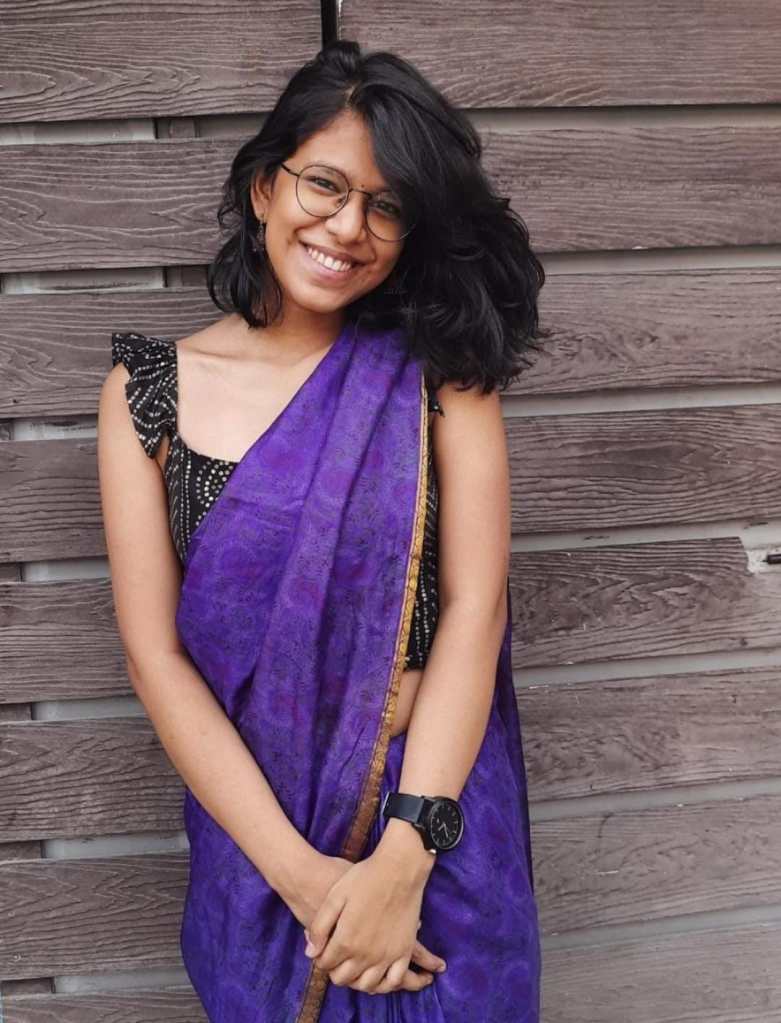
Chetna Rani is a 2nd year student pursuing BA(Hons) Political Science at Hindu College, University of Delhi. She is the anchor of TheDaak Reading Club – Delhi Chapter.
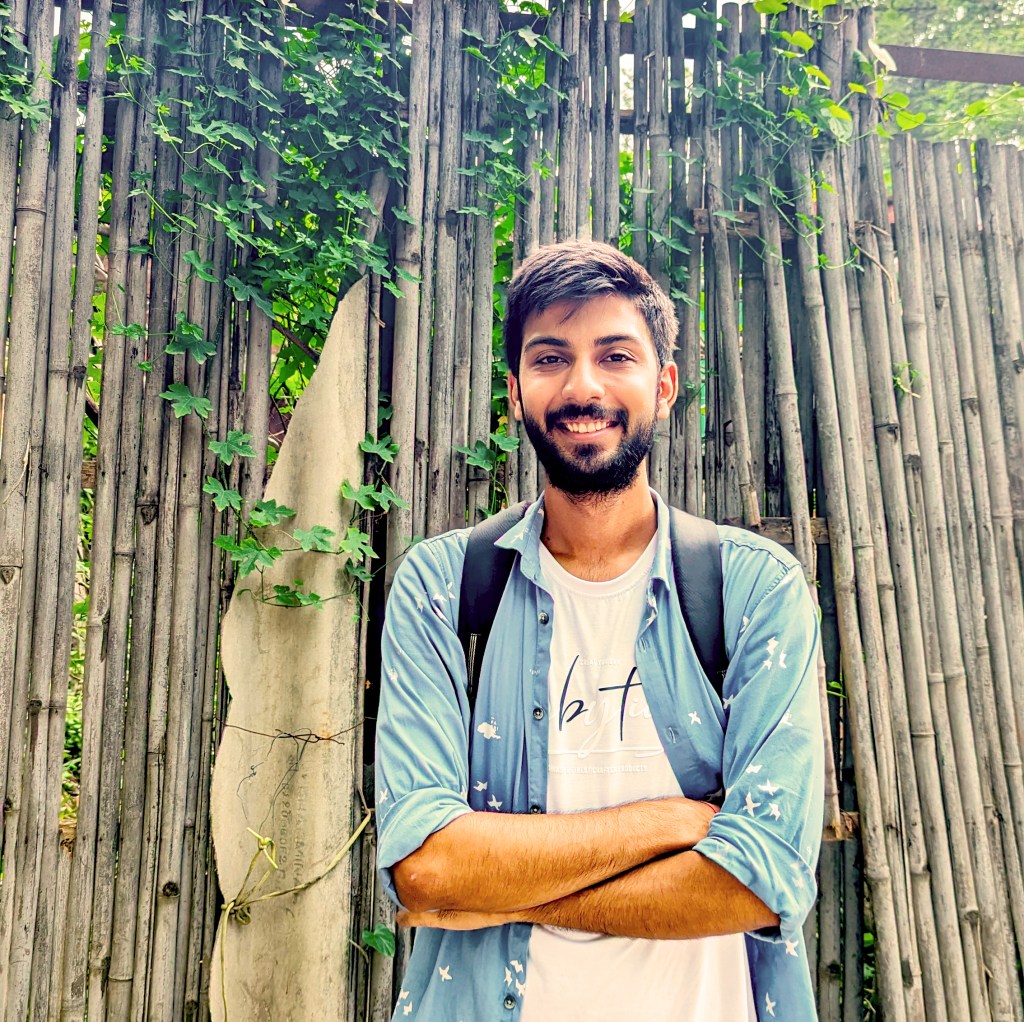
Rahul Singh Panwar is a second year B.A. Philosophy (Hons) student at Hindu College, Uniersity of Delhi.
Endnotes
- Masad, I. (2016, December 23). The Vegetarian by Han Kang tells a dangerously defiant story. The Guardian. Retrieved January 16, 2024, from https://www.theguardian.com/books/booksblog/2016/dec/23/the-vegetarian-by-han-kang–tells-a-dangerously-defiant-story ↩︎
- Gandhi, Anand, director. Ship of Theseus. https://www.youtube.com/watch?v=zuQYlgL73o0. Accessed 30 Jan. 2024 ↩︎
- INSANITY definition and meaning | Collins English Dictionary. (n.d.). Collins Dictionary. Retrieved January 16, 2024, from https://www.collinsdictionary.com/dictionary/english/insanity ↩︎
- Frame, J. (1860). The Philosophy of Insanity, Page 568 ↩︎
- (Attributed) – Aristotle | WIST Quotations. (2022, June 21). WIST. https://wist.info/aristotle/1343/ ↩︎
- Yun, C. (2017, September 22). How the bestseller ‘The Vegetarian,’ translated from Han Kang’s original, caused an uproar in South Korea. Los Angeles Times. Retrieved January 16, 2024, from https://www.latimes.com/books/jacketcopy/la-ca-jc-korean-translation-20170922-story.html
↩︎ - Parks, T., & Keret, E. (2016, June 20). Raw and Cooked | Tim Parks. The New York Review of Books. Retrieved January 16, 2024, from https://www.nybooks.com/online/2016/06/20/raw-and-cooked-translation-why-the-vegetarian-wins/ ↩︎
 TheDaak review
Leave a reply to TheDaak Reading Club Cancel reply